


Key Takeaways
- Urinalysis is a simple but powerful diagnostic tool used to detect a wide range of conditions, including urinary tract infections (UTIs), kidney disease, diabetes, and metabolic disorders.
- There are three main types of urinalysis tests: visual examination, chemical (dipstick) analysis, and microscopic analysis—each providing different layers of clinical information.
- Understanding your urinalysis results is essential: parameters like pH, protein, glucose, ketones, leukocytes, and nitrites can reveal important clues about your health status.
- Abnormal findings don’t always mean disease, but they should be interpreted in clinical context, as they may indicate infections, kidney dysfunction, liver disease, or systemic conditions.
- Proper urine sample collection is critical to avoid contamination and ensure accurate results—especially for diagnosing infections.
- Urinalysis is often used as both a screening and monitoring tool, making it valuable for routine check-ups and tracking treatment outcomes.
Introduction
Urinalysis is a simple and widely used laboratory test that examines the physical, chemical, and microscopic properties of urine. It is one of the most common diagnostic tools in clinical practice because it provides valuable insights into overall health, kidney function, and metabolic conditions.
Why Urine Is So Informative
Urine is produced by the kidneys through filtration of the blood. During this process, waste products, excess substances, and toxins are removed and excreted in urine. Because of this, urine reflects what is happening inside the body, making urinalysis a non-invasive window into internal health.
What Does Urinalysis Evaluate?
A complete urinalysis typically includes three main components:
1. Physical Examination
- Color (clear, yellow, dark)
- Clarity (clear or cloudy)
- Odor
These characteristics can provide early clues about hydration status or infection.
2. Chemical Analysis
- pH (acidity or alkalinity)
- Protein levels
- Glucose (sugar)
- Ketones
- Nitrites and leukocyte esterase
This is usually done using a dipstick test, which changes color based on the substances present.
3. Microscopic Examination
- Presence of cells (RBCs, WBCs, epithelial cells)
- Bacteria, yeast, or parasites
- Crystals or casts
This step helps confirm and refine findings from the chemical analysis.
Because it is quick, inexpensive, and non-invasive, urinalysis is often one of the first tests doctors order when evaluating a patient.
Why Is a Urinalysis Test Done?
1. Routine Health Screening
Urinalysis is often included in regular medical check-ups to detect early signs of disease before symptoms appear.
- Helps identify silent conditions like early kidney dysfunction
- Detects abnormalities such as protein or glucose in urine
- Commonly used in pre-employment exams or annual physicals
Early detection through urinalysis can significantly improve treatment outcomes.
2. Diagnosis of Diseases
One of the main reasons for ordering a urine test is to diagnose specific medical conditions.
Urinary Tract Infections (UTIs)
- Presence of bacteria, white blood cells, and nitrites
- Symptoms: burning urination, frequent urge to urinate
Kidney Disease
- Detection of protein (proteinuria) or blood in urine
- Indicates possible damage to kidney filtration
Diabetes
- Presence of glucose and ketones in urine
- Suggests poor blood sugar control
3. Monitoring Existing Conditions
Urinalysis is not only for diagnosis—it is also used to track the progression of diseases and response to treatment.
- Monitor kidney function in chronic kidney disease
- Follow-up in diabetic patients
- Assess effectiveness of treatments for infections
Regular urine tests help doctors adjust therapies and prevent complications.
4. Investigation of Symptoms
Doctors may order a urinalysis when patients present with symptoms such as:
- Painful or frequent urination
- Blood in urine (hematuria)
- Abdominal or lower back pain
- Unexplained fatigue or swelling
These symptoms may indicate underlying issues that can be detected through urine analysis.
5. Pregnancy and General Health Monitoring
Urinalysis is routinely used during pregnancy to:
- Detect infections
- Monitor glucose levels
- Check for protein (early sign of preeclampsia)
It is also used in hospitalized patients to monitor overall health status.
Types of Urinalysis Tests
A complete urinalysis is not a single test, but rather a combination of three complementary analyses. Each type provides different information, and together they give a comprehensive picture of a patient’s health.
For a fast at-home screening, urine dipstick test kits provide results in minutes and help you monitor important urine parameters without needing a laboratory visit.
This post may contain affiliate links. As an Amazon Associate, I earn from qualifying purchases at no extra cost to you.

- [COMPREHENSIVE 11-PARAMETER URINE TEST STRIPS] Get a complete picture of your wellness from home. Our easy-to-use urinal…
- [GREAT VALUE – 150 TEST STRIPS] Our large, 150-count bottle urine test kit provides an affordable and convenient solutio…
- [PROACTIVE HEALTH MONITORING] The urine test strips for urinalysis full panel take control of your health with early det…
1. Visual Examination (Macroscopic Analysis)
This is the first step in urinalysis, where the urine sample is examined with the naked eye.
What is evaluated?
- Color: Pale yellow (normal) to dark amber
- Clarity: Clear or cloudy
- Odor: Normal or unusual smell
What does it indicate?
- Dark urine → dehydration
- Cloudy urine → possible infection or crystals
- Red or brown urine → possible blood (hematuria)
Although simple, this step provides important initial clues about underlying conditions.
2. Chemical Examination (Dipstick Test)
The chemical analysis is performed using a dipstick—a strip with reagent pads that change color when dipped into urine.
Parameters measured:
- pH (acidity/alkalinity)
- Protein (kidney damage indicator)
- Glucose (diabetes marker)
- Ketones (fat metabolism, diabetes)
- Nitrites & leukocyte esterase (infection markers)
- Blood (hemoglobin)
Why it matters:
- Quick and highly efficient screening tool
- Detects biochemical abnormalities within seconds
- Guides further microscopic or laboratory testing
This step is central to identifying metabolic and infectious conditions.
3. Microscopic Examination
In this step, urine is centrifuged and the sediment is examined under a microscope.
What is analyzed:
- Red blood cells (RBCs) → bleeding or kidney issues
- White blood cells (WBCs) → infection or inflammation
- Epithelial cells → contamination or tissue damage
- Bacteria or yeast → infection
- Crystals → risk of kidney stones
- Casts → kidney disease markers
Clinical importance:
- Confirms findings from dipstick analysis Provides detailed cellular and structural information
- Essential for diagnosing kidney and urinary tract disorders
Common Abnormal Urinalysis Results and Their Causes
Abnormal findings in urinalysis can indicate a wide range of conditions, from mild and temporary issues to more serious diseases. Interpreting these abnormalities requires understanding both the type of alteration and its possible clinical causes.
Protein in Urine (Proteinuria)
Protein is normally absent or present in very low amounts in urine.
Possible causes of protein in urine:
- Kidney disease (glomerulonephritis, nephrotic syndrome)
- Hypertension
- Diabetes mellitus
- Temporary causes such as fever, stress, or intense exercise
Persistent proteinuria is often a sign of kidney damage and requires further evaluation.
Glucose in Urine (Glycosuria)
Glucose is not typically present in urine under normal conditions.
Possible causes:
- Diabetes mellitus
- Hyperglycemia exceeding renal threshold
- Rare renal tubular disorders
The presence of glucose in urine is commonly associated with poor blood sugar control.
Ketones in Urine (Ketonuria)
Ketones appear when the body metabolizes fat for energy instead of glucose.
Possible causes of ketones in urine:
- Uncontrolled diabetes (diabetic ketoacidosis)
- Prolonged fasting or starvation
- Low-carbohydrate diets
High ketone levels may indicate a serious metabolic imbalance, especially in diabetic patients.
Blood in Urine (Hematuria)
The presence of red blood cells in urine is abnormal.
Possible causes of blood in urine:
- Urinary tract infections
- Kidney stones
- Trauma or injury
- Tumors of the urinary tract
- Glomerular diseases
Hematuria can be visible (gross) or detected only microscopically.
White Blood Cells in Urine (Pyuria)
White blood cells revealed by leukocyte esterase in urine usually indicate inflammation or infection.
Possible causes:
- Urinary tract infections
- Kidney infections (pyelonephritis)
- Inflammatory conditions of the urinary tract
Pyuria is often accompanied by positive leukocyte esterase on dipstick testing.
Nitrites in Urine
Nitrites are produced by certain bacteria that convert nitrates into nitrites.
Possible causes of nitrites in urine:
- Bacterial urinary tract infections
A positive nitrite test strongly suggests the presence of gram-negative bacteria in the urinary tract.
Epithelial Cells in Urine
Epithelial cells are normally present in small numbers.
Possible causes of increased levels:
- Contamination during sample collection
- Urinary tract infections
- Kidney disease (especially renal epithelial cells)
The type of epithelial cells observed is important for clinical interpretation.
Abnormal Urine Color or Appearance
Changes in urine color or clarity can indicate underlying issues.
Examples:
- Dark yellow or amber: dehydration
- Red or brown: blood or hemoglobin
- Cloudy urine: infection, crystals, or pus
Visual abnormalities often provide the first indication of a problem.
Crystals and Casts
Crystals and casts are identified during microscopic examination.
it may indicate:
- Kidney stones
- Metabolic disorders
Casts may indicate:
- Kidney disease
- Tubular damage
Certain types of casts, such as red blood cell casts, are highly specific for renal pathology.
Bilirubin in Urine (Bilirubinuria)
- Bilirubin Not normally present in urine
- Indicates possible liver or biliary tract disorders
- Common causes: hepatitis, liver cirrhosis, bile duct obstruction
- Associated with conjugated hyperbilirubinemia
- May cause dark-colored urine
Urine Specific Gravity
- Urine Specific Gravity Reflects kidney’s ability to concentrate or dilute urine
- High values: dehydration, glycosuria, proteinuria
- Low values: overhydration, diabetes insipidus, renal impairment
- Helps assess hydration status and kidney function
Urobilinogen in Urine
- Urobilinogen in Urine Normally present in small amounts
- Elevated levels: liver disease (hepatitis, cirrhosis), hemolysis
- Low or absent levels: bile duct obstruction, impaired bilirubin flow
- Useful marker for liver function and red blood cell turnover
For individuals experiencing recurrent urinary issues, urinary health supplements—such as cranberry extract, D-mannose, or probiotics—may help support urinary tract balance and reduce the risk of future disturbances.



How to Collect a Urine Sample Properly
Why Proper Collection Matters
A poorly collected sample may:
- Introduce bacteria from the skin
- Contain contaminants (e.g., vaginal discharge, dirt)
- Affect chemical and microscopic results
This can lead to misdiagnosis or unnecessary treatments.
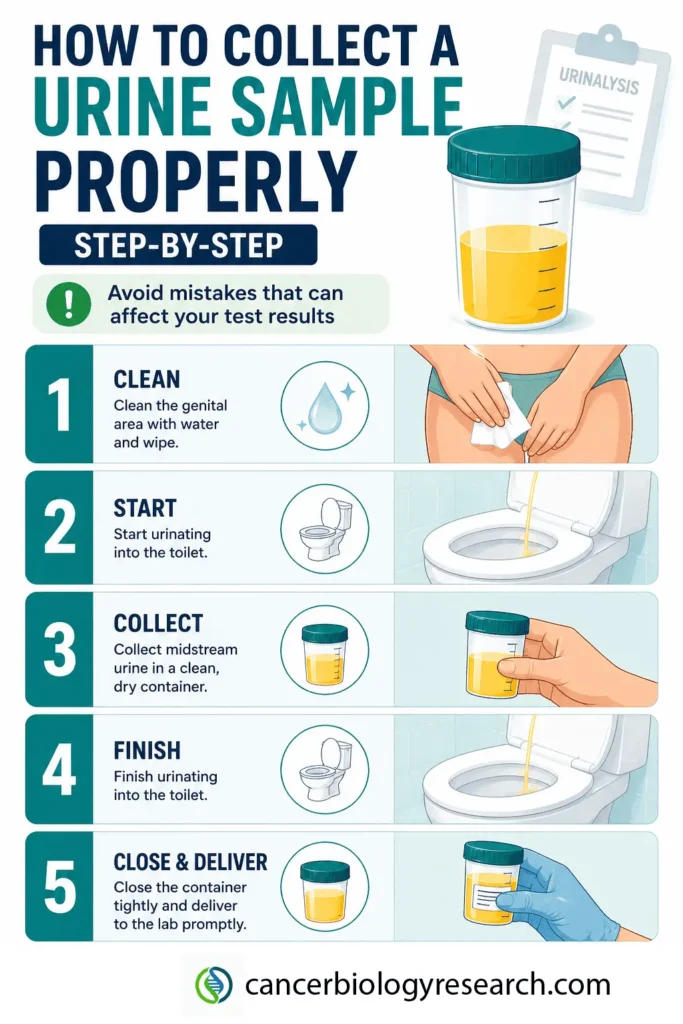
Step-by-Step: Clean-Catch Midstream Method
The clean-catch midstream technique is the most commonly recommended method.
1. Wash Your Hands
- Use soap and water to reduce contamination
2. Clean the Genital Area
- Use sterile wipes provided by the lab
- Clean from front to back (especially important for women)
3. Start Urinating
- Begin urinating into the toilet
4. Collect Midstream Urine
- After a few seconds, place the container under the urine stream
- Collect a small amount (usually 30–60 mL)
5. Finish Urinating
- Remove the container and finish urinating into the toilet
6. Secure the Sample
- Close the container tightly
- Avoid touching the inside of the lid or container
Storage and Transport
- Deliver the sample to the laboratory within 1–2 hours
- If delayed, store it in a refrigerator (at ~4°C)
- Avoid leaving the sample at room temperature for long periods
Delayed analysis can alter results, especially for bacteria and cells.
Common Mistakes to Avoid
- Collecting the first urine stream instead of midstream
- Not cleaning the genital area properly
- Touching the inside of the container
- Using a non-sterile container
- Delaying sample delivery
Special Situations
- Children or infants: Collection bags may be used
- Hospital patients: Catheterized samples may be required
- 24-hour urine collection: Used for specific tests (e.g., protein quantification)
FAQs
Urinalysis is used to detect, diagnose, and monitor diseases such as infections, kidney disorders, and diabetes.
Abnormal results may indicate a health problem, but they require further tests for confirmation.
Urinalysis is reliable for screening, but not definitive; results must be confirmed with additional tests.
Urinalysis can help detect conditions such as urinary tract infections (UTIs), kidney disease, diabetes, and liver disorders, as well as signs of dehydration and metabolic imbalances.
References
- MedlinePlus. Urinalysis.
https://medlineplus.gov/urinalysis.html - Mayo Clinic. Urinalysis.
https://www.mayoclinic.org/tests-procedures/urinalysis/about/pac-20384907 - NHS. Urine Test.
https://www.nhs.uk/conditions/urinary-incontinence/diagnosis/ - Centers for Disease Control and Prevention. Urinalysis and Kidney Disease Information.
https://www.cdc.gov/kidneydisease/ - Simerville JA, Maxted WC, Pahira JJ. Urinalysis: A Comprehensive Review. American Family Physician.
https://www.aafp.org/pubs/afp/issues/2005/0315/p1153.html - National Institute of Diabetes and Digestive and Kidney Diseases. Urinary Tract and Kidney Diseases.
https://www.niddk.nih.gov/health-information/kidney-disease
Medical Disclaimer: This content is for informational and educational purposes only and does not constitute medical advice. It is not intended to replace professional medical consultation, diagnosis, or treatment. Always seek the advice of a qualified healthcare provider with any questions regarding a medical condition.


