


Urobilinogen in urine is a small but clinically important marker that can provide valuable insight into liver function, bile flow, and red blood cell breakdown. It is a byproduct of bilirubin metabolism and is normally present in trace amounts in urine. However, abnormal levels may signal underlying conditions such as liver disease, hemolytic disorders, or bile duct obstruction.
Because it is commonly included in routine urinalysis, understanding what urobilinogen means can help in the early detection of systemic health issues.
In this article, we’ll explore what urobilinogen is, how the urine test works, normal values, and what high or low levels may indicate.
What Is Urobilinogen?
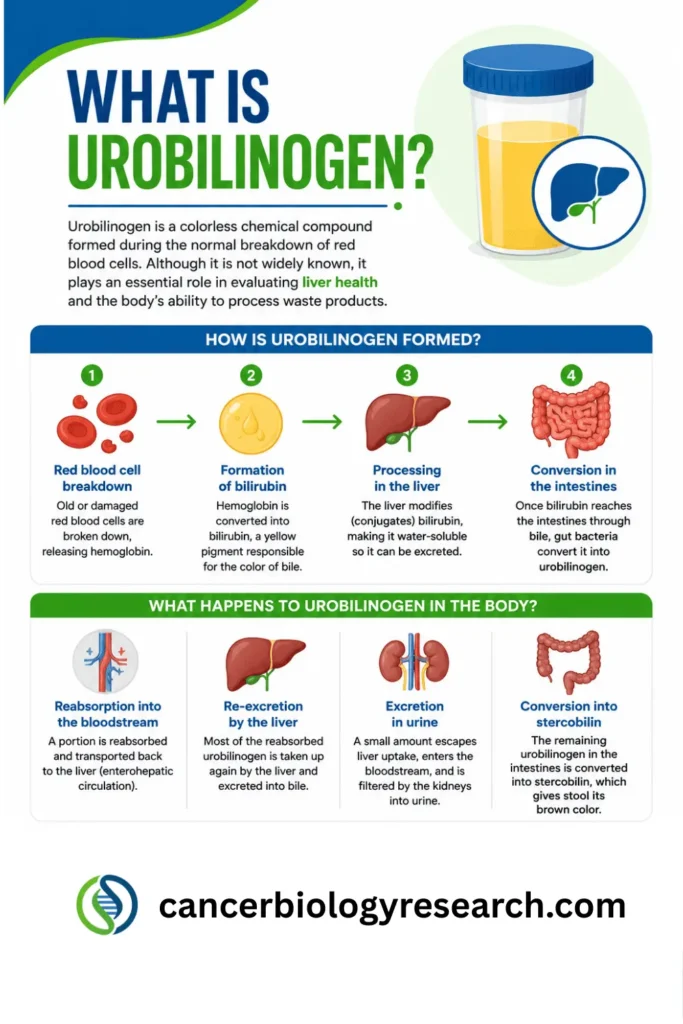
Urobilinogen is a colorless chemical compound formed during the normal breakdown of red blood cells. Although it is not widely known, it plays an essential role in evaluating liver health and the body’s ability to process waste products.
How Is Urobilinogen Formed?
The production of urobilinogen is part of a multi-step biological process involving bilirubin:
- Step 1: Red blood cell breakdown
Old or damaged red blood cells are broken down, releasing hemoglobin. - Step 2: Formation of bilirubin
Hemoglobin is converted into bilirubin, a yellow pigment responsible for the color of bile. - Step 3: Processing in the liver
The liver modifies (conjugates) bilirubin, making it water-soluble so it can be excreted. - Step 4: Conversion in the intestines
Once bilirubin reaches the intestines through bile, gut bacteria convert it into urobilinogen.
What Happens to Urobilinogen in the Body?
After it is formed in the intestines, urobilinogen follows different pathways:
- Reabsorption into the bloodstream
A portion is reabsorbed and transported back to the liver (enterohepatic circulation). - Re-excretion by the liver
Most of the reabsorbed urobilinogen is taken up again by the liver and excreted into bile. - Excretion in urine
A small amount escapes liver uptake, enters the bloodstream, and is filtered by the kidneys into urine. - Conversion into stercobilin
The remaining urobilinogen in the intestines is converted into stercobilin, which gives stool its brown color.
Why Is Urobilinogen Important?
Urobilinogen levels in urine reflect the balance between:
- Liver function
- Bile production and flow
- Red blood cell breakdown
Even small changes in this balance can lead to noticeable differences in urobilinogen levels, making it a useful marker in routine urine testing.
What Is the Urobilinogen Urine Test?
The urobilinogen urine test is a simple diagnostic test used to measure the amount of urobilinogen present in urine. It is usually part of a routine urinalysis and helps assess liver function, bile duct health, and red blood cell turnover.
What Is the Purpose of This Test?
Doctors use this test to detect abnormalities that may indicate underlying conditions. It is commonly ordered to:
- Evaluate liver function
- Help diagnose liver diseases such as hepatitis or cirrhosis
- Detect hemolytic disorders (increased red blood cell breakdown)
- Identify possible bile duct obstruction
How Is the Test Performed?
The test is quick and non-invasive, typically done using a urine sample:
- A fresh urine sample is collected in a sterile container
- A dipstick test strip is placed into the urine
- The strip changes color depending on the urobilinogen level
- Results are compared to a reference chart for interpretation
In some cases, results may be confirmed with more precise laboratory methods.
When Is the Test Recommended?
The urobilinogen urine test may be ordered in several situations:
- During a routine health checkup
- If symptoms of liver disease are present, such as:
- Jaundice (yellowing of skin or eyes)
- Dark urine
- Fatigue
- When abnormal results appear in other tests (e.g., bilirubin levels)
- To monitor existing liver or blood disorders
Why Is It Important?
This test provides valuable early clues about systemic health issues. Since urobilinogen levels can change before more obvious symptoms appear, it serves as a useful screening and monitoring tool in clinical practice.
Normal Urobilinogen Levels in Urine
Urobilinogen is normally present in urine in small (trace) amounts, reflecting healthy liver function and normal breakdown of red blood cells. Measuring these levels helps determine whether the body is processing bilirubin correctly.
What Is the Normal Range?
The typical reference range for urobilinogen in urine is:
- 0.1 to 1.0 mg/dL (milligrams per deciliter)
- Sometimes reported as 0.2 to 1.0 EU/dL (Ehrlich units per deciliter)
Values within this range are generally considered normal and do not indicate any underlying problem.
What Does a Normal Result Mean?
A normal urobilinogen level suggests that:
- The liver is functioning properly
- Bile flow from the liver to the intestines is normal
- Red blood cell breakdown is occurring at a healthy rate
In other words, the body is maintaining a proper balance in bilirubin metabolism.
Are Slight Variations Normal?
Yes, small fluctuations can occur and are usually not a cause for concern. Urobilinogen levels may vary due to:
- Hydration status
- Time of sample collection
- Minor dietary or metabolic changes
When Is It Considered Abnormal?
Results may be flagged as abnormal when:
- Levels are higher than the normal range, suggesting increased production or liver dysfunction
- Levels are very low or absent, which may indicate bile duct obstruction or impaired bilirubin flow
Because normal ranges can vary slightly between laboratories, results should always be interpreted in the context of clinical findings and other tests.
Causes of Increased Urobilinogen in Urine
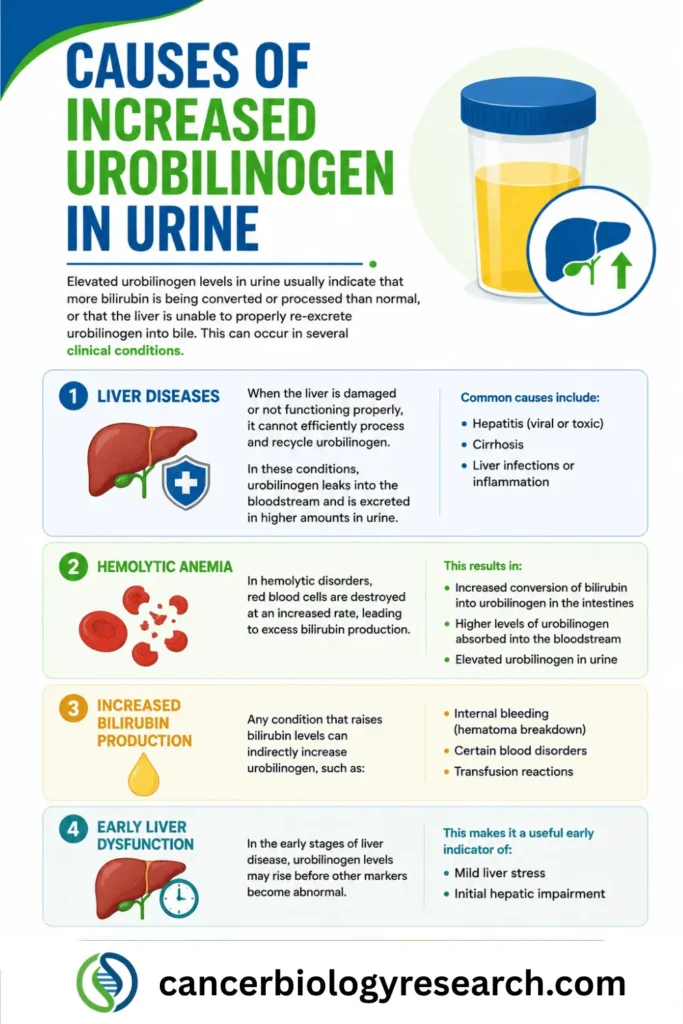
Elevated urobilinogen levels in urine usually indicate that more bilirubin is being converted or processed than normal, or that the liver is unable to properly re-excrete urobilinogen into bile. This can occur in several clinical conditions.
Liver Diseases
When the liver is damaged or not functioning properly, it cannot efficiently process and recycle urobilinogen.
Common causes include:
- Hepatitis (viral or toxic)
- Cirrhosis
- Liver infections or inflammation
In these conditions, urobilinogen leaks into the bloodstream and is excreted in higher amounts in urine.
Hemolytic Anemia
In hemolytic disorders, red blood cells are destroyed at an increased rate, leading to excess bilirubin production.
This results in:
- Increased conversion of bilirubin into urobilinogen in the intestines
- Higher levels of urobilinogen absorbed into the bloodstream
- Elevated urobilinogen in urine
Increased Bilirubin Production
Any condition that raises bilirubin levels can indirectly increase urobilinogen, such as:
- Internal bleeding (hematoma breakdown)
- Certain blood disorders
- Transfusion reactions
Early Liver Dysfunction
In the early stages of liver disease, urobilinogen levels may rise before other markers become abnormal.
This makes it a useful early indicator of:
- Mild liver stress
- Initial hepatic impairment
Causes of Low or Absent Urobilinogen
Low or absent urobilinogen in urine is less common than elevated levels, but it can be clinically significant. It usually indicates that urobilinogen is not being produced in the intestines or is not reaching the urine due to disruptions in bile flow or liver function.
Bile Duct Obstruction
One of the most common causes is a blockage in the bile ducts, which prevents bilirubin from reaching the intestines.
Possible causes include:
- Gallstones
- Tumors compressing the bile ducts
- Biliary strictures (narrowing of the ducts)
Without bilirubin in the intestines, urobilinogen cannot be formed, leading to very low or absent levels in urine.
Severe Liver Disease
In advanced liver damage, the liver may fail to produce or properly excrete bilirubin into bile.
This can result in:
- Reduced bilirubin entering the intestines
- Decreased urobilinogen formation
- Low urinary urobilinogen levels
Conditions may include severe hepatitis or liver failure.
Reduced Intestinal Bacterial Activity
Since urobilinogen is formed by intestinal bacteria, anything that disrupts gut flora can reduce its production.
Common factors include:
- Prolonged antibiotic use
- Significant changes in gut microbiota
Because these conditions can be serious, low urobilinogen results should always be evaluated alongside other findings, especially urine bilirubin and liver function tests.
Urobilinogen vs Bilirubin in Urine
Urobilinogen and bilirubin are closely related, but they provide different clinical insights when detected in urine. Understanding the difference between these two markers is essential for accurate diagnosis.
What Is the Difference?
- Bilirubin in urine
- Comes directly from the liver
- Normally not present in urine
- Appears when there is a problem with liver processing or bile excretion
- Urobilinogen in urine
- Formed in the intestines from bilirubin
- Normally present in small amounts
- Reflects the balance between liver function and red blood cell breakdown
Key Differences at a Glance
- Origin
- Bilirubin: Liver
- Urobilinogen: Intestines (from bilirubin)
- Normal presence in urine
- Bilirubin: Absent
- Urobilinogen: Trace amounts
- Clinical significance
- Bilirubin: Indicates liver disease or bile duct obstruction
- Urobilinogen: Indicates liver function or hemolysis
How Are They Interpreted Together?
Doctors often evaluate both markers together to narrow down possible diagnoses:
- High urobilinogen + negative bilirubin
- Suggests hemolytic anemia or increased red blood cell breakdown
- High urobilinogen + positive bilirubin
- Indicates liver disease (e.g., hepatitis or cirrhosis)
- Low/absent urobilinogen + positive bilirubin
- Suggests bile duct obstruction
Why This Comparison Matters
Looking at urobilinogen or bilirubin alone may not provide a complete picture. Their combined interpretation helps differentiate between:
- Liver dysfunction
- Biliary obstruction
- Blood-related disorders
This makes them valuable complementary markers in routine urinalysis.
Symptoms Associated with Abnormal Urobilinogen Levels
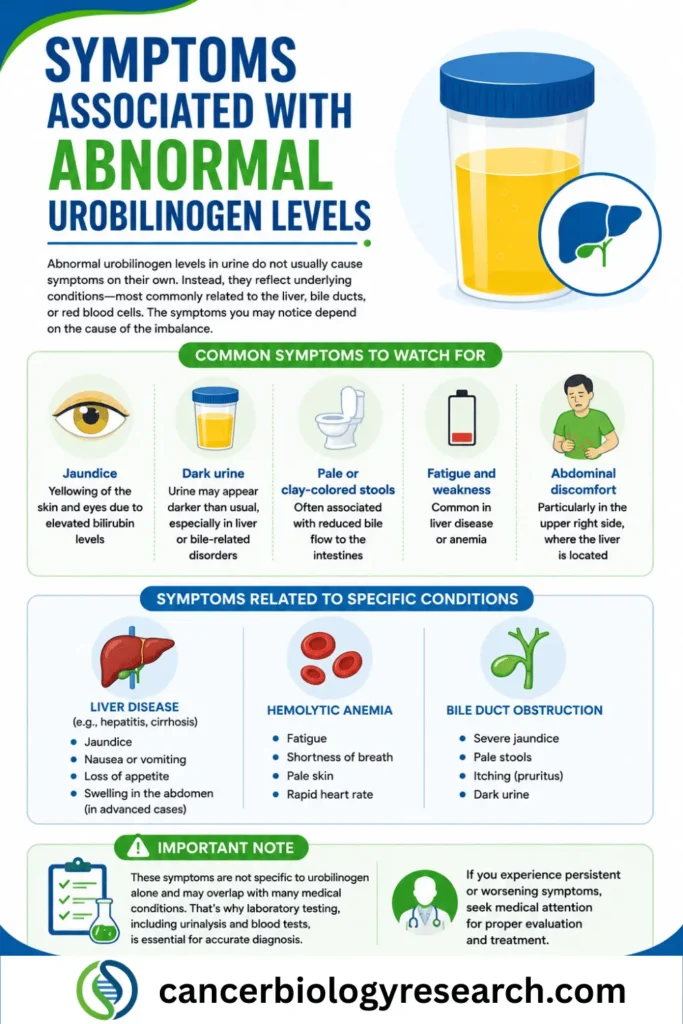
Abnormal urobilinogen levels in urine do not usually cause symptoms on their own. Instead, they reflect underlying conditions—most commonly related to the liver, bile ducts, or red blood cells. The symptoms you may notice depend on the cause of the imbalance.
Common Symptoms to Watch For
When urobilinogen levels are abnormal, the following symptoms may be present:
- Jaundice
Yellowing of the skin and eyes due to elevated bilirubin levels - Dark urine
Urine may appear darker than usual, especially in liver or bile-related disorders - Pale or clay-colored stools
Often associated with reduced bile flow to the intestines - Fatigue and weakness
Common in liver disease or anemia - Abdominal discomfort
Particularly in the upper right side, where the liver is located
Symptoms Related to Specific Conditions
Different patterns of symptoms can suggest different underlying causes:
- Liver disease (e.g., hepatitis, cirrhosis)
- Jaundice
- Nausea or vomiting
- Loss of appetite
- Swelling in the abdomen (in advanced cases)
- Hemolytic anemia
- Fatigue
- Shortness of breath
- Pale skin
- Rapid heart rate
- Bile duct obstruction
- Severe jaundice
- Pale stools
- Itching (pruritus)
- Dark urine
Important Note
These symptoms are not specific to urobilinogen alone and may overlap with many medical conditions. That’s why laboratory testing, including urinalysis and blood tests, is essential for accurate diagnosis.
If you experience persistent or worsening symptoms, medical evaluation is necessary to identify the underlying cause and begin appropriate treatment.
How to Maintain Healthy Liver Function
Keeping your liver healthy is essential for maintaining normal urobilinogen levels and overall metabolic balance. Since the liver plays a central role in processing bilirubin and detoxifying the body, simple lifestyle choices can make a significant difference.
Diet and Lifestyle Tips
Adopting a healthy lifestyle supports optimal liver function:
- Eat a balanced diet
- Include fruits, vegetables, whole grains, and lean proteins
- Choose healthy fats (olive oil, nuts, fatty fish)
- Stay hydrated
- Drinking enough water helps the liver process and eliminate waste
- Maintain a healthy weight
- Excess body fat is linked to fatty liver disease
- Exercise regularly
- Physical activity improves metabolism and reduces liver fat
- Limit processed foods
- Reduce intake of added sugars, refined carbs, and unhealthy fats
Avoiding Alcohol and Toxins
The liver is responsible for detoxifying harmful substances, so reducing exposure is key:
- Limit or avoid alcohol consumption
- Excess alcohol can damage liver cells and lead to liver disease
- Be cautious with medications
- Avoid overuse of drugs like Acetaminophen, which can harm the liver in high doses
- Minimize exposure to toxins
- Chemicals, pesticides, and environmental pollutants can strain liver function
Importance of Regular Checkups
Routine medical care helps detect liver problems early:
- Regular blood tests
- Liver function tests (LFTs) can identify abnormalities early
- Urinalysis
- Monitoring markers like urobilinogen provides additional insight
- Follow-up on abnormal results
- Early intervention can prevent disease progression
FAQs for Urobilinogen in Urine
It reflects how well your liver is functioning and how your body processes bilirubin and red blood cells.
It can signal liver disease or increased red blood cell breakdown, so it should be evaluated by a doctor.
Yes, dehydration can slightly concentrate urine and affect test results.
Improper sample handling, light exposure, and certain medications can lead to inaccurate readings.
Yes, some infections affecting the liver or blood can lead to elevated urobilinogen levels.
Medical Disclaimer: This content is for informational and educational purposes only and does not constitute medical advice. It is not intended to replace professional medical consultation, diagnosis, or treatment. Always seek the advice of a qualified healthcare provider with any questions regarding a medical condition.


