


Key Takeaways
- Blood in urine (hematuria) is a symptom, not a disease
- It can be caused by infections, kidney stones, or urinary tract conditions
- Some causes are mild, while others may be serious
- It may occur with or without pain
- Medical tests are necessary to identify the exact cause
- Early diagnosis helps prevent complications
- Any presence of blood in urine should be evaluated by a healthcare professional
What Is Blood in Urine (Hematuria)?
Blood in urine, medically known as hematuria, refers to the presence of red blood cells in the urine. It can be a sign of a minor issue, such as a urinary tract infection, or a more serious condition involving the kidneys or bladder. Because of this wide range of causes, hematuria should always be taken seriously and evaluated properly.
Hematuria is not a disease itself. It is a symptom that indicates something abnormal is happening somewhere in the urinary system, which includes the kidneys, ureters, bladder, and urethra.
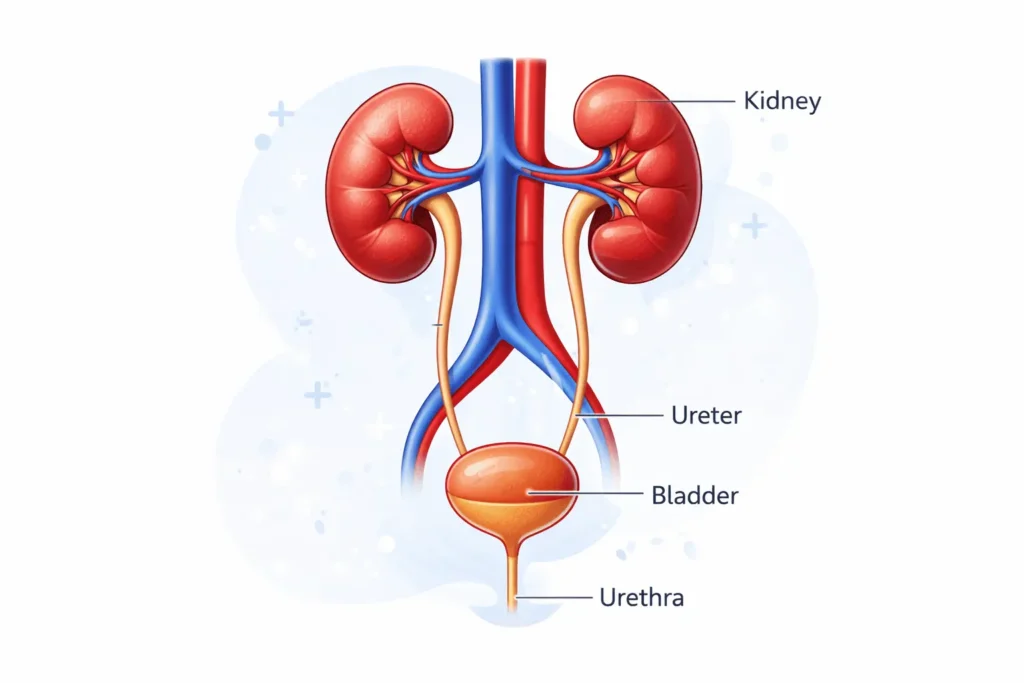
Types of Hematuria
There are two main types of hematuria, and understanding the difference is important for diagnosis.
Gross Hematuria (Visible Blood in Urine)
Gross hematuria occurs when blood is visible to the naked eye. The urine may appear:
- Pink
- Red
- Brown or cola-colored
The color depends on the amount of blood present and how long it has been in the urine. Even a small amount of blood can significantly change urine color.
Microscopic Hematuria
Microscopic hematuria is not visible without a microscope. It is usually detected during routine urine testing (urinalysis).
- The urine appears normal in color
- Red blood cells are found under microscopic examination
- It may be discovered incidentally during a health checkup
Why Blood in Urine Should Not Be Ignored
Even if it happens only once or without pain, blood in urine should not be dismissed. It may indicate:
- A urinary tract infection
- Kidney stones
- Kidney disease
- In rare cases, cancers of the urinary system
Early evaluation helps identify the underlying cause and prevents potential complications.
What Does Blood in Urine Look Like?
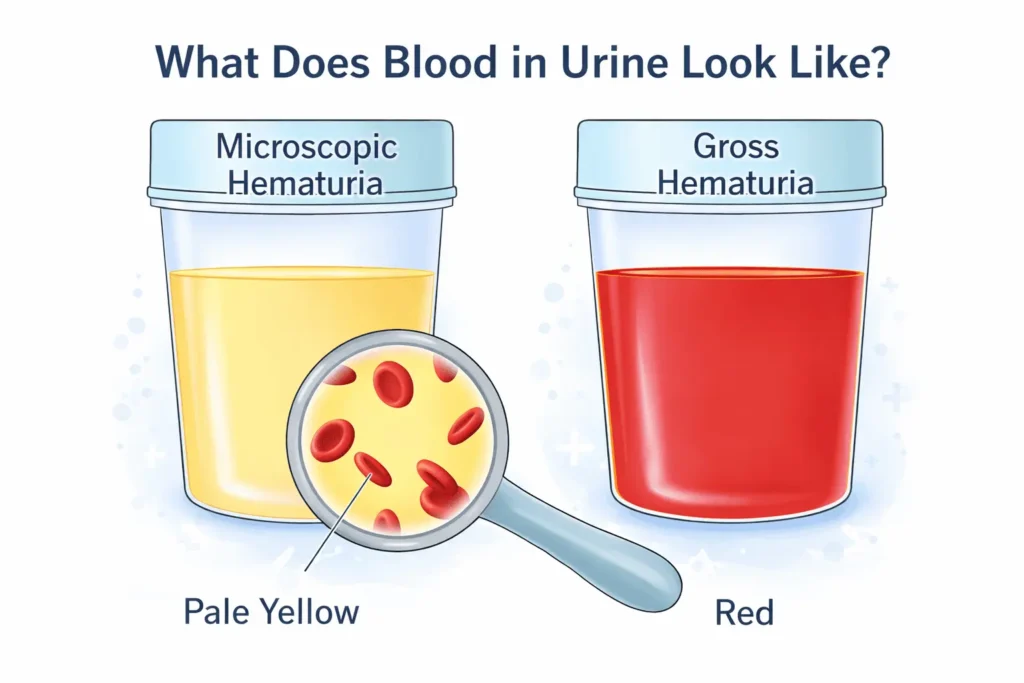
The appearance of blood in urine can vary significantly from person to person. In some cases, the change is obvious, while in others, it may only be detected through laboratory testing.
When blood is visible, the urine can take on different colors depending on the amount of blood present and how long it has been in the urinary tract.
Common Color Changes
Blood in urine does not always appear bright red. It may look like:
- Pink urine, often caused by a small amount of blood
- Red urine, indicating a more noticeable presence of blood
- Dark brown or cola-colored urine, which may suggest older blood
These variations can sometimes make it difficult to recognize that blood is the cause of the color change.
Clots in Urine
In some cases, blood may appear as small clots rather than evenly mixed with urine. This can look like:
- Tiny dark particles
- Thread-like structures
- Jelly-like clumps
The presence of clots can provide important clues about the source of bleeding and should always be evaluated by a healthcare professional.
Factors That Can Affect Urine Color
Not all red or dark urine is due to blood. Certain factors can mimic the appearance of hematuria, including:
- Foods such as beets, berries, or food dyes
- Medications that alter urine color
- Dehydration, which can make urine appear darker
Because of these possibilities, laboratory testing is often needed to confirm whether blood is actually present.
When Appearance Can Be Misleading
Sometimes, urine may look completely normal even when blood is present. This is why relying only on visual changes is not enough to rule out hematuria.
Any unusual or persistent change in urine color should be taken seriously and evaluated to determine the underlying cause.
Common Causes of Blood in Urine
Blood in urine can originate from any part of the urinary tract, including the kidneys, ureters, bladder, or urethra.
Urinary Tract Infections (UTIs)
Urinary tract infections are one of the most frequent causes of blood in urine, especially in women.
- Bacteria infect the bladder or urethra
- Inflammation irritates the lining of the urinary tract
- This irritation can lead to bleeding
Kidney Stones
Kidney stones can cause noticeable bleeding as they move through the urinary tract.
- Hard mineral deposits form in the kidneys
- Stones may scratch or irritate the lining of the urinary tract
- This can result in blood appearing in the urine
Bladder or Kidney Infections
Infections that reach the kidneys are more serious and can also cause hematuria.
- Infection spreads upward from the bladder
- Kidney tissue becomes inflamed
- Blood may leak into the urine
Enlarged Prostate (in Men)
In men, an enlarged prostate can interfere with normal urine flow.
- The prostate presses against the urethra
- This can lead to irritation and bleeding
- It becomes more common with age
Kidney Disease
Certain kidney conditions can cause blood to leak into the urine.
- Inflammation of the kidney filtering units (glomeruli)
- Damage to small blood vessels in the kidneys
- Often detected along with protein in urine
Cancers of the Urinary System
Although less common, cancers should always be considered, especially in high-risk individuals.
- Bladder cancer
- Kidney cancer
- Tumors can bleed into the urinary tract
This is particularly important in older adults or smokers.
Exercise-Induced Hematuria
Intense or prolonged physical activity can sometimes lead to temporary blood in urine.
- Common in long-distance runners
- Usually resolves on its own within a short period
Medications and Other Causes
Some medications and external factors can also lead to hematuria.
- Blood-thinning medications
- Trauma or injury to the urinary tract
- Certain medical procedures
Blood in Urine in Men, Women, and Special Cases
Blood in urine can present differently depending on age, sex, and specific physiological factors. In some groups, certain causes are more common, and interpretation may require additional care.
Blood in Urine in Women
In women, hematuria can sometimes be confused with blood from other sources.
- Menstrual blood may mix with urine and mimic hematuria
- Urinary tract infections are more common and a frequent cause
- Proper sample collection is important to avoid contamination
If there is any doubt, repeat testing may be needed to confirm the presence of blood in urine.
Blood in Urine in Men
In men, hematuria is often associated with conditions affecting the prostate or urinary tract.
- Prostate enlargement can interfere with urine flow
- Inflammation or irritation may lead to bleeding
- The likelihood of certain conditions increases with age
Evaluation may include additional tests focused on prostate health.
Blood in Urine in Children
In children, blood in urine can be concerning and should always be evaluated carefully.
- It may be linked to infections or inherited conditions
- Sometimes it appears after physical activity or minor illness
- In some cases, it is detected only during routine testing
Because children may not clearly describe symptoms, medical assessment is essential.
Blood in Urine During Pregnancy
Pregnancy requires special consideration when evaluating hematuria.
- Urinary infections are more frequent during pregnancy
- Changes in the urinary system can increase susceptibility
- Careful selection of diagnostic tests is important for safety
Any presence of blood in urine during pregnancy should be assessed promptly.
Blood in Urine Without Pain – Is It Dangerous?
Blood in urine without pain, also known as painless hematuria, can be easy to overlook. However, the absence of discomfort does not mean the condition is harmless. In some cases, it may be the only visible sign of an underlying problem.
Why Painless Hematuria Matters
Pain is often associated with conditions like infections or kidney stones. When blood appears without pain, it may indicate a different type of issue.
Possible concerns include:
- Early-stage bladder or kidney conditions
- Structural abnormalities in the urinary tract
- Chronic kidney disorders
Because there are no warning symptoms, the condition can go unnoticed for longer periods.
When It Can Be Serious
Painless hematuria is particularly important to evaluate because it is sometimes linked to more serious conditions.
Higher risk situations include:
- Persistent or recurring blood in urine
- Increasing age
- History of smoking
- Family history of urinary tract diseases
In these cases, further investigation is essential to rule out significant underlying causes.
When It May Be Less Concerning
In some situations, blood in urine without pain may be temporary and less serious.
Examples include:
- Mild irritation of the urinary tract
- Recent intense physical activity
- Minor, short-lived inflammation
Even in these cases, confirmation through testing is recommended to ensure there is no hidden condition.
Symptoms That May Accompany Blood in Urine
Blood in urine may occur on its own, but it is often accompanied by other symptoms that can provide important clues about the underlying cause. Paying attention to these signs can help guide diagnosis and determine how urgent the situation may be.
Urinary Symptoms
Changes in urination are commonly associated with hematuria, especially when the bladder or urethra is involved.
- Burning or pain during urination
- Frequent urge to urinate
- Difficulty starting or maintaining urine flow
- Feeling of incomplete bladder emptying
These symptoms are often linked to infections or irritation of the urinary tract.
Pain-Related Symptoms
Pain can vary in intensity and location depending on the source of the problem.
- Lower abdominal or pelvic discomfort
- Pain in the lower back or sides (flank pain)
- Sharp, severe pain that comes in waves
This type of pain is commonly seen in conditions affecting the kidneys or ureters.
Systemic Symptoms
Some causes of blood in urine may also produce general symptoms that affect the whole body.
- Fever or chills
- Fatigue or weakness
- Nausea or vomiting
These signs may suggest a more widespread infection or a condition involving the kidneys.
Changes in Urine Characteristics
In addition to the presence of blood, urine may show other noticeable changes.
- Cloudy appearance
- Strong or unusual odor
- Presence of sediment or particles
These changes can indicate infection or other abnormalities in the urinary system.
When Symptoms Are Absent
It is important to note that blood in urine can sometimes occur without any additional symptoms. In such cases, laboratory testing becomes essential to identify the cause.
Recognizing accompanying symptoms helps narrow down potential causes and determine whether immediate medical attention is needed.
How Is Blood in Urine Diagnosed?
Diagnosing blood in urine involves a step-by-step approach to confirm its presence and identify the underlying cause. Since hematuria can result from many different conditions, multiple tests are often needed to reach an accurate diagnosis.
Medical History and Physical Examination
The evaluation usually begins with a detailed medical history and physical exam.
Your healthcare provider may ask about:
- When the blood in urine was first noticed
- Whether it is persistent or occasional
- Associated symptoms such as pain or fever
- Recent exercise, infections, or injuries
- Medication use
This initial assessment helps guide the choice of further tests.
Urinalysis
Urinalysis is the first and most important laboratory test.
- Confirms the presence of red blood cells
- Detects signs of infection
- Identifies protein or other abnormalities
It is often the first step in distinguishing between different causes of hematuria.
Urine Culture
If an infection is suspected, a urine culture may be performed.
- Identifies bacteria in the urine
- Helps determine the most effective treatment
This test is particularly useful when urinary symptoms are present.
Blood Tests
Blood tests are used to evaluate overall kidney function and detect systemic conditions.
- Measure kidney function markers
- Identify signs of inflammation or disease
Common tests include:
- Serum Creatinine: A vital test that measures a waste product in your blood to check how effectively your kidneys are filtering.
- Blood Urea Nitrogen (BUN): Measures another waste product; high levels can indicate that the kidneys aren’t removing urea normally.
- Complete Metabolic Panel (CMP): A broader panel that includes creatinine and BUN, along with electrolytes and markers for liver function, to provide a comprehensive look at your internal balance.
- Complete Blood Count (CBC): This test checks for anemia (low red blood cell count, which could result from significant bleeding) and signs of infection (elevated white blood cell count).
- Inflammatory Markers (CRP or ESR): These measure general systemic inflammation, which can point toward an autoimmune or infectious cause.
- Complement Proteins: Specialized tests that help diagnose specific kidney inflammatory diseases like glomerulonephritis.
These tests provide additional information about how well the kidneys are working.
Imaging Tests
Imaging helps visualize the urinary tract and detect structural abnormalities.
Common options include:
- Ultrasound to examine kidneys and bladder
- CT scan for detailed imaging and detection of stones or masses
These tests are essential when a structural cause is suspected.
Cystoscopy
Cystoscopy allows direct visualization of the bladder and urethra.
- A thin camera is inserted through the urethra
- Helps detect tumors, stones, or abnormalities
This procedure is often recommended when the source of bleeding is unclear.
Putting the Results Together
No single test can identify all causes of blood in urine. Diagnosis usually relies on combining findings from:
- Laboratory tests
- Imaging studies
- Clinical evaluation
This comprehensive approach ensures that both common and serious causes are properly identified.
When Should You See a Doctor?
Blood in urine should always be taken seriously, even if it happens only once or goes away quickly. In many cases, it is not possible to determine the cause without proper medical evaluation.
Seek Medical Attention Immediately
Some situations require prompt or urgent care. You should see a doctor as soon as possible if you experience:
- Visible blood in urine that persists
- Blood clots in urine
- Severe pain in the back, side, or abdomen
- Fever or chills along with urinary symptoms
- Difficulty urinating or inability to pass urine
These signs may indicate a more serious condition that needs immediate attention.
Do Not Ignore Even Mild or Occasional Cases
Even if symptoms are mild or absent, medical evaluation is still important.
You should schedule a consultation if:
- Blood in urine appears without pain
- The episode occurs more than once
- It is detected during a routine urine test
- There is no clear explanation for the bleeding
Early evaluation helps identify potential problems before they progress.
Higher-Risk Individuals
Some people should be especially cautious and seek medical advice promptly.
This includes individuals who:
- Have a history of smoking
- Have previous urinary tract conditions
- Have a family history of kidney or bladder disease
In these cases, hematuria may require more thorough investigation.
Treatment Options for Blood in Urine
Treatment for blood in urine depends entirely on the underlying cause. Since hematuria is a symptom rather than a disease, the goal is to identify and manage the condition responsible for the bleeding.
Treating Infections
When blood in urine is caused by a urinary tract infection or kidney infection, treatment focuses on eliminating the infection.
- Antibiotics are commonly prescribed
- Symptoms usually improve within a few days
- Follow-up testing may be needed to confirm resolution
Early treatment helps prevent the infection from spreading or recurring.
Managing Kidney Stones
If kidney stones are the cause, treatment depends on their size and location.
- Increased fluid intake to help pass small stones
- Medications to reduce pain and support stone passage
- Medical procedures for larger stones
Once the stone is passed or removed, bleeding typically resolves.
Addressing Prostate-Related Conditions
In men, prostate enlargement or inflammation may lead to hematuria.
- Medications to reduce prostate size or improve urine flow
- Monitoring for symptom progression
- Additional procedures in more advanced cases
Proper management helps relieve pressure on the urinary tract.
Treating Kidney Diseases
When hematuria is linked to kidney disorders, treatment is more complex and may involve long-term care.
- Medications to control inflammation or immune response
- Blood pressure management
- Regular monitoring of kidney function
The approach depends on the specific type of kidney disease.
Cancer-Related Treatments
If a tumor is identified, treatment will depend on its type, stage, and location.
- Surgical removal of the tumor
- Chemotherapy or other targeted treatments
- Ongoing monitoring after treatment
Adjusting Medications
In some cases, medications may contribute to bleeding.
- Review of current medications
- Dose adjustment or switching to alternatives
- Monitoring for improvement after changes
This should always be done under medical supervision.
Temporary or Mild Cases
Some cases of hematuria may resolve without specific treatment.
- Rest and hydration
- Avoiding intense physical activity
- Short-term monitoring
Treatment Options Summary Table
| Cause / Condition | Treatment Approach | Key Details |
|---|---|---|
| Urinary Tract Infections (UTIs) | Antibiotics | Symptoms usually improve within a few days; follow-up testing may be needed |
| Kidney Stones | Hydration, pain management, procedures | Small stones may pass naturally; larger stones may require medical intervention |
| Prostate Conditions (Men) | Medications, monitoring, procedures | Treatment helps improve urine flow and reduce pressure on the urinary tract |
| Kidney Diseases | Long-term medical management | Includes controlling inflammation, managing blood pressure, and regular monitoring |
| Urinary Tract Cancers | Surgery, chemotherapy, targeted therapy | Treatment depends on cancer type, stage, and location |
| Medication-Induced Hematuria | Medication adjustment | May involve changing dosage or switching drugs under medical supervision |
| Temporary / Mild Cases | Rest, hydration, monitoring | Often resolves on its own but may still require follow-up |
Prevention Tips
While not all cases of blood in urine can be prevented, certain habits can reduce the risk of underlying conditions that may lead to hematuria. Maintaining a healthy urinary system is key to prevention.
Stay Well Hydrated
Adequate fluid intake helps keep the urinary tract functioning properly.
- Dilutes urine and reduces irritation
- Helps flush out bacteria
- Lowers the risk of kidney stone formation
Drinking enough water daily is one of the simplest and most effective preventive measures.
Reduce the Risk of Infections
Good hygiene and lifestyle habits can help prevent urinary tract infections.
- Do not delay urination when you feel the urge
- Maintain proper personal hygiene
- Urinate after physical activity when needed
Preventing infections reduces inflammation and the likelihood of bleeding.
Protect Kidney Health
Healthy kidneys play a central role in preventing hematuria.
- Monitor blood pressure regularly
- Avoid excessive use of medications without medical advice
- Maintain a balanced diet
Regular health checkups can help detect early signs of kidney problems.
Prevent Kidney Stones
Certain lifestyle choices can lower the risk of stone formation.
- Stay hydrated throughout the day
- Limit excessive salt intake
- Maintain a balanced intake of nutrients
These steps help reduce the concentration of minerals that form stones.
Avoid Excessive Physical Strain
Intense or prolonged exercise can sometimes lead to temporary hematuria.
- Gradually increase exercise intensity
- Allow time for recovery
- Stay hydrated during physical activity
Balanced exercise reduces unnecessary stress on the body.
Regular Medical Checkups
Routine testing can help detect issues early, even before symptoms appear.
- Periodic urine tests when recommended
- Follow-up if abnormalities are detected
- Monitoring if you have known risk factors
Early detection plays a key role in preventing complications.
FAQs
Not always. Blood in urine can result from mild conditions such as infections or temporary irritation. However, it can also indicate more serious problems, so it should always be evaluated by a healthcare professional.
Dehydration does not directly cause blood in urine, but it can concentrate urine and irritate the urinary tract. It may also increase the risk of kidney stones, which can lead to bleeding.
Hematuria can be associated with cancers of the urinary system, including bladder cancer, kidney cancer, and, less commonly, cancers affecting the ureters or prostate.
Stress alone does not directly cause blood in urine. However, it may contribute to behaviors or conditions, such as dehydration or increased physical strain, that could be linked to hematuria.
The duration depends on the cause. It may resolve within a short time in mild cases, but persistent or recurring hematuria requires medical evaluation to identify and treat the underlying condition.
References
- Davis R, Jones JS, Barocas DA, Castle EP, Lang EK, Leveillee RJ, Messing EM, Miller SD, Peterson AC, Turk TM, Weitzel W; American Urological Association. Diagnosis, evaluation and follow-up of asymptomatic microhematuria (AMH) in adults: AUA guideline. J Urol. 2012 Dec;188(6 Suppl):2473-81. doi: 10.1016/j.juro.2012.09.078.
- National Institute of Diabetes and Digestive and Kidney Diseases (NIDDK).
Hematuria (Blood in the Urine).
https://www.niddk.nih.gov/health-information/urologic-diseases/hematuria-blood-urine - Cleveland Clinic. Hematuria (Blood in Urine). https://my.clevelandclinic.org/health/diseases/15234-hematuria
- National Health Service (NHS). Blood in urine. https://www.nhs.uk/conditions/blood-in-urine/
- American Urological Association (AUA). Hematuria Guidelines and Clinical Frameworks.
- Simerville JA, Maxted WC, Pahira JJ. Urinalysis: a comprehensive review. Am Fam Physician. 2005 Mar 15;71(6):1153-62. https://www.aafp.org/pubs/afp/issues/2005/0315/p1153.html
- Mohr DN, Offord KP, Owen RA, Melton LJ 3rd. Asymptomatic microhematuria and urologic disease. A population-based study. JAMA. 1986 Jul 11;256(2):224-9. https://jamanetwork.com/journals/jama/article-abstract/361191
- European Association of Urology (EAU). Guidelines on Urological Infections and Hematuria.
Medical Disclaimer
This content is for informational and educational purposes only and does not constitute medical advice. It is not intended to replace professional medical consultation, diagnosis, or treatment. Always seek the advice of a qualified healthcare provider with any questions regarding a medical condition.


 means, its common causes in men and women, symptoms, diagnostic tests, and treatment options.)