

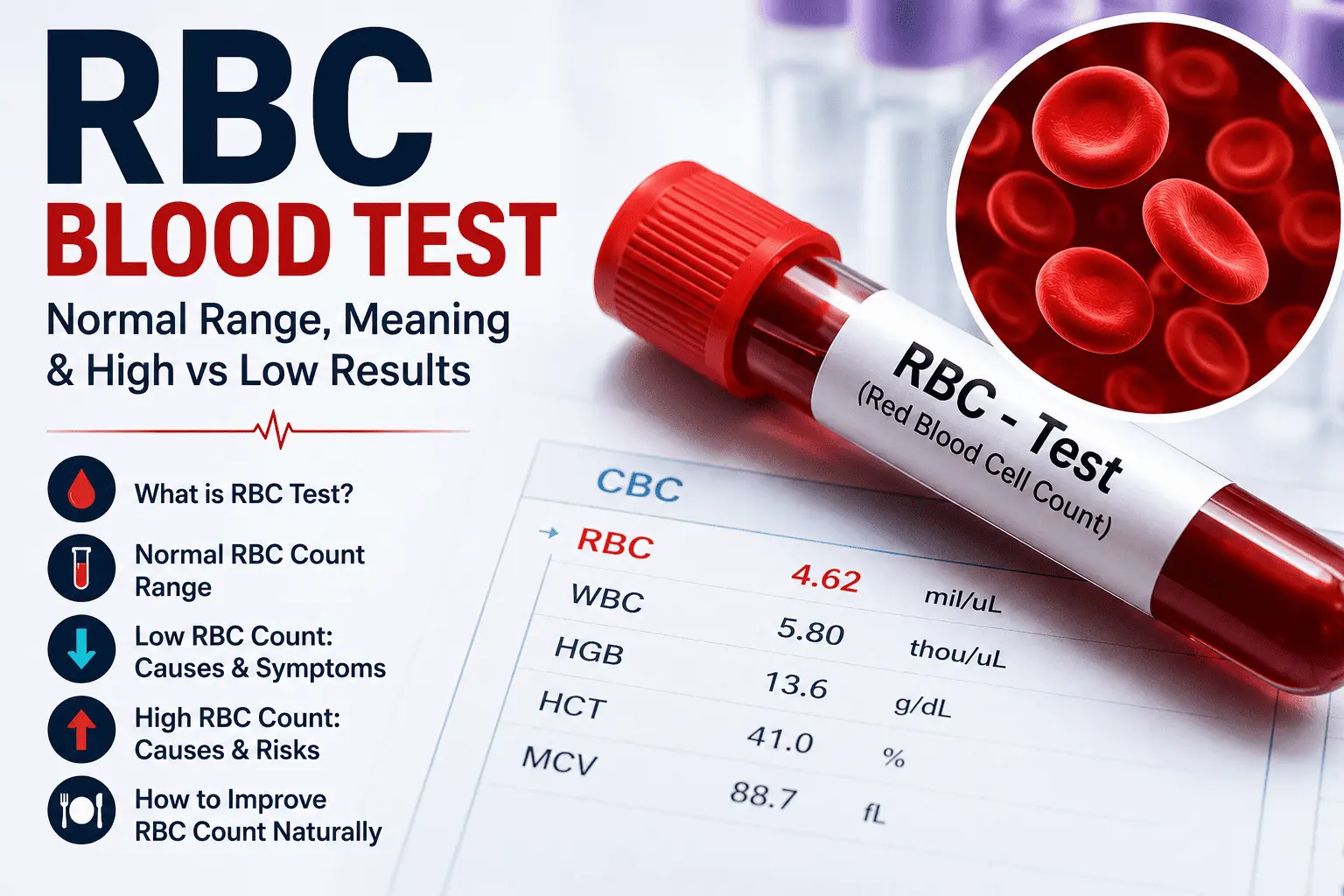
What Is an RBC Blood Test?
An RBC blood test, also known as a red blood cell count, is a common laboratory test used to measure the number of red blood cells (RBCs) in your blood. Red blood cells play a crucial role in your body by carrying oxygen from your lungs to tissues and organs and transporting carbon dioxide back to the lungs for removal.
If you’ve ever had routine blood work, your RBC count was likely included as part of a Complete Blood Count (CBC). This test helps doctors evaluate your overall health and detect a wide range of conditions, including anemia, infections, and blood disorders.
What Does RBC Mean in a Blood Test?
The term RBC stands for red blood cells. These cells contain a protein called hemoglobin, which binds oxygen and gives blood its red color. Without enough healthy RBCs, your body may not get sufficient oxygen, leading to fatigue and other symptoms.
Why Is an RBC Blood Test Important?
Doctors order an RBC blood test to:
- Diagnose anemia or polycythemia
- Monitor chronic diseases
- Evaluate symptoms like fatigue, dizziness, or weakness
- Check overall blood health
It is often interpreted alongside other parameters such as hemoglobin (Hb) and hematocrit (Hct) to provide a complete picture of your blood health.
Normal RBC Count: What Is a Healthy Range?
Understanding your RBC count is key to interpreting your blood test results. The normal range can vary depending on age, sex, and physiological conditions.
Normal RBC Count Ranges
- Men: 4.7 to 6.1 million cells per microliter
- Women: 4.2 to 5.4 million cells per microliter
- Children: 4.0 to 5.5 million cells per microliter
These values may vary slightly depending on the laboratory and measurement methods used.
Factors That Affect RBC Count
Several factors can influence your RBC levels, including:
- Altitude: Higher altitudes may increase RBC count due to lower oxygen levels
- Hydration status: Dehydration can falsely elevate RBC count
- Pregnancy: RBC levels may appear lower due to increased plasma volume
- Age and gender: Natural biological differences affect RBC production
When Is an RBC Count Considered Abnormal?
An RBC count outside the normal range may indicate an underlying health condition. However, a single abnormal result does not always mean disease—it must be interpreted in context with other tests and clinical symptoms.
Low RBC Blood Test Results (Causes and Symptoms)
A low RBC count typically indicates a condition known as anemia, where the body does not have enough red blood cells to carry adequate oxygen.
Common Causes of Low RBC Count
- Iron-deficiency anemia: The most common cause, due to insufficient iron for hemoglobin production
- Vitamin B12 or folate deficiency: Essential for RBC formation
- Chronic diseases: Such as kidney disease or cancer
- Bone marrow disorders: Affect RBC production
- Blood loss: From injury, surgery, or heavy menstruation
Symptoms of Low RBC Count
People with low RBC levels may experience:
- Fatigue and weakness
- Pale or yellowish skin
- Shortness of breath
- Dizziness or lightheadedness
- Cold hands and feet
When Should You Be Concerned?
If your RBC count is significantly low and accompanied by symptoms, medical evaluation is necessary. Persistent anemia can affect organ function and quality of life.
High RBC Blood Test Results (Causes and Risks)
A high RBC count is known as polycythemia and may indicate that your body is producing too many red blood cells.
Common Causes of High RBC Count
- Dehydration: Reduces plasma volume, making RBC count appear higher
- Smoking: Reduces oxygen levels, stimulating RBC production
- Chronic lung disease: Such as COPD
- Heart disease: Affecting oxygen delivery
- Polycythemia vera: A rare bone marrow disorder
Symptoms of High RBC Count
- Headaches
- Dizziness
- Blurred vision
- High blood pressure
- Red or flushed skin
Risks and Complications
High RBC levels can make blood thicker, increasing the risk of:
- Blood clots
- Stroke
- Heart attack
Proper diagnosis and management are essential to prevent complications.
RBC Blood Test Procedure: What to Expect
The RBC blood test procedure is simple and quick.
How the Test Is Done
- A healthcare professional draws blood from a vein, usually in your arm
- The sample is sent to a laboratory for analysis
- Results are typically available within 24–48 hours
Do You Need to Prepare?
In most cases, no special preparation is required. However, your doctor may give specific instructions depending on other tests being performed.
Is the Test Painful?
You may feel a slight pinch during the blood draw, but the procedure is generally painless and safe.
How to Improve Your RBC Count Naturally
If your RBC count is abnormal, lifestyle and dietary changes can help improve your levels.
Diet Tips to Boost RBC Count
Include foods rich in:
- Iron: Red meat, spinach, lentils
- Vitamin B12: Eggs, dairy, fish
- Folate: Leafy greens, beans, citrus fruits
Lifestyle Changes
- Stay hydrated
- Exercise regularly
- Avoid smoking
- Manage chronic conditions
When Are Supplements Needed?
Doctors may recommend iron, vitamin B12, or folic acid supplements if deficiencies are diagnosed. Always consult a healthcare provider before starting supplements.
RBC Blood Test vs Other Blood Tests
The RBC count is often evaluated alongside other blood parameters.
RBC vs Hemoglobin
- RBC count: Number of red blood cells
- Hemoglobin: Amount of oxygen-carrying protein
RBC vs Hematocrit
- Hematocrit: Percentage of blood volume made up of RBCs
Part of a Complete Blood Count (CBC)
The RBC test is one component of the CBC, which also measures white blood cells and platelets, providing a comprehensive overview of your blood health.
FAQs
RBC refers to red blood cells, which carry oxygen throughout the body.
Levels significantly below or above the normal range may indicate serious conditions and require medical evaluation.
Yes, dehydration can falsely increase RBC levels due to reduced plasma volume.
It depends on your health condition, but it is typically included in routine blood tests.
It can be, especially if it leads to thickened blood and increased risk of clotting.
Conclusion
The RBC blood test is a vital diagnostic tool that provides important insights into your overall health. Whether your RBC count is high, low, or normal, understanding what these numbers mean can help you take proactive steps toward better health.
Regular monitoring, a balanced diet, and proper medical care are essential for maintaining healthy red blood cell levels. If you notice symptoms or receive abnormal results, consult your healthcare provider for further evaluation and guidance.
Medical Disclaimer: This content is for informational and educational purposes only and does not constitute medical advice. It is not intended to replace professional medical consultation, diagnosis, or treatment. Always seek the advice of a qualified healthcare provider with any questions regarding a medical condition.


