


What Are Ketones in Urine?
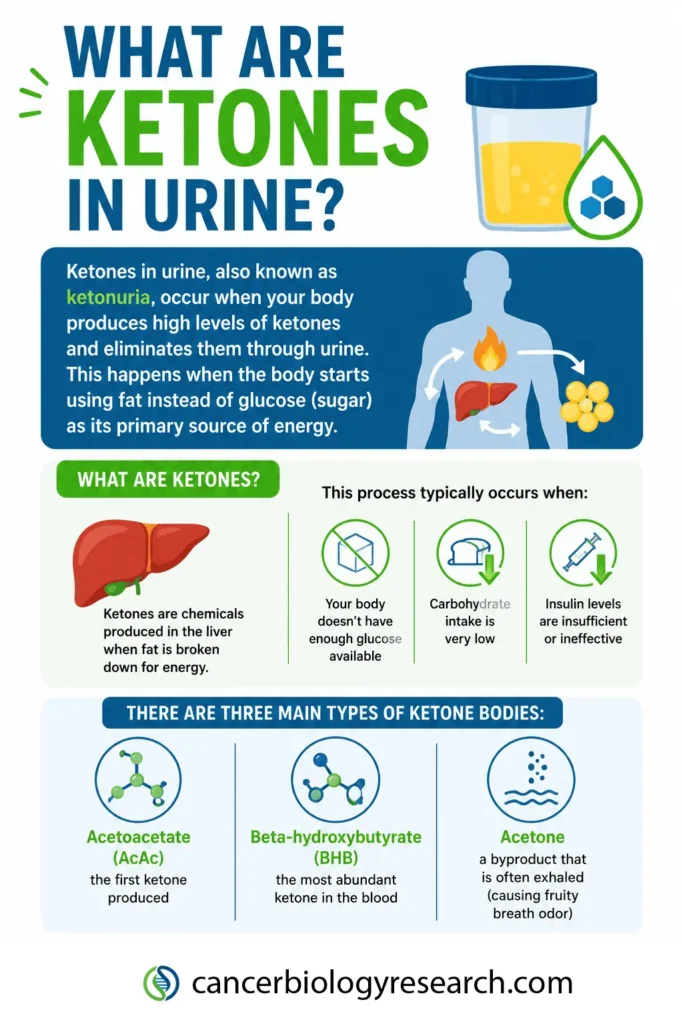
Ketones in urine, also known as ketonuria, occur when your body produces high levels of ketones and eliminates them through urine. This usually happens when the body starts using fat instead of glucose (sugar) as its primary source of energy.
What Are Ketones?
Ketones are chemicals produced in the liver when fat is broken down for energy. This process typically occurs when:
- Your body doesn’t have enough glucose available
- Carbohydrate intake is very low
- Insulin levels are insufficient or ineffective
There are three main types of ketone bodies:
- Acetoacetate (AcAc) – the first ketone produced
- Beta-hydroxybutyrate (BHB) – the most abundant ketone in the blood
- Acetone – a byproduct that is often exhaled (causing fruity breath odor)
Causes of Ketones in Urine
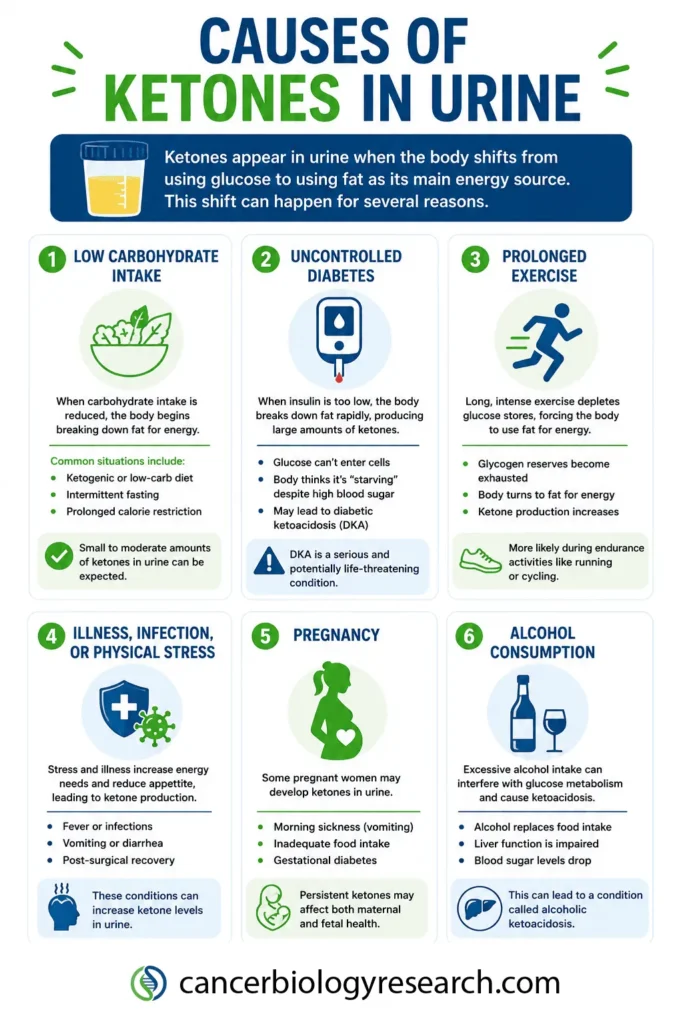
Ketones appear in urine when the body shifts from using glucose to using fat as its main energy source. This shift can happen for several reasons, ranging from normal metabolic changes to underlying health conditions.
Low Carbohydrate Intake
When carbohydrate intake is reduced, the body has less glucose available for energy. As a result, it begins breaking down fat, leading to ketone production.
Common situations include:
- Following a ketogenic or low-carb diet
- Intermittent fasting or skipping meals
- Prolonged calorie restriction
In these cases, small to moderate amounts of ketones in urine can be expected.
Uncontrolled Diabetes
One of the most important causes of ketones in urine is poorly controlled diabetes, particularly type 1 diabetes.
When insulin levels are too low:
- Glucose cannot enter cells effectively
- The body perceives a state of “starvation” despite high blood sugar
- Fat is broken down rapidly, producing large amounts of ketones
This can lead to diabetic ketoacidosis (DKA), a serious and potentially life-threatening condition.
Prolonged Exercise
Extended periods of intense physical activity can deplete the body’s glucose stores. When this happens:
- Glycogen reserves become exhausted
- The body turns to fat for energy
- Ketone production increases
This is more likely during endurance activities such as long-distance running or cycling.
Illness, Infection, or Physical Stress
During illness or stress, the body’s energy demands increase. At the same time, appetite may decrease, leading to reduced carbohydrate intake.
Possible triggers include:
- Fever or infections
- Vomiting or diarrhea
- Post-surgical recovery
These conditions can promote fat breakdown and increase ketone levels in urine.
Pregnancy
Some pregnant women may develop ketones in their urine, especially if they experience:
- Morning sickness with frequent vomiting
- Inadequate food intake
- Gestational diabetes
Monitoring is important because persistent ketones may affect both maternal and fetal health.
Alcohol Consumption
Excessive alcohol intake can interfere with normal glucose metabolism and lead to a condition known as alcoholic ketoacidosis.
This may occur when:
- Alcohol replaces food intake
- Liver function is impaired
- Blood sugar levels drop
Symptoms Associated with Ketones in Urine
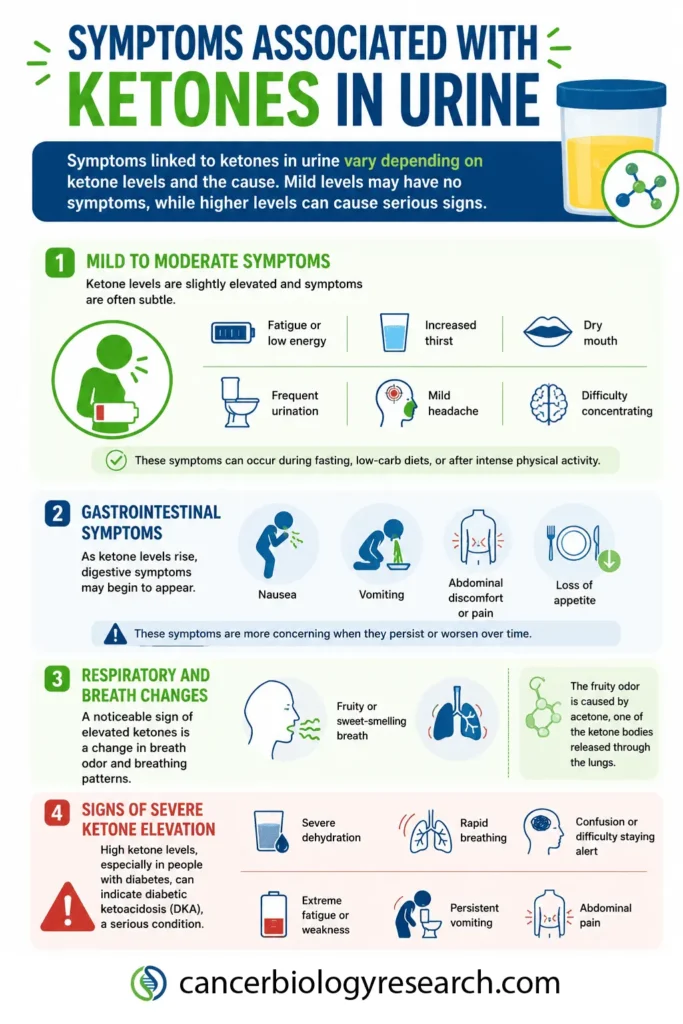
The symptoms linked to ketones in urine can vary depending on how high the ketone levels are and what is causing them. In some cases, especially with mild ketonuria, there may be no noticeable symptoms at all. However, higher levels can lead to more obvious and serious signs.
Mild to Moderate Symptoms
When ketone levels are slightly elevated, symptoms are often subtle and may be overlooked.
Common signs include:
- Fatigue or low energy
- Increased thirst
- Dry mouth
- Frequent urination
- Mild headache
- Difficulty concentrating
These symptoms can occur during fasting, low-carb diets, or after intense physical activity.
Gastrointestinal Symptoms
As ketone levels rise, digestive symptoms may begin to appear.
These can include:
- Nausea
- Vomiting
- Abdominal discomfort or pain
- Loss of appetite
These symptoms are more concerning when they persist or worsen over time.
Respiratory and Breath Changes
One of the more noticeable signs of elevated ketones is a change in breath odor.
You may experience:
- Fruity or sweet-smelling breath
- Rapid or deep breathing
The fruity odor is caused by acetone, one of the ketone bodies released through the lungs.
Signs of Severe Ketone Elevation
High levels of ketones, especially in people with diabetes, can indicate a serious condition known as diabetic ketoacidosis.
Warning signs include:
- Severe dehydration
- Rapid breathing
- Confusion or difficulty staying alert
- Extreme fatigue or weakness
- Persistent vomiting
- Abdominal pain
How Ketones in Urine Are Tested and Diagnosed
Detecting ketones in urine is a simple and widely used method to assess how the body is using energy. Testing is especially important for people with diabetes, those who are ill, or anyone experiencing symptoms linked to high ketone levels.
Urine Dipstick Test
The most common way to check for ketones is the urine dipstick test. It is quick, non-invasive, and can be done at home or in a clinical setting.
How it works:
- A test strip is dipped into a urine sample
- The strip changes color based on the level of ketones present
- Results are compared to a color chart provided with the test kit
Typical result categories include:
- Negative – no ketones detected
- Trace – very small amount
- Small to moderate – elevated levels
- Large – high ketone levels that may require medical attention
This post may contain affiliate links. As an Amazon Associate, I earn from qualifying purchases at no extra cost to you.

- User-Friendly and Easy to Use
- 150 Strips – A Family Size Pack
- Convenient Wellness Insight
Blood Ketone Testing
Blood testing provides a more accurate and real-time measurement of ketone levels, particularly beta-hydroxybutyrate.
Key points:
- Uses a small blood sample from a finger prick
- Often performed with a specialized meter
- More precise than urine testing, especially in urgent situations
This method is commonly recommended for people with diabetes who need close monitoring.
When Should You Test for Ketones?
Testing is advised in several situations where ketone production is more likely.
You should consider testing if you:
- Have diabetes and high blood sugar levels
- Are feeling unwell, especially with nausea or vomiting
- Are fasting or following a strict low-carb diet
- Are pregnant and experiencing symptoms like vomiting
- Have symptoms such as fatigue, fruity breath, or rapid breathing
Interpreting Test Results
Understanding the results is essential for deciding what to do next.
General guidance:
- Negative or trace levels are usually not a concern
- Small to moderate levels may require monitoring and lifestyle adjustments
- High levels can indicate a serious condition and should not be ignored
For people with diabetes, high ketone levels combined with high blood glucose may signal diabetic ketoacidosis and require urgent care.
Diagnosis and Medical Evaluation
If ketones are consistently present or levels are high, a healthcare provider may perform further evaluation.
This can include:
- Blood glucose testing
- Blood ketone measurement
- Electrolyte and acid-base balance tests
- Assessment of underlying causes such as infection or insulin deficiency
Treatment and Management of Ketones in Urine
Managing ketones in urine focuses on correcting the underlying cause and restoring the body’s normal energy balance. The right approach depends on whether ketone production is due to lifestyle factors, temporary conditions, or a medical issue such as diabetes.
Addressing the Underlying Cause
The first step is to identify why ketones are being produced in excess.
General approaches include:
- Increasing carbohydrate intake if levels are low due to dieting or fasting
- Treating infections or illnesses that may be triggering ketone production
- Adjusting physical activity if excessive exercise is contributing
- Ensuring adequate calorie intake, especially during recovery or pregnancy
Correcting the root cause often leads to a reduction in ketone levels.
Managing Diabetes Effectively
For individuals with diabetes, proper blood sugar control is essential to prevent ketone buildup.
Key strategies include:
- Taking insulin or medications as prescribed
- Monitoring blood glucose levels regularly
- Checking ketones during periods of high blood sugar or illness
- Following a personalized diabetes management plan
If ketone levels rise alongside high blood sugar, medical advice should be sought promptly.
Hydration and Fluid Intake
Staying well hydrated helps the body eliminate excess ketones through urine.
Helpful tips:
- Drink plenty of water throughout the day
- Consider oral rehydration solutions if dehydration is present
- Avoid sugary or alcoholic drinks that may worsen the condition
Proper hydration supports kidney function and helps rebalance metabolism.
Dietary Adjustments
Nutrition plays a key role in managing ketone levels.
Depending on the cause, recommendations may include:
- Reintroducing healthy carbohydrates such as whole grains, fruits, and vegetables
- Eating regular, balanced meals to maintain stable energy levels
- Avoiding extreme dietary restrictions unless medically supervised
For those intentionally following a ketogenic diet, monitoring ketone levels helps ensure they remain within a safe range.
When to Seek Medical Attention
Some situations require prompt medical care to prevent complications.
Seek medical help if you experience:
- High ketone levels on repeated testing
- Persistent nausea or vomiting
- Abdominal pain or difficulty breathing
- Confusion or unusual drowsiness
- High blood sugar levels along with ketones
These signs may indicate a serious condition that needs urgent treatment.
FAQs
It means your body is using fat instead of glucose for energy, leading to the production of ketones that are excreted in urine.
Not always. Small amounts can be normal during fasting or low-carb diets, but high levels may indicate a serious condition, especially in people with diabetes.
Yes. Dehydration can contribute to ketone production by reducing glucose availability and concentrating ketones in urine.
Moderate to large amounts on a urine test are considered high and may require medical attention, particularly if symptoms are present.
You can reduce ketones by staying hydrated, eating enough carbohydrates, and treating any underlying condition such as uncontrolled diabetes.
Yes, especially if you have diabetes, are sick, fasting, or experiencing symptoms like nausea or fatigue.
Yes. This is expected, as the diet is designed to shift the body into fat-burning mode, producing ketones.
Medical Disclaimer: This content is for informational and educational purposes only and does not constitute medical advice. It is not intended to replace professional medical consultation, diagnosis, or treatment. Always seek the advice of a qualified healthcare provider with any questions regarding a medical condition.


