

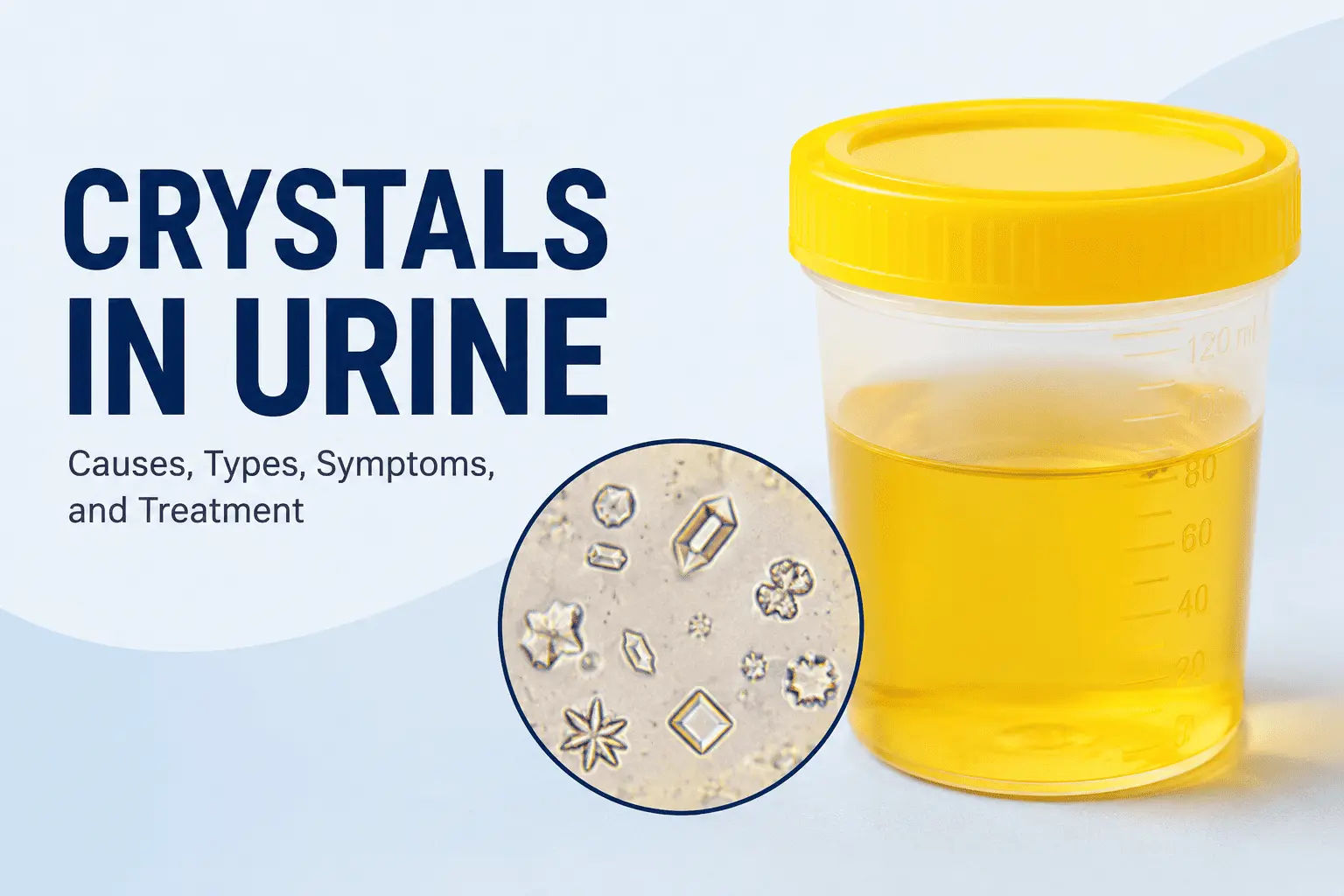
What Are Crystals in Urine?
Crystals in urine, also known as crystalluria, are solid particles that form when certain minerals and substances in the urine become highly concentrated. Under normal conditions, urine contains dissolved salts and waste products. However, when these substances exceed their solubility, they can crystallize.
Crystals can be found during a routine urinalysis and may be harmless in small amounts. In many cases, they form temporarily due to dehydration or dietary factors. However, persistent or large amounts of crystals may indicate an underlying health issue or increase the risk of kidney stone formation.
Several factors influence crystal formation in urine:
- Urine concentration: Highly concentrated urine promotes crystallization
- Urine pH: Acidic or alkaline environments favor specific crystal types
- Temperature: Cooling of urine samples can encourage crystal formation
- Presence of certain substances: Excess minerals or metabolic byproducts
It is important to distinguish between occasional, harmless crystals and those associated with disease.
Common Types of Crystals Found in Urine
Different types of crystals can appear in urine, each with distinct shapes and clinical significance.
Calcium oxalate crystals
These are the most common type. They often appear as envelope-shaped structures and are associated with kidney stone formation. They can develop in both acidic and neutral urine.
Uric acid crystals
Typically found in acidic urine, these crystals may appear as rhomboid or needle-like shapes. They are often linked to high protein intake, gout, or increased cell turnover.
Struvite crystals
These crystals form in alkaline urine and are commonly associated with urinary tract infections caused by certain bacteria. They can lead to large kidney stones if untreated.
Cystine crystals
These are rare and usually indicate a genetic disorder called cystinuria. They appear as hexagonal crystals and are strongly associated with recurrent kidney stones.
Calcium phosphate crystals
Found in alkaline urine, these crystals may be linked to metabolic conditions or kidney disorders. They often appear as rosette or prism-shaped structures.
Identifying the type of crystal helps guide diagnosis and treatment.
Causes of Crystals in Urine
Crystals in urine can result from a variety of factors, ranging from simple lifestyle habits to more serious medical conditions.
Dehydration
One of the most common causes. When fluid intake is low, urine becomes concentrated, increasing the likelihood of crystal formation.
Dietary factors
Certain foods can contribute to crystal formation, including:
- High oxalate foods such as spinach, nuts, and chocolate
- High protein diets that increase uric acid levels
- Excess salt intake, which raises calcium excretion in urine
Urinary tract infections
Some bacteria can alter urine composition, promoting the formation of crystals such as struvite.
Metabolic disorders
Conditions that affect how the body processes substances can lead to abnormal crystal formation. Examples include:
- Gout, which increases uric acid levels
- Hypercalciuria, characterized by excess calcium in urine
Kidney stones
Crystals are often the building blocks of kidney stones. Persistent crystalluria may indicate an increased risk of stone development.
Medications
Certain drugs can contribute to crystal formation by altering urine chemistry.
Symptoms Associated with Urinary Crystals
In many cases, crystals in urine do not cause noticeable symptoms and are discovered incidentally during laboratory testing. However, when crystals accumulate or lead to complications such as kidney stones, symptoms may develop.
Common symptoms include:
- Pain in the lower back or side, especially if stones are present
- Blood in urine, giving it a pink or reddish color
- Pain or burning sensation during urination
- Frequent urge to urinate
- Cloudy or foul-smelling urine
Severe symptoms may indicate complications such as obstruction or infection and require prompt medical attention.
Diagnosis, Treatment, and Prevention
Diagnosis
Crystals in urine are typically detected through urinalysis. This includes:
- Microscopic examination to identify crystal type and quantity
- Measurement of urine pH
- Assessment of other parameters such as protein, glucose, and blood
If kidney stones are suspected, imaging tests such as ultrasound or CT scans may be recommended.
Treatment
Treatment depends on the underlying cause and type of crystals.
- Increasing fluid intake to dilute urine
- Dietary modifications based on crystal type
- Medications to manage underlying conditions such as gout or infections
- In cases of kidney stones, medical or surgical intervention may be required
Prevention
Preventing crystal formation focuses on maintaining healthy urine composition.
- Drink adequate water throughout the day
- Reduce intake of salt and high-risk foods
- Maintain a balanced diet
- Manage underlying medical conditions
- Follow medical advice if prone to kidney stones
When to see a doctor
Medical evaluation is recommended if:
- Crystals are consistently found in urine tests
- There is pain, blood in urine, or urinary discomfort
- You have a history of kidney stones
- Symptoms of infection are present
Early detection and proper management can help prevent complications and maintain urinary health.
FAQs
Crystals in urine usually mean that certain minerals have become concentrated and formed solid particles. This can be normal in small amounts but may indicate dehydration or an underlying condition if persistent.
Not always. Many cases are harmless, especially if caused by temporary factors like dehydration. However, some crystals can lead to kidney stones or signal medical conditions that require attention.
Common causes include dehydration, high intake of certain foods, urinary tract infections, metabolic disorders, and sometimes medications that affect urine composition.
Yes, in many cases they can disappear with proper hydration and dietary changes. However, persistent crystals may require medical evaluation and treatment.
You can reduce the risk by drinking enough water, maintaining a balanced diet, limiting salt and high-risk foods, and managing any underlying health conditions.
Medical Disclaimer: This content is for informational and educational purposes only and does not constitute medical advice. It is not intended to replace professional medical consultation, diagnosis, or treatment. Always seek the advice of a qualified healthcare provider with any questions regarding a medical condition.


