

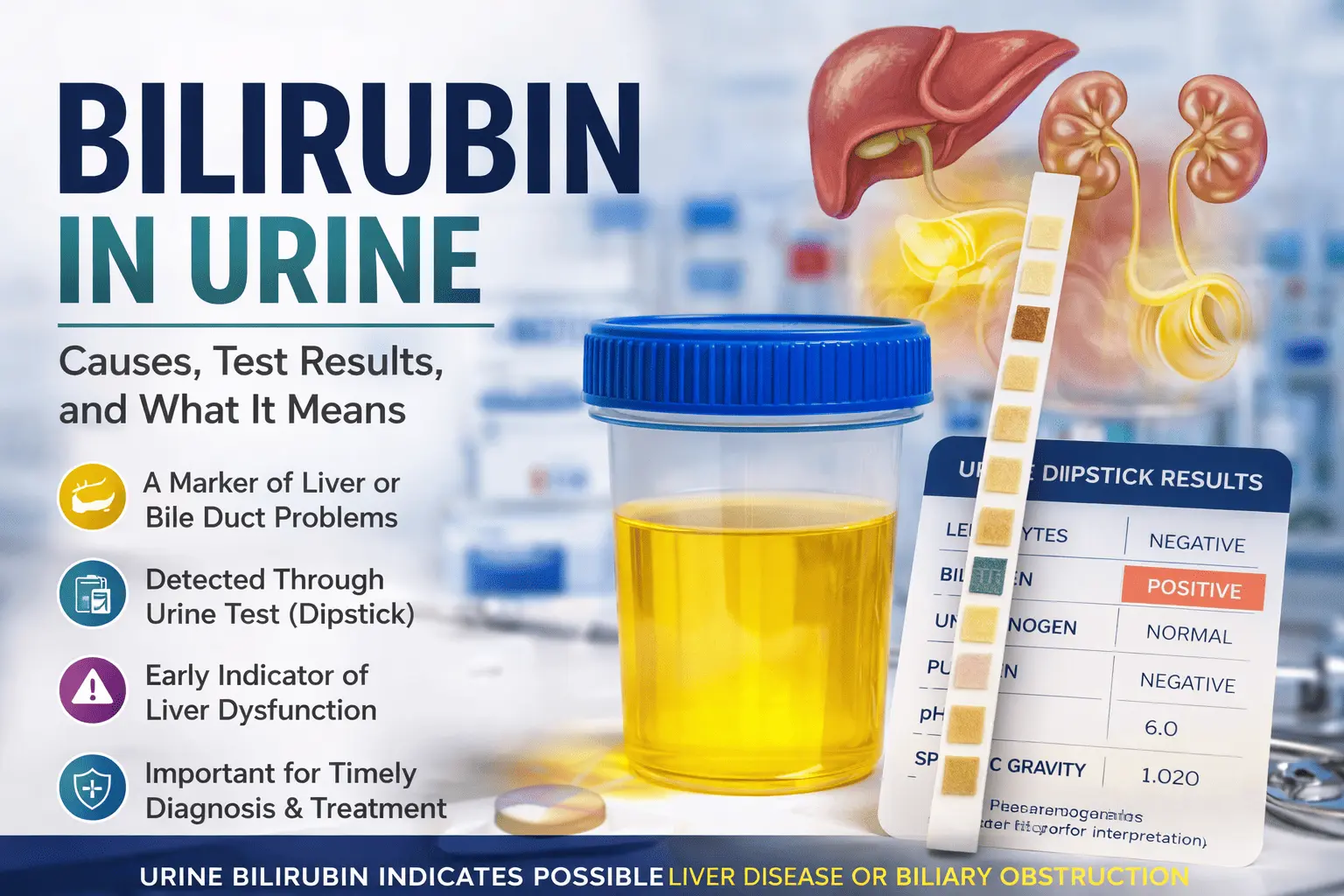
Key Takeaways
- Bilirubin in urine is always abnormal and usually indicates a problem with the liver or bile ducts.
- It reflects the presence of conjugated (direct) bilirubin, which can leak into urine when liver function or bile flow is impaired.
- A positive urine bilirubin test may be an early sign of liver disease or biliary obstruction, sometimes before visible symptoms like jaundice appear.
- Common causes include hepatitis, cirrhosis, gallstones, and bile duct blockage.
- The test is simple and part of routine urinalysis using a dipstick method, but results should be confirmed with further testing.
- False negatives can occur if the urine sample is exposed to light or not tested promptly.
- Bilirubin is often evaluated alongside urobilinogen to help differentiate types of liver and biliary conditions.
Introduction
Bilirubin in urine is an important clinical finding that often signals underlying liver or biliary system disorders. Unlike many other substances measured in urine, bilirubin is normally absent, so its presence typically indicates a pathological process that requires further evaluation.
Urinalysis is a simple and widely used diagnostic tool, and detecting bilirubin can provide early clues about liver dysfunction, bile duct obstruction, or systemic disease.
This comprehensive guide explains everything you need to know about bilirubin in urine, including its biological origin, testing methods, causes, associated symptoms, and clinical significance.
What Is Bilirubin?
Bilirubin is a yellow pigment produced during the normal breakdown of red blood cells. When red blood cells reach the end of their lifespan (approximately 120 days), hemoglobin is released and metabolized into bilirubin.
Types of Bilirubin
There are two main forms of bilirubin:
- Unconjugated (indirect) bilirubin
- Insoluble in water
- Transported to the liver bound to albumin
- Conjugated (direct) bilirubin
- Processed by the liver
- Water-soluble
- Excreted into bile and eventually into the intestines
Normal Metabolism
- Red blood cells break down → bilirubin is produced
- Unconjugated bilirubin travels to the liver
- The liver converts it into conjugated bilirubin
- Conjugated bilirubin is excreted in bile → intestine → stool
Under normal conditions, bilirubin is not present in urine because unconjugated bilirubin is not water-soluble and conjugated bilirubin is efficiently excreted into bile.
Why Is Bilirubin Found in Urine?
The presence of bilirubin in urine is always abnormal and indicates that conjugated bilirubin is leaking into the bloodstream and being filtered by the kidneys.
This usually happens when:
- The liver cannot properly excrete bilirubin into bile
- There is an obstruction in the bile ducts
- Liver cells are damaged
Because conjugated bilirubin is water-soluble, it can pass into urine when blood levels rise.
Key Clinical Insight
- Urine bilirubin reflects conjugated (direct) bilirubin only
- It is often an early sign of liver or biliary disease, sometimes appearing before jaundice is visible
Bilirubin in Urine Test: Overview
The bilirubin urine test is typically part of a routine urinalysis, performed using a dipstick.
How the Test Works
The dipstick contains a chemical reagent that reacts with bilirubin to produce a color change. This reaction allows rapid detection of bilirubin in the urine sample.
When Is the Test Ordered?
Doctors may request this test when patients present with:
- Symptoms of liver disease
- Jaundice
- Dark-colored urine
- Abnormal liver function tests
It is also commonly included in general health screenings.
How Is the Test Performed?
Sample Collection
A clean-catch midstream urine sample is required to ensure accuracy.
Procedure:
- Clean the genital area
- Begin urination
- Collect the midstream urine in a sterile container
- Submit the sample promptly
Important Considerations
- Bilirubin is light-sensitive, so samples must be protected from light
- Testing should be done quickly to avoid degradation
- Delayed analysis may lead to false-negative results
Normal vs Abnormal Results
Normal Results
- Negative bilirubin
- Indicates normal liver function and bile flow
Positive Bilirubin in Urine
- Always abnormal
- Indicates conjugated hyperbilirubinemia
- Suggests liver dysfunction or bile duct obstruction
Even small amounts of bilirubin in urine are clinically significant and warrant further investigation.
Causes of Bilirubin in Urine
1. Liver Diseases
Damage to liver cells can impair bilirubin processing and excretion.
- Viral hepatitis (A, B, C)
- Alcoholic liver disease
- Non-alcoholic fatty liver disease (NAFLD)
- Cirrhosis
- Liver cancer
2. Biliary Obstruction
Blockage of bile flow leads to accumulation of conjugated bilirubin.
- Gallstones
- Tumors of bile ducts or pancreas
- Cholestasis
3. Drug-Induced Liver Injury
Certain medications can damage the liver and disrupt bilirubin metabolism.
4. Genetic Disorders
Rare inherited conditions affecting bilirubin processing may contribute to abnormal findings.
Symptoms Associated with Bilirubin in Urine
The presence of bilirubin in urine is often associated with symptoms of liver or biliary disease:
- Jaundice (yellowing of skin and eyes)
- Dark urine (tea-colored)
- Pale or clay-colored stools
- Fatigue and weakness
- Abdominal pain (especially right upper quadrant)
- Nausea and vomiting
- Loss of appetite
In early stages, patients may be asymptomatic, making laboratory testing crucial.
Bilirubin vs Urobilinogen in Urine
Bilirubin and urobilinogen are often measured together in urinalysis.
Key Differences
| Parameter | Bilirubin | Urobilinogen |
|---|---|---|
| Origin | Liver (conjugated bilirubin) | Intestinal metabolism |
| Normal in urine | Absent | Present in small amounts |
| Clinical significance | Liver disease or obstruction | Liver function or hemolysis |
Diagnostic Interpretation
- Bilirubin positive + low urobilinogen → bile duct obstruction
- Bilirubin positive + high urobilinogen → liver disease
- No bilirubin + high urobilinogen → hemolysis
This combination helps clinicians differentiate between different types of jaundice.
False Positive and False Negative Results
Positives
- Certain medications
- Pigmented urine
- Improper interpretation of dipstick color
Negatives
- Exposure to light (bilirubin breakdown)
- High vitamin C intake
- Delayed testing
- Improper sample storage
Because of these limitations, results should always be interpreted in clinical context.
Clinical Significance
Detecting bilirubin in urine is clinically important because it:
- Provides early evidence of liver dysfunction
- Helps differentiate causes of jaundice
- Guides further diagnostic testing
Additional Tests
If bilirubin is detected, doctors may order:
- Liver function tests (LFTs): ALT, AST, ALP, total bilirubin
- Imaging studies: ultrasound, CT scan
- Blood tests for viral hepatitis
These tests help identify the underlying cause and determine severity.
Treatment and Management
Treatment depends on the underlying condition.
General Approaches
- Treat liver diseases (e.g., antiviral therapy for hepatitis)
- Remove biliary obstruction (e.g., gallstone removal)
- Adjust or discontinue hepatotoxic medications
- Monitor liver function regularly
Supportive Measures
- Maintain hydration
- Follow a balanced diet
- Avoid alcohol
- Regular medical follow-up
Early diagnosis significantly improves outcomes.
Prevention Tips
While not all causes are preventable, certain measures can reduce risk:
- Limit alcohol consumption
- Get vaccinated against hepatitis A and B
- Practice safe medication use
- Maintain a healthy weight
- Avoid exposure to toxins
- Schedule regular health checkups
When to See a Doctor
Seek medical attention if you experience:
- Yellowing of the skin or eyes
- Persistent dark urine
- Abdominal pain or swelling
- Unexplained fatigue
- Abnormal lab results
Early evaluation can prevent serious complications.
Bilirubin in Urine During Pregnancy
During pregnancy, bilirubin in urine is not normal and requires evaluation.
Possible Causes
- Liver disorders (e.g., intrahepatic cholestasis of pregnancy)
- Biliary obstruction
- Pre-existing liver disease
Importance
Early detection is critical to protect both maternal and fetal health. Regular prenatal screening helps identify abnormalities early.
FAQs
No, bilirubin should not be present in urine under normal conditions.
Dehydration may darken urine but does not cause bilirubin to appear.
Urine may appear dark yellow to brown (tea-colored).
It depends on the cause. Treating the underlying condition usually resolves it.
Diet has minimal direct effect, but liver health can be influenced by overall nutrition.
Conclusion
Bilirubin in urine is a clinically significant finding that often indicates liver dysfunction or biliary obstruction. Because it is normally absent, its detection should always prompt further investigation.
Understanding the causes, test methods, and interpretation of bilirubin in urine helps in early diagnosis and effective management of potentially serious conditions. When identified early, many underlying causes can be treated successfully, preventing complications and improving patient outcomes.
If bilirubin is detected in your urine, consulting a healthcare professional is essential for accurate diagnosis and appropriate care.
Medical Disclaimer
This content is for informational and educational purposes only and does not constitute medical advice. It is not intended to replace professional medical consultation, diagnosis, or treatment. Always seek the advice of a qualified healthcare provider with any questions regarding a medical condition.


