


What Is Vitamin D and Why Is It Important?
Vitamin D is a fat-soluble vitamin that acts more like a hormone than a traditional nutrient. It plays a central role in regulating minerals such as calcium and phosphorus, which are essential for bone structure, nerve signaling, and muscle contraction. What makes vitamin D unique is that your body can synthesize it when your skin is exposed to ultraviolet B (UVB) radiation from sunlight.
There are two main biologically relevant forms:
- Vitamin D2 (ergocalciferol): Derived from plant sources and fungi, often used in fortified foods
- Vitamin D3 (cholecalciferol): Produced in the skin and found in animal-based foods; more effective at raising blood levels
Once produced or consumed, vitamin D undergoes two activation steps:
- First in the liver, where it is converted to 25-hydroxyvitamin D (the form measured in blood tests)
- Then in the kidneys, where it becomes its active form, calcitriol
This active form binds to vitamin D receptors (VDRs), which are present in many tissues throughout the body, including bones, immune cells, brain, and muscles. This explains why vitamin D influences a wide range of biological processes beyond bone health.
Key Health Benefits of Vitamin D
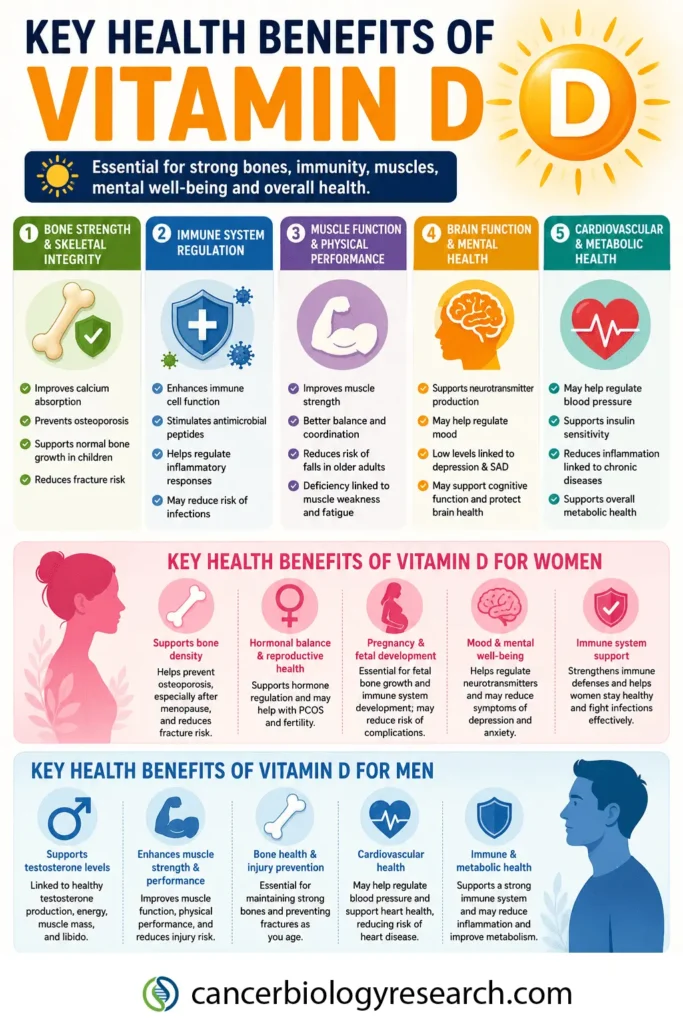
Vitamin D is involved in multiple physiological systems, making it one of the most important nutrients for maintaining overall health.
Bone Strength and Skeletal Integrity
Vitamin D’s most well-known role is in calcium absorption. Without sufficient vitamin D:
- Only a small fraction of dietary calcium is absorbed
- The body compensates by taking calcium from bones
- This leads to weakened bone density over time
Adequate vitamin D helps:
- Prevent osteoporosis in adults
- Support normal bone growth in children
- Reduce fracture risk, especially in older individuals
Immune System Regulation
Vitamin D plays a key role in both innate and adaptive immunity:
- Enhances the pathogen-fighting ability of immune cells
- Stimulates production of antimicrobial peptides
- Helps regulate inflammatory responses
Low vitamin D levels have been associated with increased susceptibility to infections, including respiratory illnesses.
Muscle Function and Physical Performance
Vitamin D receptors are found in muscle tissue, indicating its importance in muscle health. Benefits include:
- Improved muscle strength
- Better balance and coordination
- Reduced risk of falls in older adults
Deficiency is often linked to muscle weakness and fatigue.
Brain Function and Mental Health
Vitamin D influences neurotransmitter production and brain function. Research suggests:
- It may help regulate mood
- Low levels are associated with depression and seasonal affective disorder (SAD)
- It could play a role in cognitive function and neuroprotection
Cardiovascular and Metabolic Health
Emerging evidence suggests vitamin D may:
- Help regulate blood pressure
- Influence insulin sensitivity
- Reduce inflammation linked to chronic diseases
While research is ongoing, maintaining adequate levels is considered beneficial for overall metabolic health.
Key Health Benefits of Vitamin D for Women
Vitamin D plays a critical role in women’s health across different life stages, from adolescence to menopause and beyond.
- Supports bone density and prevents osteoporosis
Women are at higher risk of bone loss, especially after menopause due to decreased estrogen levels. Vitamin D improves calcium absorption and helps maintain strong bones, reducing the risk of fractures. - Hormonal balance and reproductive health
Vitamin D influences hormone regulation and may support conditions such as polycystic ovary syndrome (PCOS). Adequate levels are also linked to improved fertility outcomes. - Pregnancy and fetal development
During pregnancy, vitamin D is essential for fetal bone development and immune system formation. It may also reduce the risk of complications such as preeclampsia and low birth weight. - Mood and mental well-being
Women are more prone to mood disorders like depression. Vitamin D helps regulate neurotransmitters and may reduce symptoms of depression and anxiety, especially in those with low levels. - Immune system support
Vitamin D strengthens immune defenses, helping women fight infections more effectively and maintain overall health.
Key Health Benefits of Vitamin D for Men
Vitamin D is equally important for men, contributing to physical performance, hormonal health, and disease prevention.
- Supports testosterone levels
Vitamin D is linked to healthy testosterone production. Adequate levels may help maintain energy, muscle mass, and libido. - Enhances muscle strength and performance
Vitamin D improves muscle function, which is important for physical activity, strength, and reducing injury risk. - Bone health and injury prevention
Although men generally have higher bone density than women, vitamin D is still essential for maintaining bone strength and preventing fractures with age. - Cardiovascular health
Vitamin D may help regulate blood pressure and support heart health, reducing the risk of cardiovascular diseases, which are common in men. - Immune and metabolic health
Adequate vitamin D levels contribute to a stronger immune system and may play a role in reducing inflammation and improving metabolic function.
Signs and Symptoms of Vitamin D Deficiency
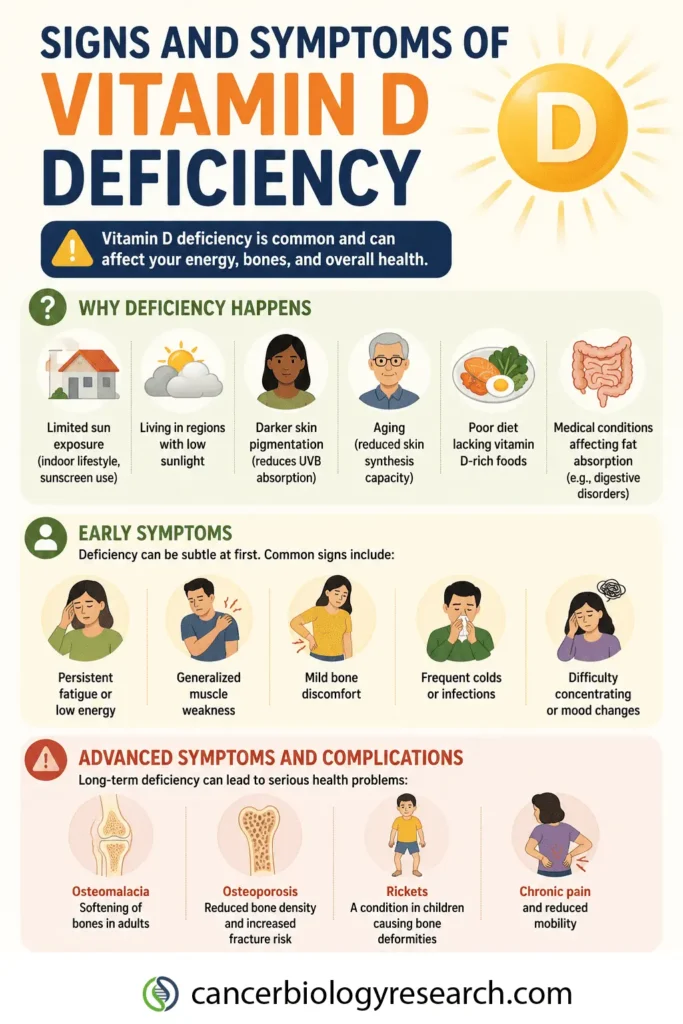
Vitamin D deficiency is a global health issue affecting millions of people, often without obvious early warning signs.
Why Deficiency Happens
Several factors can contribute to low vitamin D levels:
- Limited sun exposure (indoor lifestyle, sunscreen use)
- Living in regions with low sunlight
- Darker skin pigmentation (reduces UVB absorption)
- Aging (reduced skin synthesis capacity)
- Poor diet lacking vitamin D-rich foods
- Medical conditions affecting fat absorption (e.g., digestive disorders)
Early Symptoms
Deficiency can be subtle at first, but common signs include:
- Persistent fatigue or low energy
- Generalized muscle weakness
- Mild bone discomfort
- Frequent colds or infections
- Difficulty concentrating or mood changes
Advanced Symptoms and Complications
Long-term deficiency can lead to serious health problems:
- Osteomalacia: Softening of bones in adults
- Osteoporosis: Reduced bone density and increased fracture risk
- Rickets: A condition in children causing bone deformities
- Chronic pain and reduced mobility
Recognizing these signs early is important to prevent long-term damage.
Best Sources of Vitamin D
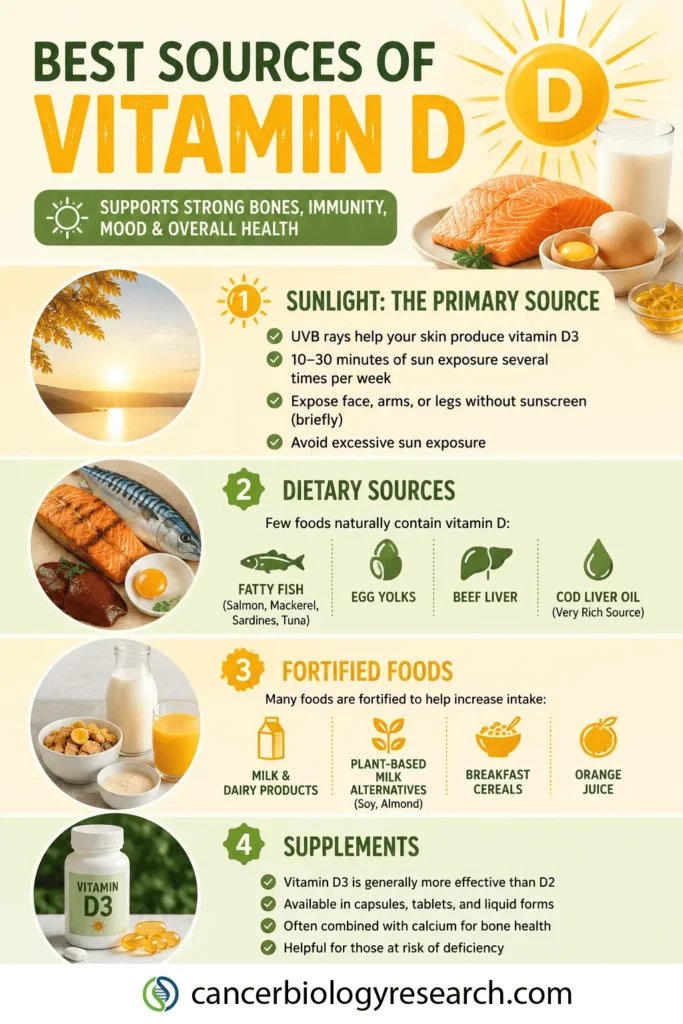
Maintaining adequate vitamin D levels requires a combination of sun exposure, diet, and sometimes supplementation.
Sunlight: The Primary Source
Sun exposure is the most efficient way to produce vitamin D naturally. When UVB rays hit the skin:
- Cholesterol in the skin is converted into vitamin D3
- Production varies depending on time of day, season, and skin type
General guidelines:
- 10–30 minutes of sun exposure several times per week
- Exposure of face, arms, or legs without sunscreen (briefly)
However, excessive sun exposure should be avoided to reduce the risk of skin damage.
Dietary Sources
Few foods naturally contain significant amounts of vitamin D, but some excellent sources include:
- Fatty fish: Salmon, mackerel, sardines, tuna
- Egg yolks
- Beef liver
- Cod liver oil (very rich source)
Fortified Foods
Many foods are fortified to help increase intake:
- Milk and dairy products
- Plant-based milk alternatives (soy, almond)
- Breakfast cereals
- Orange juice
Supplements
Supplements are often necessary for individuals at risk of deficiency. Key points:
- Vitamin D3 is generally more effective than D2
- Available in capsules, tablets, and liquid forms
- Often combined with calcium for bone health
This post may contain affiliate links. As an Amazon Associate, I earn from qualifying purchases at no extra cost to you.


How Much Vitamin D Do You Need?
Vitamin D requirements vary based on age, health status, and lifestyle.
Recommended Daily Intake
- Infants (0–12 months): 400 IU (10 mcg)
- Children and adults (1–70 years): 600 IU (15 mcg)
- Adults over 70: 800 IU (20 mcg)
Some experts suggest higher intakes may be beneficial, especially for those with limited sun exposure.
Optimal Blood Levels
Vitamin D status is measured as 25-hydroxyvitamin D in the blood:
- Deficiency: less than 20 ng/mL
- Insufficiency: 20–30 ng/mL
- Optimal range: 30–50 ng/mL
Maintaining levels within the optimal range supports overall health and reduces disease risk.
Risk Factors for Higher Needs
You may need more vitamin D if you:
- Spend most of your time indoors
- Have darker skin
- Are overweight or obese
- Are older
- Have certain medical conditions affecting absorption
Vitamin D Toxicity
Although rare, excessive intake from supplements can lead to toxicity. This results in:
- High blood calcium levels (hypercalcemia)
- Nausea and vomiting
- Kidney stones or kidney damage
- Confusion and weakness
Toxicity usually occurs with very high doses over long periods, not from sunlight or food.
Practical Tips for Maintaining Healthy Levels
- Combine moderate sun exposure with a balanced diet
- Include vitamin D-rich foods regularly
- Use supplements if necessary, especially in winter
- Consider periodic blood testing if at risk of deficiency
FAQs
Vitamin D supports bone strength, boosts the immune system, improves muscle function, and helps regulate mood.
Common symptoms include fatigue, muscle weakness, bone pain, frequent infections, and low mood.
A normal blood level is generally between 30–50 ng/mL (75–125 nmol/L).
You can increase levels through sun exposure, eating vitamin D-rich foods, and taking supplements if needed.
Fatty fish (like salmon and sardines), egg yolks, fortified milk, and cereals are good sources.
Most adults need around 600–800 IU per day, but needs may vary depending on age and health.
Yes, daily supplementation is safe within recommended doses, but excessive intake can be harmful.
Yes, vitamin D helps support the immune system and may reduce the risk of infections.
Sunlight is the most natural source, but diet and supplements can also help meet your needs.
Medical Disclaimer: This content is for informational and educational purposes only and does not constitute medical advice. It is not intended to replace professional medical consultation, diagnosis, or treatment. Always seek the advice of a qualified healthcare provider with any questions regarding a medical condition.


