

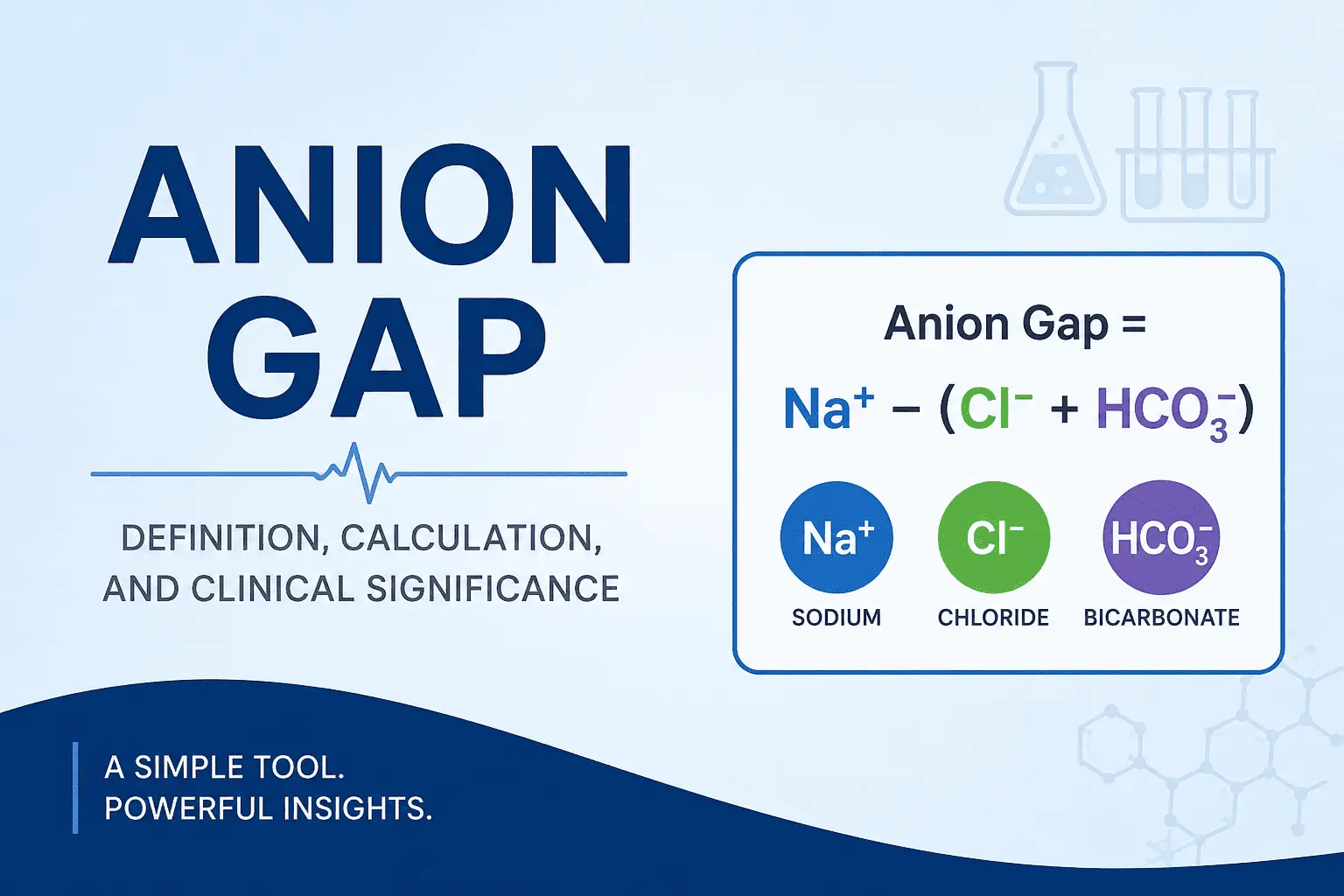
The anion gap is a key concept in clinical chemistry and internal medicine, widely used to evaluate acid–base disorders—especially metabolic acidosis. Understanding how it works can help clinicians and students quickly identify underlying conditions and guide diagnosis and treatment.
What Is the Anion Gap?
The anion gap is a calculated value that reflects the difference between measured positively charged ions (cations) and negatively charged ions (anions) in the blood.
In routine laboratory testing, only a limited number of electrolytes are directly measured. The anion gap helps estimate the concentration of unmeasured ions, providing insight into metabolic imbalances.
Key Concept
- Measured cations: Sodium (Na⁺) ± Potassium (K⁺)
- Measured anions: Chloride (Cl⁻) and Bicarbonate (HCO₃⁻)
- Unmeasured anions: Proteins (mainly albumin), phosphates, sulfates, organic acids
- Unmeasured cations: Calcium, magnesium, and others
The anion gap essentially represents:
Unmeasured anions − Unmeasured cations
Why It Matters
- Helps detect metabolic acidosis
- Identifies the presence of abnormal acids in the blood
- Guides further diagnostic evaluation
How to Calculate the Anion Gap
The anion gap is calculated using a simple formula derived from standard electrolyte measurements.
Standard Formula
Anion Gap = Na⁺ − (Cl⁻ + HCO₃⁻)
Alternative Formula (Including Potassium)
Anion Gap = (Na⁺ + K⁺) − (Cl⁻ + HCO₃⁻)
In most clinical settings, potassium is often omitted because its concentration is relatively low and has minimal impact on the result.
Step-by-Step Example
- Sodium (Na⁺) = 140 mEq/L
- Chloride (Cl⁻) = 104 mEq/L
- Bicarbonate (HCO₃⁻) = 24 mEq/L
Anion Gap = 140 − (104 + 24) = 12 mEq/L
Normal Range
- Typical range: 8 to 16 mEq/L (without potassium)
- May vary slightly depending on laboratory standards
Normal vs. Abnormal Anion Gap Values
Interpreting the anion gap is crucial for identifying acid–base disturbances.
Normal Anion Gap
- Indicates a balance between measured and unmeasured ions
- Seen in normal physiology or certain types of metabolic acidosis (e.g., bicarbonate loss compensated by chloride increase)
High Anion Gap
A high anion gap occurs when there is an accumulation of unmeasured acids in the blood.
Interpretation
- Suggests metabolic acidosis with acid accumulation
- Bicarbonate decreases as it buffers excess acids
Low Anion Gap
A low anion gap is less common and often overlooked.
Interpretation
- May indicate reduced unmeasured anions or increased unmeasured cations
- Often associated with laboratory or physiological abnormalities
Causes of High and Low Anion Gap
Understanding the underlying causes helps narrow down the diagnosis.
Causes of High Anion Gap
High anion gap metabolic acidosis is commonly remembered using mnemonics.
GOLD MARK Mnemonic
- Glycols (ethylene glycol, propylene glycol)
- Oxoproline (chronic acetaminophen use)
- L-lactate (lactic acidosis)
- D-lactate
- Methanol
- Aspirin (salicylates)
- Renal failure (uremia)
- Ketoacidosis (diabetic, alcoholic, starvation)
Causes of Normal Anion Gap (for comparison)
- Diarrhea (loss of bicarbonate)
- Renal tubular acidosis
- Hyperchloremic metabolic acidosis
Causes of Low Anion Gap
- Hypoalbuminemia (most common cause)
- Multiple myeloma (increased positively charged proteins)
- Lithium intoxication
- Laboratory error or instrument variation
Clinical Applications of the Anion Gap
The anion gap is widely used in clinical practice for diagnosis and monitoring.
1. Diagnosing Metabolic Acidosis
- Distinguishes between:
- High anion gap metabolic acidosis
- Normal anion gap (hyperchloremic) metabolic acidosis
2. Differential Diagnosis
- Helps identify the cause of acid accumulation
- Guides further tests (e.g., lactate, ketones, toxicology screening)
3. Monitoring Disease Progression
- Tracks response to treatment in conditions like:
- Diabetic ketoacidosis
- Sepsis-related lactic acidosis
4. Detecting Mixed Acid–Base Disorders
- Used alongside other parameters (e.g., delta gap, arterial blood gases)
- Helps uncover complex metabolic disturbances
5. Limitations
- Influenced by albumin levels (low albumin lowers the anion gap)
- Lab variability can affect results
- Should always be interpreted in clinical context
Conclusion
The anion gap is a simple yet powerful diagnostic tool that provides valuable insight into acid–base balance. By understanding how to calculate and interpret it, clinicians can rapidly identify metabolic acidosis and its underlying causes.
Whether used in emergency settings or routine evaluations, the anion gap remains an essential component of modern clinical practice.
FAQs
A normal anion gap is typically between 8 and 16 mEq/L, depending on the laboratory and whether potassium is included.
It usually indicates metabolic acidosis due to acid accumulation, such as lactic acidosis or ketoacidosis.
Common causes include low albumin levels, certain blood disorders, or lab measurement errors.
It helps clinicians diagnose and differentiate types of metabolic acidosis and identify underlying conditions.
No fasting is typically required, as it is part of routine electrolyte testing.
Medical Disclaimer: This content is for informational and educational purposes only and does not constitute medical advice. It is not intended to replace professional medical consultation, diagnosis, or treatment. Always seek the advice of a qualified healthcare provider with any questions regarding a medical condition.


