

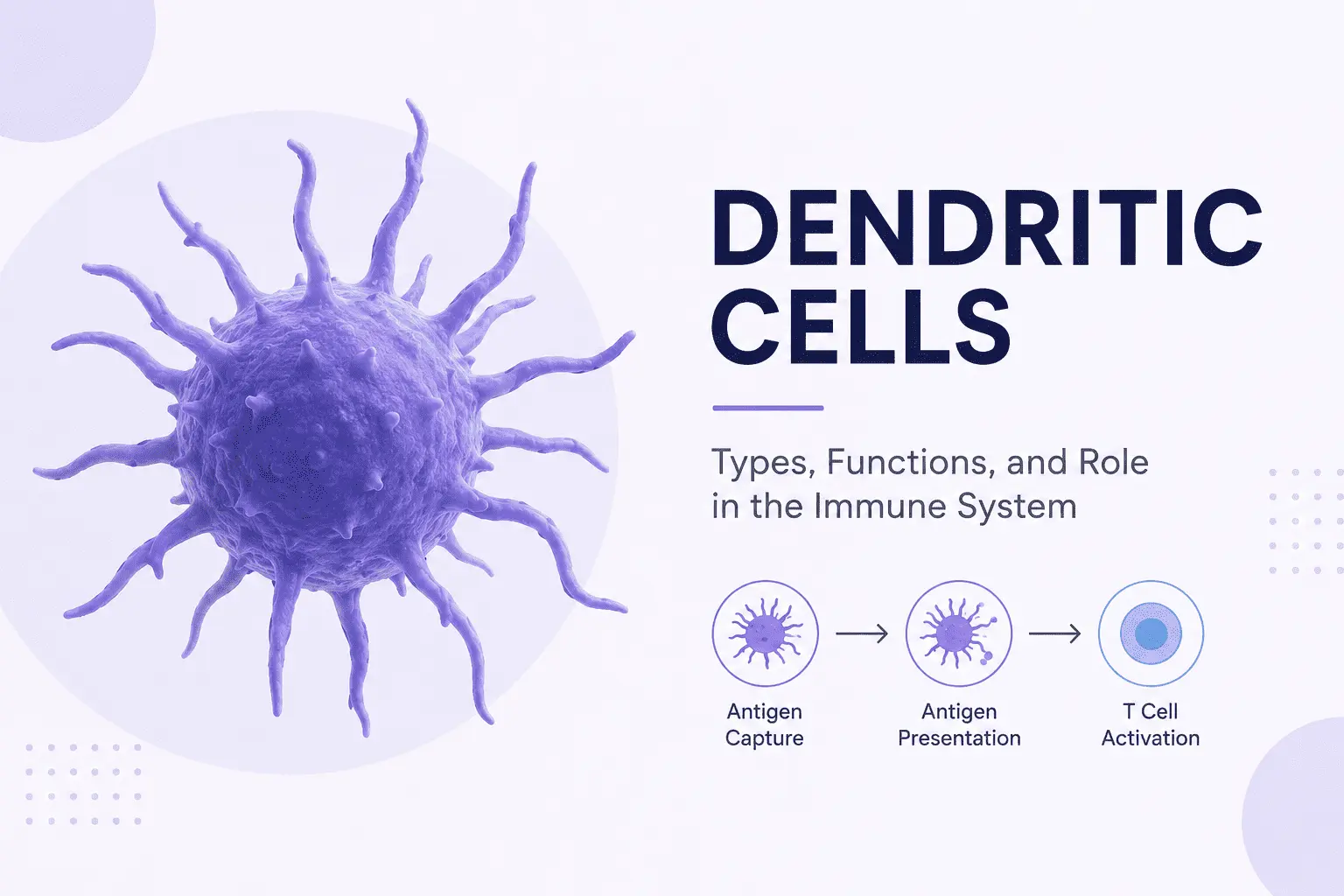
Dendritic cells (DCs) are specialized immune cells that serve as the body’s primary antigen-presenting cells, playing a pivotal role in initiating and regulating immune responses. By capturing foreign antigens and presenting them to T lymphocytes, they bridge the innate and adaptive immune systems, enabling the body to recognize and eliminate pathogens while maintaining immune tolerance to healthy tissues.
Understanding dendritic cells is essential for appreciating how the immune system detects threats and coordinates defense mechanisms.
In this article, we’ll explore what dendritic cells are, their origin and major types, their key functions in the immune system, and their clinical significance in infectious diseases, cancer immunotherapy, autoimmune disorders, and vaccine development.
What Are Dendritic Cells?
Dendritic cells (DCs) are specialized white blood cells that function as professional antigen-presenting cells (APCs). They play a fundamental role in the immune system by detecting pathogens, capturing antigens, and activating T lymphocytes, thereby connecting the innate and adaptive immune responses.
The primary function of dendritic cells is to recognize foreign or abnormal substances and initiate antigen-specific immune responses. After encountering an antigen, dendritic cells process it into peptide fragments and display these fragments on major histocompatibility complex (MHC) molecules for recognition by T cells.
Key characteristics of dendritic cells include:
- They are the most potent professional antigen-presenting cells.
- They bridge innate and adaptive immunity.
- They activate naïve T cells and initiate adaptive immune responses.
- They help maintain immune tolerance and prevent autoimmunity.
- They continuously monitor tissues for signs of infection or cellular damage.
Why Are They Called “Dendritic” Cells?
The term “dendritic” originates from the Greek word dendron, meaning “tree.” This name refers to the numerous branching cytoplasmic projections that extend from the cell surface, giving dendritic cells their distinctive tree-like appearance.
These projections provide several advantages:
- Increase the surface area for capturing antigens.
- Enhance interactions with pathogens and surrounding cells.
- Facilitate efficient communication with T lymphocytes in lymphoid organs.
Where Are Dendritic Cells Found?
Dendritic cells are widely distributed throughout the body, particularly at sites that are frequently exposed to pathogens. Their strategic location allows them to act as the immune system’s first line of surveillance.
They are commonly found in:
- Skin (including the epidermis)
- Respiratory tract
- Gastrointestinal tract
- Mucosal tissues
- Blood
- Lymph nodes
- Spleen
After capturing antigens in peripheral tissues, dendritic cells migrate to nearby lymph nodes, where they present processed antigens to naïve T cells and initiate adaptive immune responses.
Why Are Dendritic Cells Important?
Unlike macrophages, which primarily destroy pathogens through phagocytosis, dendritic cells specialize in activating T cells and coordinating immune responses. In addition to promoting protective immunity against infections and cancer, they also contribute to immune tolerance by presenting self-antigens under non-inflammatory conditions. This process helps eliminate or suppress autoreactive T cells, reducing the risk of autoimmune diseases and maintaining immune homeostasis.
Types of Dendritic Cells
Dendritic cells are a heterogeneous group of immune cells composed of several subsets with distinct origins, surface markers, tissue distributions, and specialized functions. Although all dendritic cells can present antigens to T lymphocytes, each subset plays a unique role in coordinating immune responses against different types of pathogens or maintaining immune tolerance.
Conventional Dendritic Cells (cDCs)
Conventional dendritic cells (also called classical dendritic cells) are the primary antigen-presenting cells responsible for activating naïve T cells. They are found in lymphoid organs and peripheral tissues and are broadly divided into two major subsets.
cDC1
cDC1 cells specialize in cross-presentation, a process in which extracellular antigens are presented on MHC class I molecules to activate CD8+ cytotoxic T cells.
Their main functions include:
- Cross-presenting antigens to CD8+ T cells
- Promoting antiviral immunity
- Supporting anti-tumor immune responses
- Producing cytokines such as IL-12 to stimulate cell-mediated immunity
cDC2
cDC2 cells primarily present antigens through MHC class II molecules and activate CD4+ helper T cells.
They are involved in:
- Activating helper T cells
- Directing Th1, Th2, and Th17 immune responses
- Defending against extracellular bacteria, fungi, and parasites
- Supporting antibody production through interactions with B cells
Plasmacytoid Dendritic Cells (pDCs)
Plasmacytoid dendritic cells are best known for their ability to rapidly produce large amounts of type I interferons (IFN-α and IFN-β) during viral infections. Although they are less efficient antigen-presenting cells than conventional dendritic cells, they play a critical role in antiviral immunity.
Their major functions include:
- Detecting viral nucleic acids through Toll-like receptors (TLR7 and TLR9)
- Producing type I interferons
- Limiting viral replication
- Supporting the activation of NK cells and adaptive immune responses
Langerhans Cells
Langerhans cells are a specialized population of dendritic cells located in the epidermis of the skin. As one of the first immune cells to encounter environmental pathogens, they provide continuous immune surveillance at the body’s surface.
Their primary roles include:
- Capturing antigens that enter through the skin
- Migrating to regional lymph nodes after activation
- Presenting antigens to T cells
- Contributing to skin immune homeostasis and tolerance
Monocyte-Derived Dendritic Cells (moDCs)
Monocyte-derived dendritic cells develop from circulating monocytes during inflammation or infection rather than under normal steady-state conditions. These cells possess strong antigen-presenting capabilities and are widely used in immunological research and therapeutic applications.
Their functions include:
- Enhancing immune responses during inflammation
- Producing inflammatory cytokines
- Presenting antigens to T cells
- Serving as the basis for many experimental dendritic cell vaccines
Emerging Dendritic Cell Subsets
Recent advances in single-cell sequencing and immunophenotyping have identified additional dendritic cell populations with specialized functions in different tissues. These include tissue-resident dendritic cells and migratory dendritic cells that contribute to local immune regulation and tissue-specific immunity.
Research into these newly identified subsets is expanding our understanding of:
- Tissue-specific immune responses
- Immune tolerance mechanisms
- Chronic inflammatory diseases
- Cancer immunology
- Next-generation immunotherapies
Summary of Dendritic Cell Types
The major dendritic cell subsets can be summarized as follows:
| Dendritic Cell Type | Primary Function |
|---|---|
| cDC1 | Cross-presentation and activation of CD8+ cytotoxic T cells |
| cDC2 | Activation of CD4+ helper T cells and regulation of adaptive immunity |
| Plasmacytoid DC (pDC) | Production of type I interferons during viral infections |
| Langerhans Cells | Immune surveillance and antigen presentation in the skin |
| Monocyte-Derived DC (moDC) | Inflammatory antigen presentation and immunotherapy applications |
Functions of Dendritic Cells in the Immune System
Dendritic cells are central regulators of the immune system. They not only detect invading pathogens but also determine whether an immune response should be activated or suppressed. By linking innate and adaptive immunity, dendritic cells coordinate multiple immune processes that protect the body against infections while maintaining tolerance to self-antigens.
Antigen Capture and Processing
One of the primary functions of dendritic cells is to capture antigens from pathogens, damaged cells, or tumor cells. Immature dendritic cells are highly efficient at sampling their environment through several mechanisms, including:
- Phagocytosis: Engulfment of large particles such as bacteria and apoptotic cells.
- Endocytosis: Internalization of soluble antigens and extracellular proteins.
- Macropinocytosis: Uptake of extracellular fluid containing dissolved antigens.
Once internalized, antigens are broken down into peptide fragments within intracellular compartments. These peptides are then loaded onto major histocompatibility complex (MHC) molecules for presentation to T cells.
Antigen Presentation to T Cells
Dendritic cells are considered the most effective professional antigen-presenting cells because they efficiently activate naïve T lymphocytes.
They present antigens through two major pathways:
- MHC class I pathway: Presents intracellular or cross-presented antigens to CD8+ cytotoxic T cells, enabling the elimination of virus-infected and cancerous cells.
- MHC class II pathway: Presents extracellular antigens to CD4+ helper T cells, which coordinate broader immune responses.
A unique feature of dendritic cells is cross-presentation, in which extracellular antigens are presented on MHC class I molecules. This mechanism is particularly important for generating effective antiviral and anti-tumor immunity.
Activation of Adaptive Immunity
Following antigen presentation, mature dendritic cells activate naïve T cells by providing three essential signals:
- Signal 1: Presentation of the antigenic peptide through MHC molecules.
- Signal 2: Co-stimulatory signals provided by surface molecules such as CD80 and CD86.
- Signal 3: Cytokine secretion that directs T-cell differentiation.
These signals stimulate the expansion and specialization of T cells into different effector subsets, including:
- Cytotoxic CD8+ T cells
- Th1 helper T cells
- Th2 helper T cells
- Th17 helper T cells
- Regulatory T cells (Tregs)
As a result, dendritic cells orchestrate adaptive immune responses tailored to the type of pathogen encountered.
Maintenance of Immune Tolerance
In addition to activating immunity, dendritic cells play a critical role in preventing harmful immune responses against the body’s own tissues.
Under non-inflammatory conditions, they present self-antigens without strong co-stimulatory signals, leading to:
- Deletion of autoreactive T cells
- Induction of T-cell anergy (functional unresponsiveness)
- Generation of regulatory T cells (Tregs)
- Maintenance of peripheral immune tolerance
These mechanisms are essential for preventing autoimmune diseases and preserving immune homeostasis.
Communication with Other Immune Cells
Dendritic cells coordinate immune responses by interacting with numerous immune cell populations through direct cell-to-cell contact and cytokine secretion.
They communicate with:
- T lymphocytes to initiate adaptive immunity.
- B lymphocytes to promote antibody production.
- Natural killer (NK) cells to enhance early antiviral and anti-tumor responses.
- Macrophages to strengthen innate immune defenses.
- Neutrophils to regulate inflammatory responses.
By integrating signals from both innate and adaptive immune cells, dendritic cells function as the central coordinators of the immune response, ensuring that immunity is both effective against pathogens and tightly regulated to avoid excessive inflammation or autoimmunity.
Clinical Significance of Dendritic Cells
The unique ability of dendritic cells to initiate, regulate, and suppress immune responses makes them essential players in human health and disease. Alterations in dendritic cell function have been linked to a wide range of conditions, including infectious diseases, cancer, autoimmune disorders, and allergies. As a result, these cells have become important targets for immunotherapy and vaccine development.
Dendritic Cells in Infectious Diseases
Dendritic cells are among the first immune cells to encounter invading pathogens. They recognize microbial components through pattern recognition receptors (PRRs), such as Toll-like receptors (TLRs), triggering their maturation and the activation of adaptive immunity.
Their roles during infection include:
- Detecting bacteria, viruses, fungi, and parasites.
- Capturing and processing microbial antigens.
- Activating pathogen-specific T cells.
- Producing cytokines that coordinate immune responses.
- Promoting the development of long-lasting immunological memory.
Because of their ability to rapidly produce type I interferons, plasmacytoid dendritic cells are particularly important for controlling viral infections.
Dendritic Cells in Cancer
Dendritic cells play a critical role in tumor immunosurveillance by recognizing tumor-associated antigens and activating cytotoxic T lymphocytes capable of destroying cancer cells. However, many tumors develop mechanisms to impair dendritic cell function, allowing them to evade immune detection.
In cancer, dendritic cells are involved in:
- Presenting tumor antigens to CD8+ T cells.
- Initiating anti-tumor immune responses.
- Recruiting and activating other immune cells.
- Shaping the tumor microenvironment.
- Influencing patient prognosis and response to immunotherapy.
Understanding how tumors suppress dendritic cell activity has become a major focus of cancer immunology research.
Dendritic Cell-Based Immunotherapy
Because dendritic cells are highly efficient at activating T cells, they have become attractive tools for immunotherapy, particularly in cancer treatment.
Current and emerging therapeutic approaches include:
- Dendritic cell vaccines, in which patient-derived dendritic cells are loaded with tumor antigens before being reintroduced into the body.
- Personalized cancer vaccines targeting patient-specific tumor neoantigens.
- Combination therapies using dendritic cell vaccines with immune checkpoint inhibitors.
- Strategies to enhance dendritic cell maturation and antigen presentation within tumors.
These approaches aim to strengthen anti-tumor immunity and improve clinical outcomes in patients with various cancers.
Dendritic Cells in Autoimmune Diseases
While dendritic cells are essential for protective immunity, dysregulation of their function can contribute to autoimmune diseases. Abnormal activation of dendritic cells or defects in immune tolerance may lead to inappropriate activation of self-reactive T cells.
Dendritic cells have been implicated in several autoimmune disorders, including:
- Rheumatoid arthritis
- Multiple sclerosis
- Systemic lupus erythematosus (SLE)
- Type 1 diabetes
- Psoriasis
Therapies that restore the tolerogenic functions of dendritic cells are being investigated as potential treatments for autoimmune diseases.
Future Directions in Dendritic Cell Research
Ongoing research continues to uncover new dendritic cell subsets, signaling pathways, and therapeutic applications. Advances in genomics, single-cell technologies, and bioengineering are expanding our understanding of how these cells regulate immunity in different tissues and disease settings.
Future areas of investigation include:
- Development of next-generation vaccines.
- Identification of dendritic cell biomarkers for disease diagnosis and prognosis.
- Gene-editing approaches to enhance dendritic cell function.
- Nanoparticle-based delivery systems for targeted immunotherapy.
- Personalized immunotherapies tailored to individual immune profiles.
As our knowledge of dendritic cell biology continues to grow, these cells are expected to play an increasingly important role in the prevention, diagnosis, and treatment of infectious diseases, cancer, and immune-mediated disorders.
Conclusion
Dendritic cells are indispensable components of the immune system, acting as the bridge between innate and adaptive immunity through their exceptional ability to capture, process, and present antigens. Beyond initiating protective immune responses against pathogens and tumors, they also maintain immune tolerance, preventing harmful reactions against the body’s own tissues.


