

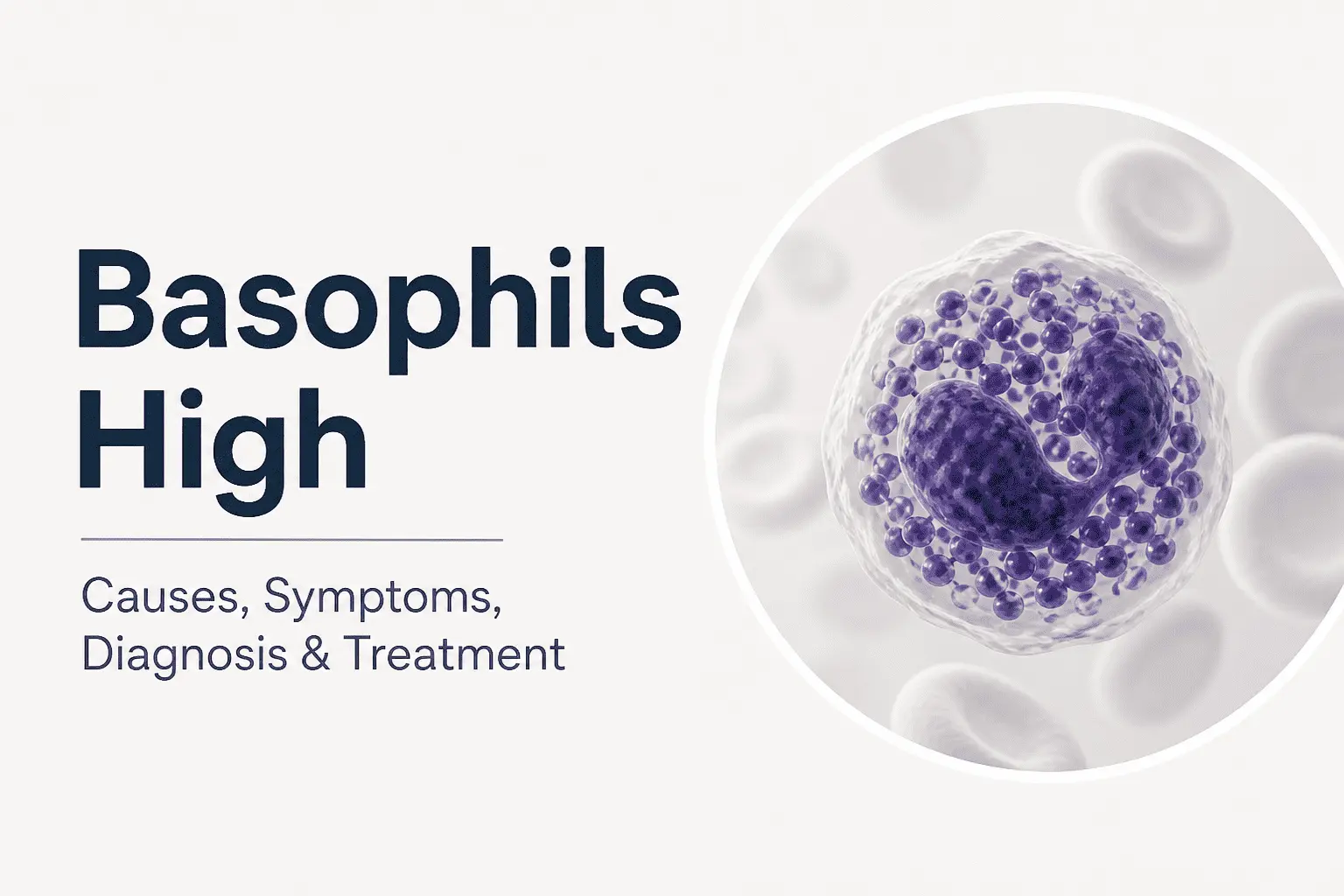
Basophils are a type of white blood cell involved in immune responses, particularly in allergies and inflammation. Although they make up only a small percentage of circulating white blood cells, they play an important role in how the body reacts to triggers.
When a blood test shows basophils high, the condition is known as basophilia. This finding is usually identified during a routine complete blood count (CBC) and may be linked to allergies, inflammation, or certain blood disorders. Understanding what elevated basophils mean helps put your lab results into proper context.
In this article, we will explore the causes of basophilia, associated symptoms, how it is diagnosed, and when it may require medical attention.
What Are Basophils?
Basophils are a specialized type of white blood cell that play a key role in the immune system, particularly in allergic and inflammatory responses. Although they are the least common white blood cells, their function is essential for protecting the body and coordinating immune reactions.
Basophils at a Glance
- Produced in the bone marrow
- Circulate in the bloodstream and can migrate into tissues
- Contain granules filled with biologically active substances
- Represent less than 1% of total white blood cells
Structure and Key Features
Basophils belong to a group of white blood cells known as granulocytes, which are characterized by the presence of cytoplasmic granules.
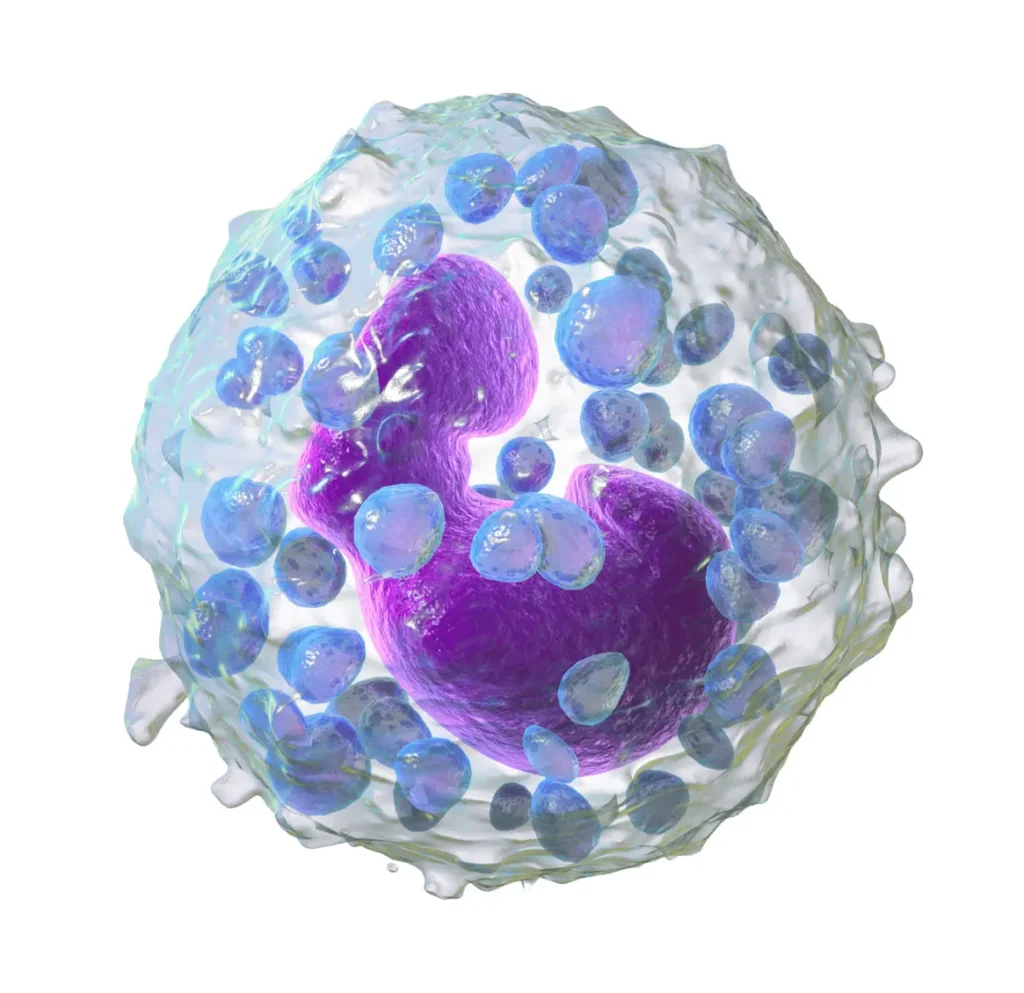
Key characteristics include:
- Large, dark granules visible under a microscope
- A bilobed or irregularly shaped nucleus
- Granules containing:
- Histamine, which promotes inflammation and increases blood vessel permeability
- Heparin, which helps regulate blood clotting
- Cytokines, which act as signaling molecules in immune responses
Functions of Basophils
Basophils are mainly involved in immune defense and inflammatory signaling. Their primary functions include:
1. Allergic Reactions
- Play a central role in immediate hypersensitivity reactions
- Release histamine when activated
- Contribute to symptoms such as itching, swelling, and redness
2. Inflammatory Response
- Help recruit other immune cells to sites of infection or injury
- Release mediators that amplify inflammation
3. Immune System Communication
- Interact with other immune cells, including lymphocytes
- Secrete cytokines that regulate immune responses
Normal Basophil Levels
Basophil levels are typically measured as part of a complete blood count (CBC).
- Percentage: 0% to 1% of total white blood cells
- Absolute count: approximately 0 to 0.1 × 10⁹/L
Even small increases outside this range may be clinically relevant and should be interpreted in the appropriate clinical context.
What Does “Basophils High” Mean?
The term “basophils high” refers to a condition called basophilia, where the number of basophils in the blood is higher than normal. This finding is usually identified during a complete blood count (CBC) with a white blood cell differential.
Definition of Basophilia
Basophilia is defined as an elevated basophil count in the bloodstream, either as a percentage or as an absolute value.
- Relative basophilia: basophils make up more than 1% of total white blood cells
- Absolute basophilia: basophil count exceeds approximately 0.1 × 10⁹/L
How It Appears in Blood Test Results
Basophils are reported in two main ways on lab results:
- Percentage (%): proportion of basophils among total white blood cells
- Absolute count: the actual number of basophils per volume of blood
An increase in either value may be reported as “high basophils.”
What High Basophils Indicate
Basophilia is not a disease on its own. Instead, it is a laboratory finding that may indicate an underlying condition, such as:
- Allergic reactions
- Chronic inflammation
- Infections
- Blood disorders, including certain leukemias
Key Point
A single elevated basophil result does not always indicate a serious problem. Interpretation depends on:
- The degree of elevation
- Other blood count results
- Clinical symptoms and medical history
For this reason, high basophil levels should always be evaluated in the broader clinical context.
Causes of High Basophils
High basophil levels, or basophilia, are usually a sign of an underlying condition rather than a disease on their own. The causes can range from mild and temporary issues to more serious disorders affecting the immune system or blood.
Allergic Reactions
Allergies are one of the most common causes of elevated basophils. These cells play a direct role in allergic responses by releasing histamine.
Common triggers include:
- Seasonal allergies (hay fever)
- Asthma
- Food allergies
- Drug hypersensitivity
In these cases, basophil levels may rise as part of the body’s response to allergens.
Chronic Inflammatory Conditions
Long-term inflammation can stimulate the production of basophils.
Examples include:
- Rheumatoid arthritis
- Inflammatory bowel disease (Crohn’s disease and ulcerative colitis)
Basophils contribute to the inflammatory process by releasing cytokines and other mediators.
Infections
Certain infections, especially chronic or viral ones, can lead to elevated basophil levels.
- Viral infections
- Tuberculosis and other chronic infections
Basophilia in this context is usually mild and temporary.
Blood Disorders
This is one of the most important categories to consider, especially when basophil levels are significantly elevated.
Conditions include:
- Leukemia
- Myeloproliferative disorders
- Chronic myeloid leukemia (CML) is strongly associated with basophilia
- Polycythemia vera
- Essential thrombocythemia
In these disorders, the bone marrow produces excessive numbers of blood cells, including basophils.
Hormonal and Metabolic Conditions
Some endocrine disorders can also affect basophil levels.
- Hypothyroidism
- Diabetes (in certain inflammatory states)
Recovery Phase After Illness
Basophil levels may increase temporarily during recovery from:
- Acute infections
- Inflammatory conditions
This is generally a normal part of immune system regulation.
Symptoms of High Basophils
High basophil levels, or basophilia, do not usually cause symptoms on their own. In most cases, symptoms are related to the underlying condition responsible for the increase rather than the basophils themselves.
Often No Symptoms
Many people with elevated basophils have no noticeable symptoms. The condition is often discovered incidentally during a routine blood test such as a complete blood count (CBC).
Symptoms Related to Allergic Conditions
When basophilia is linked to allergies, symptoms may include:
- Itching (skin or eyes)
- Sneezing and runny nose
- Skin rashes or hives
- Swelling (especially in the face or throat in severe cases)
These symptoms occur due to the release of histamine and other inflammatory mediators.
Symptoms of Chronic Inflammation
In cases of ongoing inflammatory diseases, common symptoms may include:
- Fatigue
- Joint pain or stiffness
- Digestive issues (in inflammatory bowel disease)
- Low-grade fever
Symptoms of Infections
If an infection is the cause, symptoms may vary depending on the type of infection:
- Fever
- Weakness or malaise
- Persistent cough or other localized symptoms
Symptoms of Blood Disorders
When basophilia is associated with hematological conditions, symptoms may be more serious, such as:
- Unexplained weight loss
- Night sweats
- Persistent fatigue
- Enlarged spleen (causing abdominal discomfort)
- Easy bruising or bleeding
Treatment for High Basophils
There is no specific treatment aimed at lowering basophils directly. Management focuses on identifying and treating the underlying cause of basophilia. Once the primary condition is controlled, basophil levels usually return to normal.
Treating Allergic Conditions
If high basophils are caused by allergies, treatment may include:
- Antihistamines to reduce allergic symptoms
- Corticosteroids in more severe cases
- Avoidance of known allergens
Controlling the allergic response often leads to normalization of basophil levels.
Managing Inflammatory Diseases
For chronic inflammatory conditions, treatment depends on the specific disease:
- Anti-inflammatory medications
- Immunosuppressive drugs (in autoimmune disorders)
- Disease-specific therapies (e.g., for inflammatory bowel disease or arthritis)
Effective control of inflammation can reduce basophil elevation.
Treating Infections
If an infection is responsible:
- Antibiotics for bacterial infections
- Antiviral or antifungal treatments when appropriate
Basophil levels typically return to normal after the infection resolves.
Treatment of Blood Disorders
When basophilia is linked to hematological conditions, treatment may be more complex:
- Targeted therapies (such as tyrosine kinase inhibitors for certain leukemias)
- Chemotherapy
- Bone marrow-targeted treatments
Management is usually guided by a specialist in hematology.
Addressing Hormonal Conditions
If an endocrine disorder such as hypothyroidism is the cause:
- Hormone replacement therapy may be prescribed
Correcting hormonal imbalance can help normalize basophil counts.
Lifestyle and Supportive Measures
While lifestyle changes do not directly treat basophilia, they can support overall health:
- Balanced diet rich in anti-inflammatory foods
- Stress management
- Adequate sleep
These measures may help reduce underlying inflammation.
Basophils High vs Other White Blood Cells
Basophils are only one part of the white blood cell (WBC) family. To properly understand what basophils high means, it is important to compare them with other types of white blood cells included in the differential count. Each type has a distinct role, and changes in their levels can point to different conditions.
Overview of White Blood Cells
The main types of white blood cells include:
- Neutrophils
- Lymphocytes
- Monocytes
- Eosinophils
- Basophils
Each of these cells contributes to immune defense in a specific way.
Basophils vs Neutrophils
- Neutrophils are the most abundant white blood cells
- They are the first responders to bacterial infections
- High neutrophils (neutrophilia) usually indicate:
- Acute bacterial infections
- Physical stress or inflammation
Key difference:
Basophils are mainly involved in allergic and inflammatory signaling, while neutrophils focus on fighting infections directly.
Basophils vs Lymphocytes
- Lymphocytes include T cells, B cells, and natural killer (NK) cells
- They are essential for adaptive immunity
- High lymphocytes (lymphocytosis) are often seen in:
- Viral infections
- Certain chronic conditions
Key difference:
Basophils act in immediate immune reactions, whereas lymphocytes are responsible for targeted, long-term immune responses.
Basophils vs Eosinophils
- Eosinophils are closely related to basophils
- They are also involved in allergic reactions and parasitic infections
- High eosinophils (eosinophilia) may indicate:
- Parasitic infections
- Allergic diseases such as asthma
Key difference:
Both cells participate in allergies, but eosinophils are more active in parasitic defense, while basophils are more involved in histamine release and inflammation signaling.
Basophils vs Monocytes
- Monocytes develop into macrophages and dendritic cells in tissues
- They are responsible for cleaning up pathogens and dead cells
- High monocytes (monocytosis) may be seen in:
- Chronic infections
- Inflammatory conditions
Key difference:
Basophils mainly release inflammatory mediators, while monocytes are involved in phagocytosis and tissue repair.
Why the Comparison Matters
A high basophil count should never be interpreted in isolation. Doctors look at the entire white blood cell differential to better understand what is happening in the body.
For example:
- High basophils + high eosinophils → may suggest an allergic condition
- High basophils + abnormal white cell counts → may indicate a blood disorder
- Isolated mild basophilia → often less concerning
FAQs About High Basophils
There is no single “dangerous” cutoff, but basophil counts significantly above 0.1 × 10⁹/L, especially when persistent or accompanied by other abnormal blood results, may require further investigation.
Stress alone is not a common direct cause of high basophils. However, it can influence the immune system and may contribute indirectly in some cases.
High basophils are not always a sign of cancer, but they can be associated with certain blood disorders such as leukemia. Most cases are linked to less serious conditions like allergies or inflammation.
The duration depends on the underlying cause. Basophil levels may return to normal quickly after infections or allergies resolve, but can remain elevated longer in chronic conditions.
Yes, allergies are one of the most common causes of elevated basophils. These cells play a key role in allergic reactions by releasing histamine and other inflammatory substances.
Medical Disclaimer: This content is for informational and educational purposes only and does not constitute medical advice. It is not intended to replace professional medical consultation, diagnosis, or treatment. Always seek the advice of a qualified healthcare provider with any questions regarding a medical condition.


