


The human immune system is a powerful defense network designed to protect the body from harmful invaders like viruses, bacteria, and even cancer cells. One of its most remarkable functions is immunosurveillance—the process by which immune cells constantly monitor the body to detect and eliminate abnormal or transformed cells before they develop into tumors. This natural defense mechanism plays a crucial role in cancer prevention, acting as an early warning system against malignancies.
Over the past few decades, researchers have uncovered how the immune system doesn’t just respond to infections but also identifies and destroys emerging cancer cells through a complex interaction of natural killer (NK) cells, cytotoxic T lymphocytes (CTLs), and other immune components. However, some cancer cells develop strategies to escape immune detection, leading to tumor progression and immune evasion—a phenomenon central to the concept of cancer immunoediting.
In this article, we’ll explore the science behind immunosurveillance, its phases, the key immune cells and molecules involved, and how some tumors manage to outsmart the immune system. We’ll also discuss the clinical implications of this process, especially its relevance to modern cancer immunotherapy.
🧠 What Is Immunosurveillance?
Immunosurveillance refers to the immune system’s ability to detect and destroy abnormal cells, including those that may become cancerous. The concept was first proposed in the 1950s by immunologist Lloyd J. Old, who suggested that the immune system plays a critical role in suppressing tumor development.
At its core, immunosurveillance involves the continuous monitoring of tissues by immune cells to identify and eliminate potentially malignant cells. This process relies on a coordinated response from both innate and adaptive immune systems:
- Natural Killer (NK) cells and macrophages in the innate immune system act as the first responders, targeting cells that lack normal surface markers such as MHC class I molecules.
- Cytotoxic T lymphocytes (CTLs) in the adaptive immune system recognize specific tumor-associated antigens presented on cancer cells and induce apoptosis through the release of cytotoxic molecules like perforin and granzyme B.
Immunosurveillance is most effective during the early stages of tumor development, where it can completely eliminate nascent cancer cells before they become clinically detectable. However, as cancer evolves, some tumor cells develop mechanisms to evade immune detection—marking the transition from immune protection to immune escape.
This immune-tumor interaction is better understood today through the broader framework of cancer immunoediting, which encompasses not just immunosurveillance (elimination), but also the phases of equilibrium and escape—topics we’ll explore in the next section.
🔄 The Cancer Immunoediting Concept
While immunosurveillance was once thought to be a simple process of immune defense against tumors, modern research has revealed a more dynamic interaction between the immune system and cancer. This led to the development of the cancer immunoediting model, which explains how the immune system not only protects against cancer but also shapes tumor evolution.
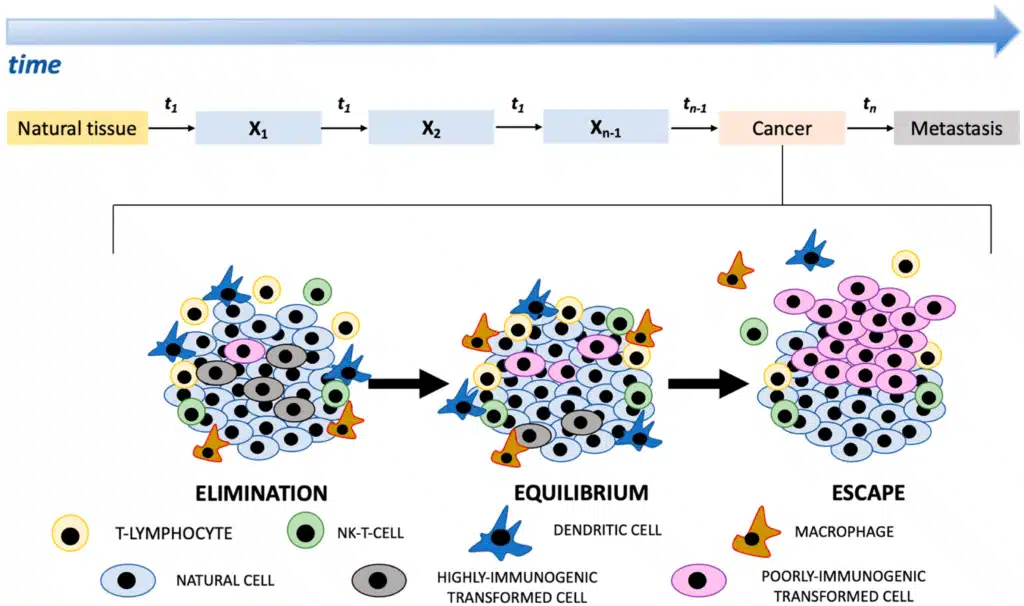
Cancer immunoediting is divided into three distinct phases:
1. Elimination (Immunosurveillance)
This is the classical immunosurveillance phase, where the immune system recognizes and destroys newly transformed cancer cells. NK cells, dendritic cells, and cytotoxic T lymphocytes work together to:
- Detect tumor-specific antigens
- Release inflammatory cytokines such as interferon-gamma (IFN-γ)
- Induce apoptosis in abnormal cells through the release of perforin and granzyme B
If successful, this phase leads to the complete eradication of tumor cells.
2. Equilibrium
Some tumor cells survive the elimination phase and enter a dormant state, coexisting with the immune system. This phase can last for years. During this time:
- The immune system contains, but does not eliminate, the remaining tumor cells.
- Genetic instability in cancer cells may lead to the emergence of variants with reduced immunogenicity.
- This phase is driven by selective pressure—only the fittest tumor cells that can evade detection will survive.
3. Escape
Eventually, tumor cells may acquire mutations that allow them to evade immune detection entirely. In the escape phase:
- Tumor cells downregulate MHC class I molecules or alter antigen presentation pathways.
- They secrete immunosuppressive cytokines (like IL-10 and TGF-β) to suppress immune responses.
- Immune checkpoint molecules such as PD-L1 may be upregulated, inhibiting T cell function.
At this stage, the immune system can no longer control tumor growth, leading to clinically detectable cancer.
🔬 Why Immunoediting Matters
Understanding the immunoediting process provides insight into how tumors evolve under immune pressure and why immunotherapies—like checkpoint inhibitors—are effective only in certain cases. Therapies that block the escape mechanisms are now a central focus of cancer treatment.
🛡️ Key Players in Immunosurveillance
The effectiveness of immunosurveillance relies on a complex interplay of immune cells and signaling molecules. Both the innate and adaptive branches of the immune system contribute to identifying and eliminating abnormal cells. Here’s a breakdown of the key components involved:
🔹 Innate Immune System
1. Natural Killer (NK) Cells
- These cells are crucial for detecting cells that lack MHC class I molecules—often a hallmark of cancer cells.
- NK cells induce apoptosis by releasing perforin and granzyme B, forming pores in the target cell’s membrane and initiating programmed cell death.
2. Dendritic Cells (DCs)
- DCs act as antigen-presenting cells (APCs) that capture tumor antigens and present them to T cells.
- They serve as a bridge between the innate and adaptive immune responses, activating cytotoxic T cells.
3. Macrophages
- Tumor-associated macrophages (TAMs) can have dual roles—either promoting or suppressing tumor growth depending on their polarization (M1 vs. M2).
- M1 macrophages support immunosurveillance by producing pro-inflammatory cytokines and enhancing antigen presentation.
🔹 Adaptive Immune System
1. Cytotoxic T Lymphocytes (CD8+ T Cells)
- Recognize and bind to tumor antigens presented on MHC class I molecules.
- Kill cancer cells via the release of cytotoxic granules or through Fas-FasL interactions that induce apoptosis.
2. Helper T Cells (CD4+ T Cells)
- Assist in activating CD8+ T cells and macrophages.
- Release cytokines like IL-2 and IFN-γ, enhancing the immune response against tumors.
3. Regulatory T Cells (Tregs)
- These cells suppress the immune response to maintain self-tolerance.
- In the context of cancer, Tregs can inhibit immunosurveillance, allowing tumor cells to escape immune control.
🧬 Key Molecules and Pathways
- Interferon-gamma (IFN-γ): A cytokine critical for activating macrophages and enhancing antigen presentation.
- Perforin and Granzyme B: Cytotoxic proteins released by NK cells and CTLs to kill cancer cells.
- MHC Class I Molecules: Present tumor antigens to CD8+ T cells; often downregulated in cancer to avoid detection.
- Immune Checkpoints: Molecules like PD-1, PD-L1, and CTLA-4 that can suppress immune activation—targets of modern immunotherapy.
By understanding the roles of these cells and molecules, researchers and clinicians can develop therapies that boost the immune response or block the mechanisms tumors use to avoid detection.
🧬 How Cancer Cells Evade Immunosurveillance
Although the immune system is remarkably effective at detecting and destroying abnormal cells, some cancer cells develop sophisticated strategies to escape immune detection and destruction. This process, known as immune evasion, marks the transition from immune control to tumor progression.
Let’s explore the main mechanisms cancer cells use to evade immunosurveillance:
🔻 1. Downregulation of MHC Class I Molecules
- Tumor cells may reduce or completely lose expression of MHC class I, which is essential for presenting tumor antigens to CD8+ T cells.
- Without this presentation, cytotoxic T cells cannot recognize or kill these cancer cells.
- This mechanism is particularly effective against the adaptive immune system but can still be countered by NK cells, which detect “missing self.”
🔻 2. Secretion of Immunosuppressive Cytokines
- Tumor cells and the surrounding tumor microenvironment (TME) often secrete cytokines that suppress immune responses.
- TGF-β: Inhibits T cell activation and promotes regulatory T cells (Tregs).
- IL-10: Suppresses dendritic cells and macrophage function.
- VEGF: Limits T cell infiltration and promotes angiogenesis.
- These molecules help create an immune-silent environment around the tumor.
🔻 3. Recruitment of Immunosuppressive Cells
- Tumors actively recruit cells that inhibit the anti-tumor immune response, including:
- Regulatory T cells (Tregs): Suppress effector T cells.
- Myeloid-Derived Suppressor Cells (MDSCs): Inhibit T cell activation and promote tumor growth.
- M2 macrophages: Support tumor progression and angiogenesis.
🔻 4. Upregulation of Immune Checkpoint Molecules
- Cancer cells exploit immune checkpoints—natural “brakes” of the immune system—to prevent immune overactivation.
- PD-L1 on tumor cells binds to PD-1 on T cells, turning off their activity.
- CTLA-4 competes with stimulatory molecules, reducing T cell activation.
- These checkpoints are now key targets of cancer immunotherapy, such as anti-PD-1 and anti-CTLA-4 antibodies.
🔻 5. Loss of Tumor Antigen Expression
- Tumor cells may undergo antigenic variation, altering or losing the expression of antigens that were once recognized by T cells.
- This helps them escape antigen-specific immune responses and contributes to tumor heterogeneity.
📌 Summary
The ability of cancer cells to evade immunosurveillance is a major challenge in oncology. Understanding these escape mechanisms is crucial for developing effective immunotherapies that can block immune suppression and restore the immune system’s ability to fight cancer.
🏥 Clinical Implications of Immunosurveillance
The concept of immunosurveillance has reshaped our understanding of cancer biology and opened new doors in clinical oncology. By recognizing the immune system’s dual role in both controlling and shaping tumor development, researchers and clinicians have developed innovative strategies to harness and enhance the body’s natural defenses against cancer.
Below are key clinical implications of immunosurveillance:
💉 1. Foundation for Cancer Immunotherapy
The discovery that tumors can evade immunosurveillance led directly to the development of immune checkpoint inhibitors:
- Anti-PD-1/PD-L1 and anti-CTLA-4 therapies aim to remove the brakes on the immune system, allowing T cells to recognize and attack tumors.
- These therapies have revolutionized the treatment of cancers such as melanoma, lung cancer, bladder cancer, and renal cell carcinoma.
Immunosurveillance research laid the foundation for these breakthroughs.
🧪 2. Biomarkers for Patient Selection
Understanding how the immune system interacts with tumors has helped identify biomarkers to predict which patients will respond to immunotherapy:
- PD-L1 expression levels
- Tumor mutational burden (TMB)
- Presence of tumor-infiltrating lymphocytes (TILs)
- MHC class I expression
These markers help clinicians personalize cancer treatment.
💊 3. Combination Therapies
Insights into immune evasion have inspired the development of combination treatments:
- Checkpoint inhibitors + chemotherapy
- Checkpoint inhibitors + targeted therapies
- Checkpoint inhibitors + cancer vaccines
These strategies aim to boost immunosurveillance and overcome resistance mechanisms by reactivating immune cells or enhancing antigen presentation.
🧬 4. Cancer Vaccines and Oncolytic Viruses
Therapeutic cancer vaccines (e.g., Sipuleucel-T) and oncolytic viruses (e.g., T-VEC) are designed to stimulate immune responses against tumors, improving the immunosurveillance process:
- They introduce tumor antigens or generate inflammation to draw immune cells into the tumor microenvironment.
- This helps re-establish immune recognition in cancers that have escaped surveillance.
🧠 5. Early Detection and Prevention
Immunosurveillance research also contributes to:
- Cancer prevention strategies, such as HPV vaccines and chronic inflammation control.
- Early detection biomarkers, where subtle immune responses to abnormal cells may signal early tumor formation.
📌 Takeaway
The clinical implications of immunosurveillance extend far beyond theory. They have led to real-world advances in diagnostics, therapeutics, and personalized medicine. Understanding and enhancing the immune system’s ability to surveil and destroy cancer remains one of the most promising frontiers in oncology.
✅ Conclusion
Immunosurveillance is a fundamental process by which the immune system detects and eliminates emerging cancer cells. While highly effective in early stages, some tumors evolve to escape immune control—highlighting the importance of understanding cancer-immune interactions. Insights from immunosurveillance have paved the way for breakthrough therapies like immune checkpoint inhibitors and cancer vaccines. As research advances, strengthening the immune system’s natural defense may remain one of the most powerful strategies in the fight against cancer.


