

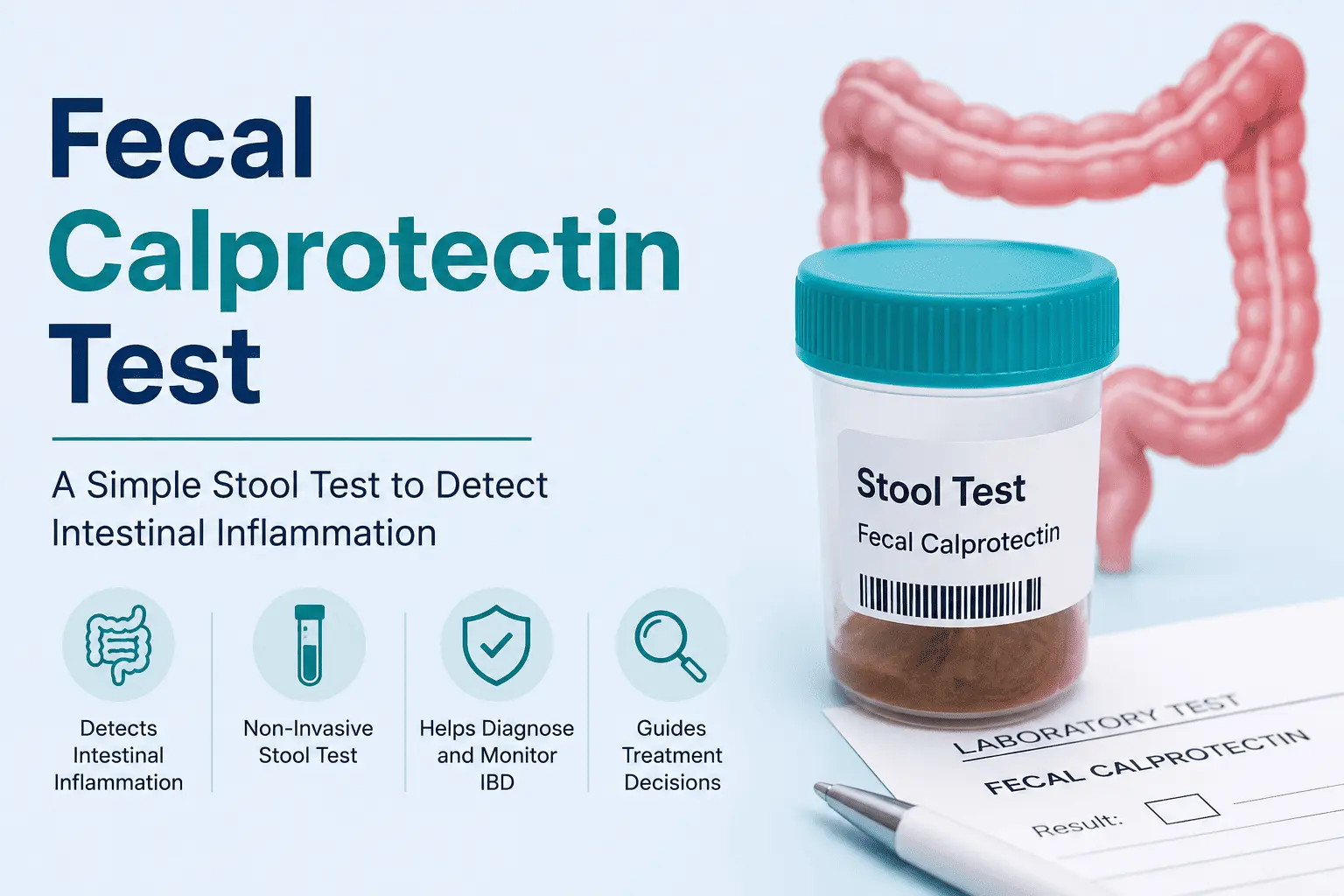
The fecal calprotectin test is a simple, non-invasive stool test used to detect inflammation in the gastrointestinal tract. By measuring the level of calprotectin, a protein released by white blood cells during inflammation, the test helps healthcare providers evaluate digestive conditions, particularly inflammatory bowel disease (IBD).
Because it can distinguish inflammatory conditions from non-inflammatory disorders such as irritable bowel syndrome (IBS), the calprotectin stool test has become an important tool in modern gastroenterology.
In this article, you’ll learn what the fecal calprotectin test is, when it’s recommended, how it’s performed, how to interpret the results, and what elevated fecal calprotectin levels may indicate.
What Is the Fecal Calprotectin Test?
The fecal calprotectin test, also known as the calprotectin stool test or stool calprotectin test, is a laboratory test that measures the amount of calprotectin in a stool sample. Calprotectin is a protein released by neutrophils, a type of white blood cell involved in the body’s inflammatory response.
When inflammation occurs in the digestive tract, neutrophils migrate to the affected area and release calprotectin into the intestines. The protein is then excreted in the stool, where it can be measured to help assess the presence and severity of intestinal inflammation.
Unlike blood tests that measure general inflammation, the fecal calprotectin test specifically reflects inflammation within the gastrointestinal tract. This makes it a valuable tool for evaluating patients with chronic digestive symptoms and distinguishing inflammatory conditions from functional disorders.
When Is the Test Recommended?
A healthcare provider may recommend a fecal calprotectin test if you have symptoms that suggest inflammation of the intestines, including:
- Persistent or chronic diarrhea
- Abdominal pain or cramping
- Blood or mucus in the stool
- Unexplained weight loss
- Frequent bowel movements
- Suspected inflammatory bowel disease (IBD)
The test is also commonly used to monitor patients with Crohn’s disease or ulcerative colitis, helping assess disease activity and response to treatment.
Who Should Have a Fecal Calprotectin Test?
The test may be recommended for:
- Adults with persistent gastrointestinal symptoms
- Children with unexplained digestive complaints
- Individuals being evaluated for inflammatory bowel disease
- Patients with diagnosed Crohn’s disease or ulcerative colitis who require ongoing monitoring
Because it is non-invasive and easy to perform, the test is often used before considering more invasive procedures such as colonoscopy.
How Is the Fecal Calprotectin Test Performed?
The fecal calprotectin test is a simple, non-invasive procedure that requires only a small stool sample. No hospital stay or specialized equipment is needed for the patient, and the sample can usually be collected at home using a sterile collection kit provided by the laboratory or healthcare provider.
Preparing for the Test
In most cases, no special preparation is required before a calprotectin stool test. You can usually eat and drink normally unless your healthcare provider gives different instructions.
Before collecting the sample, inform your healthcare provider about:
- Any medications you are taking, particularly nonsteroidal anti-inflammatory drugs (NSAIDs)
- Recent gastrointestinal infections
- Any recent medical procedures involving the digestive tract
Do not stop taking prescribed medications unless advised by your healthcare provider.
Collecting the Stool Sample
Proper sample collection helps ensure accurate results. General recommendations include:
- Collect the stool sample in a clean, dry container.
- Avoid contaminating the sample with urine or toilet water.
- Transfer the recommended amount of stool into the sterile collection container.
- Seal the container securely and label it if instructed.
Follow the instructions provided by your laboratory, as collection methods may vary slightly.
Laboratory Analysis
Once the sample reaches the laboratory, technicians measure the concentration of calprotectin using immunoassay techniques such as enzyme-linked immunosorbent assay (ELISA) or other automated testing methods.
The results are typically reported as micrograms of calprotectin per gram (µg/g) of stool, allowing healthcare providers to determine whether intestinal inflammation is present.
When Will You Receive the Results?
Most laboratories provide results within 1 to 3 business days, although turnaround times may vary depending on the testing facility.
Your healthcare provider will interpret the results alongside your symptoms, medical history, and any additional diagnostic tests to determine whether further evaluation or treatment is needed.
Understanding Fecal Calprotectin Test Results
The results of a fecal calprotectin test indicate whether inflammation is present in the gastrointestinal tract. While elevated levels suggest intestinal inflammation, the test cannot determine the exact cause or location of the inflammation. Your healthcare provider will interpret the results alongside your symptoms, medical history, and, if necessary, additional diagnostic tests.
Normal Fecal Calprotectin Levels
Although reference ranges may vary slightly between laboratories, the following values are commonly used:
| Fecal Calprotectin Level | Interpretation |
|---|---|
| Less than 50 µg/g | Normal; little or no intestinal inflammation |
| 50–120 µg/g | Borderline; repeat testing or further evaluation may be recommended |
| Greater than 120 µg/g | Elevated; intestinal inflammation is likely |
A normal result makes inflammatory bowel disease (IBD) less likely, but it does not completely rule out all gastrointestinal disorders.
What Does Elevated Fecal Calprotectin Mean?
Elevated fecal calprotectin levels indicate increased activity of inflammatory cells in the intestines. However, they do not confirm a specific diagnosis.
High calprotectin levels may be associated with:
- Crohn’s disease
- Ulcerative colitis
- Gastrointestinal infections
- Diverticulitis
- Celiac disease
- Colorectal cancer
- NSAID-related intestinal inflammation
If your result is elevated, your healthcare provider may recommend additional tests, such as blood work, stool cultures, imaging studies, or a colonoscopy, to identify the underlying cause.
Clinical Uses, Benefits, Limitations, and FAQs
The fecal calprotectin test is widely used in gastroenterology because it provides valuable information about intestinal inflammation without requiring invasive procedures.
Clinical Uses
Healthcare providers commonly use the test to:
- Help distinguish inflammatory bowel disease (IBD) from irritable bowel syndrome (IBS)
- Support the diagnosis of Crohn’s disease and ulcerative colitis
- Monitor disease activity in patients with IBD
- Evaluate response to treatment
- Detect early disease relapse during remission
Benefits
The calprotectin stool test offers several advantages:
- Non-invasive and painless
- Requires only a small stool sample
- No fasting is usually required
- Highly sensitive for detecting intestinal inflammation
- Helps reduce unnecessary colonoscopies
- Useful for monitoring treatment response over time
Limitations
Despite its usefulness, the test has some limitations:
- It cannot diagnose a specific disease on its own.
- Elevated results can occur in several gastrointestinal conditions.
- A normal result does not completely exclude all digestive disorders.
- Additional tests, including colonoscopy, may still be needed to confirm a diagnosis.
Frequently Asked Questions
Most laboratories consider a value below 50 µg/g to be within the normal range, although reference ranges may vary.
No. Elevated levels indicate intestinal inflammation but may also occur with infections, ulcerative colitis, diverticulitis, celiac disease, and other gastrointestinal conditions.
IBS usually does not cause intestinal inflammation, so most people with IBS have normal or only slightly elevated calprotectin levels.
No. The test only requires collecting a stool sample and is completely non-invasive.
For patients with inflammatory bowel disease, repeat testing may be recommended to monitor disease activity or assess response to treatment. The frequency depends on your healthcare provider’s recommendations.
Medical Disclaimer: This content is for informational and educational purposes only and does not constitute medical advice. It is not intended to replace professional medical consultation, diagnosis, or treatment. Always seek the advice of a qualified healthcare provider with any questions regarding a medical condition.


.)