


Chromosomes are fundamental structures that organize and protect genetic information within the cell. They are composed of DNA and associated proteins, forming a highly compact and regulated system that allows vast amounts of genetic material to fit inside the nucleus while remaining accessible for essential cellular processes. From determining inherited traits to ensuring accurate cell division, chromosomes lie at the very core of genetics.
Understanding chromosome structure, types, and functions is crucial for grasping how genetic information is stored, expressed, and transmitted from one generation to the next. Alterations in chromosome number or structure can lead to genetic disorders, developmental abnormalities, and diseases such as cancer, highlighting their biological and medical significance.
In this article, we will explore how chromosomes are structured, the different types found in cells, their behavior during the cell cycle, and their key functions in genetics and cell biology.
Chromosome Structure: Organization of Genetic Material
DNA and Chromatin Packaging
In eukaryotic cells, DNA molecules are extremely long—if fully extended, they would measure several centimeters—yet they must fit within a nucleus only a few micrometers in diameter. This remarkable level of compaction is achieved through the association of DNA with proteins, primarily histones, forming a complex known as chromatin.
The basic unit of chromatin is the nucleosome, which consists of DNA wrapped around an octamer of histone proteins. This organization not only allows efficient packaging but also plays a key role in regulating gene accessibility and expression.
Chromosome Components
Each chromosome possesses distinct structural regions that are essential for its stability and function. The centromere is a specialized DNA sequence where the kinetochore forms, enabling proper attachment to spindle fibers during cell division. Its position is used to classify chromosomes and is critical for accurate segregation.
At the ends of chromosomes are telomeres, repetitive DNA sequences that protect chromosome termini from degradation and prevent them from being recognized as DNA breaks. Telomeres also play a role in cellular aging and genome integrity.
Euchromatin vs Heterochromatin
Chromatin exists in two main forms based on its level of compaction and transcriptional activity. Euchromatin is less condensed and generally rich in actively transcribed genes, making it accessible to transcription machinery. In contrast, heterochromatin is highly condensed and typically transcriptionally inactive.
Heterochromatin can be further classified into constitutive heterochromatin, which is permanently compacted and found in regions such as centromeres, and facultative heterochromatin, which can alternate between active and inactive states depending on cellular context. This dynamic organization allows cells to tightly regulate gene expression while maintaining chromosomal stability.
Types of Chromosomes in Cells
Autosomes and Sex Chromosomes
In most eukaryotic organisms, chromosomes are classified into autosomes and sex chromosomes based on their role in inheritance. Autosomes are chromosomes that are identical in both sexes and carry the majority of genes responsible for somatic traits such as metabolism, development, and physiological functions.
Sex chromosomes, on the other hand, determine the biological sex of an individual and carry genes involved in sexual development. In humans, females typically possess two X chromosomes, while males have one X and one Y chromosome. Beyond sex determination, sex chromosomes also contain genes essential for normal cellular functions.
Homologous Chromosomes and Sister Chromatids
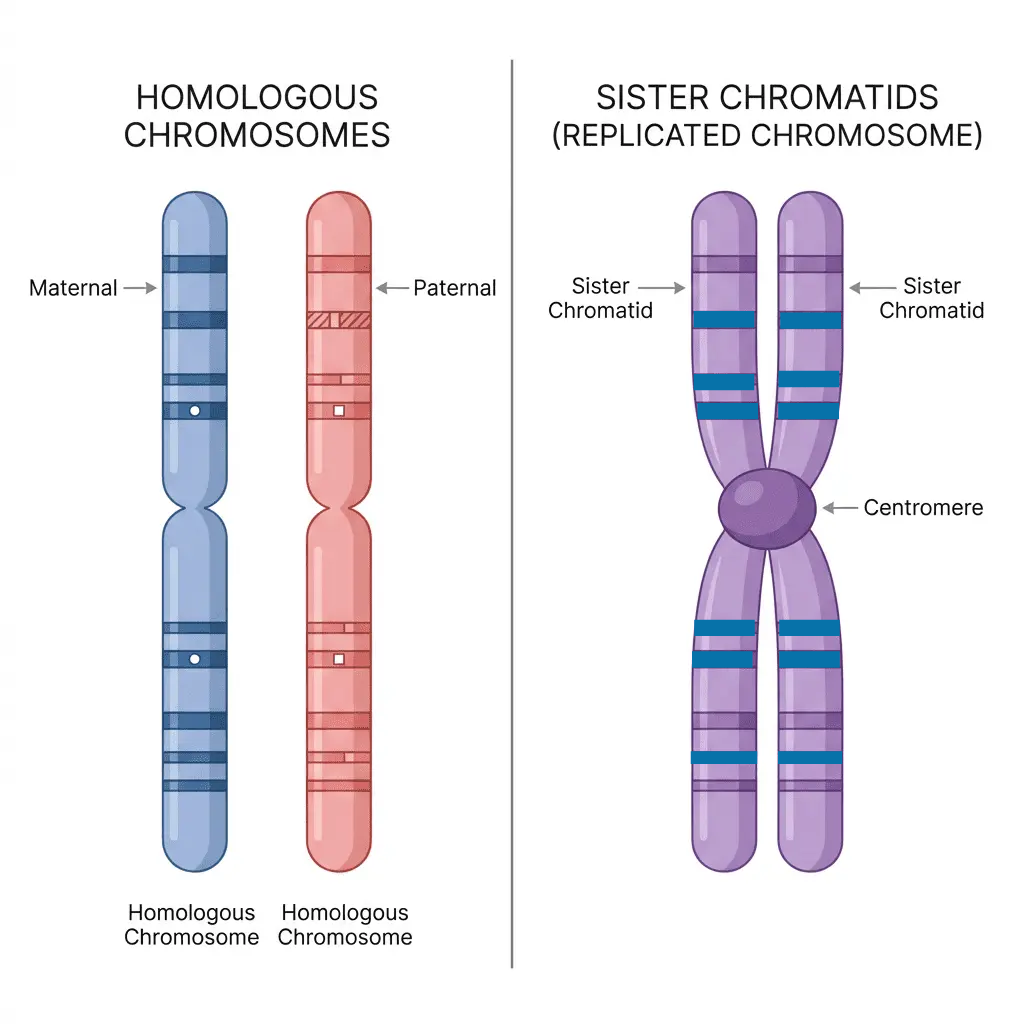
Diploid cells contain pairs of homologous chromosomes, one inherited from each parent. Homologous chromosomes have the same gene loci arranged in the same order, although they may carry different alleles. These pairs are essential during meiosis, where they undergo pairing and recombination to increase genetic diversity.
Following DNA replication, each chromosome consists of two identical sister chromatids joined at the centromere. Sister chromatids remain attached until they are separated during cell division, ensuring that each daughter cell receives an identical copy of the genetic material.
Chromosomes Based on Centromere Position
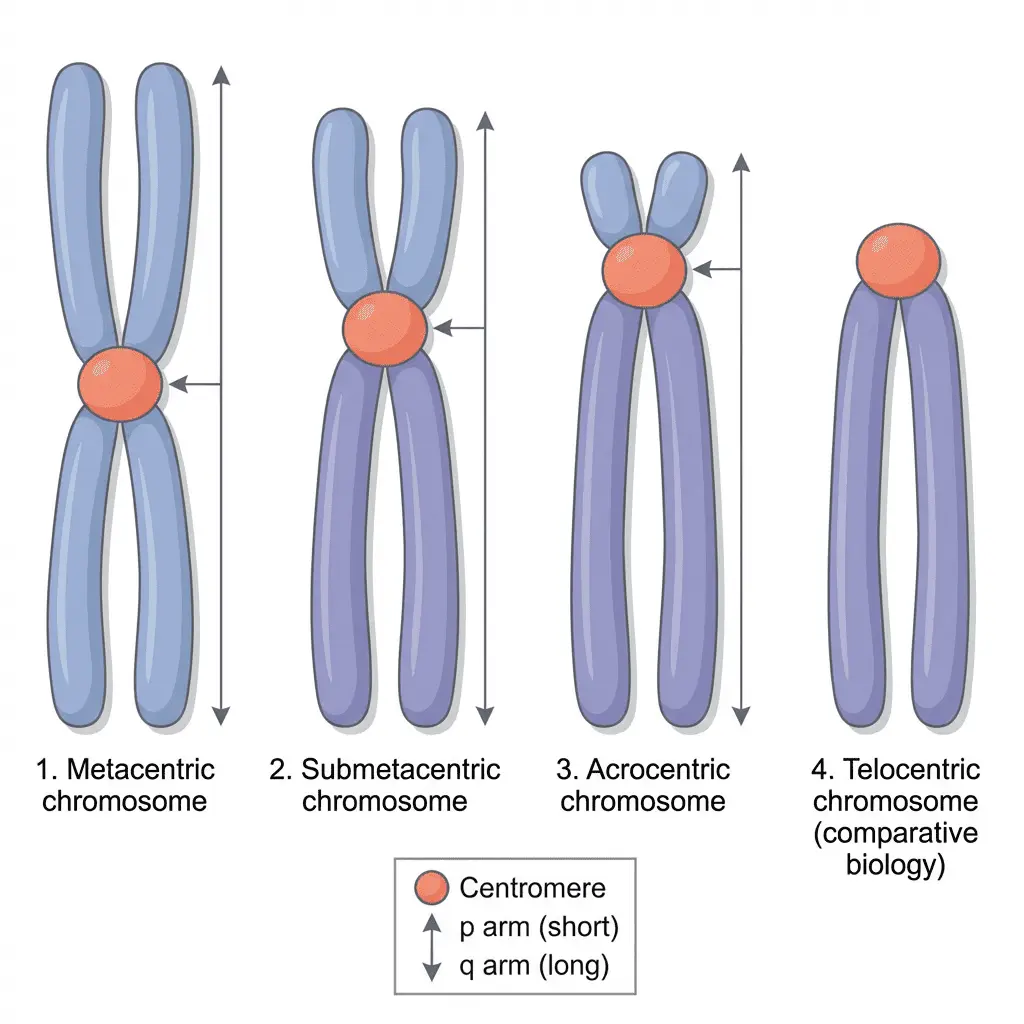
Chromosomes can also be classified according to the position of their centromere, which influences their shape during metaphase. Metacentric chromosomes have a centrally located centromere, producing arms of equal length. Submetacentric chromosomes display a slightly off-center centromere, resulting in one arm being longer than the other.
Acrocentric chromosomes possess a centromere positioned close to one end, creating a very short arm and a long arm. This classification is commonly used in karyotyping and helps identify structural variations and chromosomal abnormalities.
A telocentric chromosome has its centromere located at the very end of the chromosome, resulting in only one visible arm. This type of chromosome is not found in humans but occurs in the chromosomes of certain plants and animals. Telocentric chromosomes are mainly studied in comparative cytogenetics and evolutionary biology to understand chromosomal rearrangements and karyotype evolution.
Chromosome Behavior During the Cell Cycle
Chromosomes in Interphase
During interphase, chromosomes are not visible as distinct structures under the light microscope. Instead, they exist in a loosely organized form known as chromatin, which allows active gene transcription and DNA replication. This phase is divided into G₁, S, and G₂ stages, during which the cell grows, duplicates its DNA, and prepares for division.
The relaxed organization of chromatin during interphase is essential for cellular function, as it permits regulatory proteins and enzymes to access specific genes when needed.
Chromosome Condensation in Mitosis
As the cell enters mitosis, chromatin undergoes progressive condensation, transforming into clearly visible chromosomes. This condensation begins in prophase and reaches its maximum at metaphase, when chromosomes align at the metaphase plate.
Chromosome condensation is critical for preventing DNA entanglement and breakage, ensuring that genetic material can be accurately and efficiently distributed between daughter cells.
Chromosome Segregation and Cytokinesis
During anaphase, sister chromatids separate and are pulled toward opposite poles of the cell by the mitotic spindle. This precise movement depends on correct centromere function and spindle attachment. Any disruption in this process can lead to unequal chromosome distribution, known as aneuploidy.
Following chromosome segregation, cytokinesis divides the cytoplasm, producing two genetically identical daughter cells. This final step completes the cell cycle and preserves genomic integrity across cell generations.
Functions of Chromosomes in Genetics and Cell Biology
Storage and Transmission of Genetic Information
One of the primary functions of chromosomes is the storage and faithful transmission of genetic information. Chromosomes carry genes, which encode the instructions required for protein synthesis and cellular function. By organizing genes into linear DNA molecules, chromosomes ensure that genetic information is efficiently packaged and protected within the nucleus.
During cell division, chromosomes are precisely duplicated and segregated so that each daughter cell receives an identical set of genetic instructions. This accurate transmission is essential for growth, tissue maintenance, and reproduction.
Regulation of Gene Expression
Chromosomes play an active role in controlling gene expression through their structural organization. The arrangement of DNA into euchromatin and heterochromatin influences whether genes are accessible to transcriptional machinery. Changes in chromatin structure can switch genes on or off without altering the DNA sequence itself.
Epigenetic mechanisms such as DNA methylation and histone modifications further regulate chromosome function. These reversible modifications allow cells to respond dynamically to developmental cues and environmental signals while maintaining stable patterns of gene expression.
Chromosomes and Genome Stability
Chromosomes are central to maintaining genome stability by coordinating DNA replication, repair, and segregation. Specialized chromosomal regions, including telomeres and centromeres, protect DNA ends and ensure proper chromosome movement during cell division.
Failures in chromosome maintenance can lead to mutations, chromosomal rearrangements, or abnormal chromosome numbers, which are associated with genetic disorders and cancer. Thus, chromosomes act not only as carriers of genetic information but also as guardians of genomic integrity.
Conclusion
Chromosomes are essential components of the genetic architecture of the cell, ensuring the proper organization, regulation, and transmission of genetic information. Their structure allows efficient DNA packaging, their diversity reflects functional specialization, and their behavior during the cell cycle guarantees genomic stability. A solid understanding of chromosome biology provides a foundation for exploring genetic inheritance, development, and disease.


