

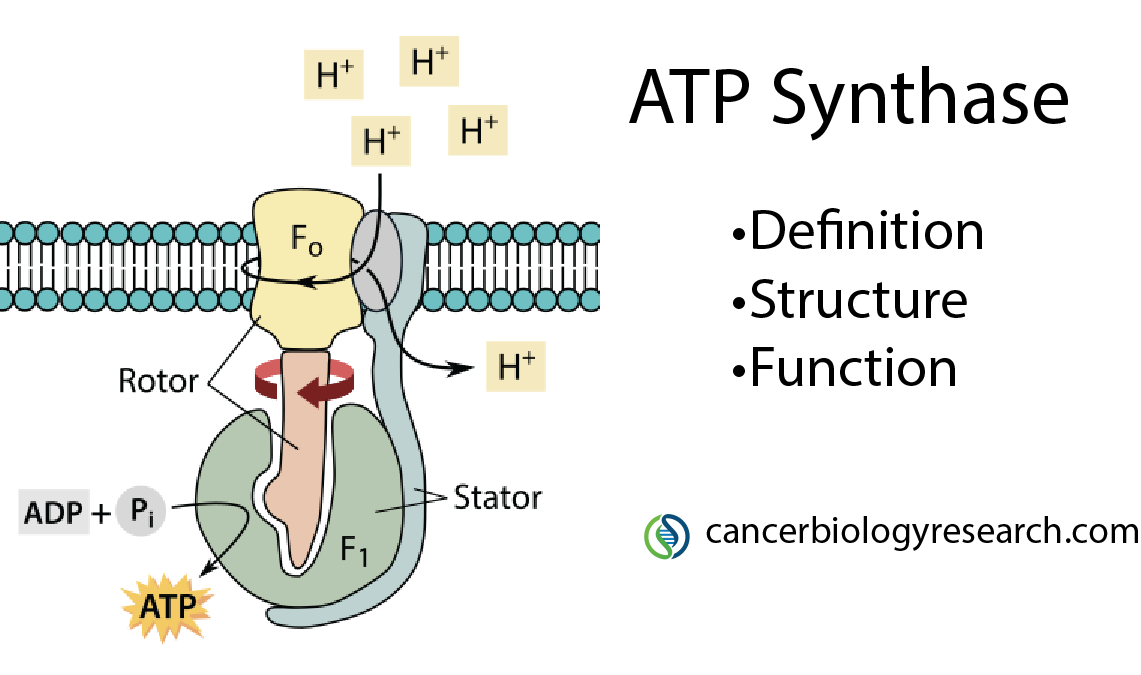
ATP synthase is one of the most remarkable enzymes in biology — a true molecular motor responsible for producing adenosine triphosphate (ATP), the universal energy currency of all living cells. Every heartbeat, muscle contraction, and neural signal depends on ATP, and ATP synthase is the enzyme that makes it possible.
Found in the inner membrane of mitochondria, the thylakoid membranes of chloroplasts, and in bacterial plasma membranes, ATP synthase converts the energy from proton gradients into the chemical bond energy of ATP. This process lies at the heart of both cellular respiration and photosynthesis.
In this article, we’ll explore what ATP synthase is, how it works, its structure and mechanism, and why it’s considered one of nature’s most elegant molecular machines.
What Is ATP Synthase?
ATP synthase is a large, membrane-bound enzyme complex that catalyzes the formation of ATP (adenosine triphosphate) from ADP (adenosine diphosphate) and inorganic phosphate (Pi). It’s the final and most crucial enzyme in the process of oxidative phosphorylation in mitochondria and photophosphorylation in chloroplasts — the reactions responsible for producing most of the ATP used by living cells.
ATP synthase operates as a biological nanomachine that transforms electrochemical energy (from a proton gradient) into chemical energy stored in ATP. This energy conversion is vital for nearly all cellular functions, from muscle movement to active transport and biosynthesis.
Discovery and Historical Background
The discovery of ATP synthase is closely tied to our understanding of how cells generate energy:
- In the 1960s, Peter Mitchell proposed the chemiosmotic theory, suggesting that ATP synthesis is driven by a proton gradient across membranes. This groundbreaking idea earned him the 1978 Nobel Prize in Chemistry.
- Later, Paul D. Boyer described the binding change mechanism, explaining how conformational changes in ATP synthase produce ATP.
- John E. Walker resolved the three-dimensional structure of the enzyme, revealing its rotary mechanism — both Boyer and Walker received the 1997 Nobel Prize in Chemistry.
Where Is ATP Synthase Found?
ATP synthase is present in almost all forms of life, reflecting its evolutionary importance:
- Mitochondria of eukaryotic cells — site of oxidative phosphorylation.
- Chloroplasts in plants — responsible for photophosphorylation.
- Plasma membranes of bacteria — where proton gradients are used for ATP production.
In every case, ATP synthase serves the same fundamental function: harnessing proton motive force to synthesize ATP, the molecule that fuels life’s energy needs.
Structure of ATP Synthase
The structure of ATP synthase is one of the most intricate and fascinating in molecular biology. It is composed of two main functional units — F₀ and F₁ — that work together to convert the proton motive force into the chemical energy of ATP.
This dual structure allows ATP synthase to act both as a proton channel and a rotary catalytic machine, efficiently coupling ion transport with energy synthesis.
The F₀ Complex: The Membrane-Embedded Proton Channel
The F₀ component (pronounced “F-zero”) is embedded within the inner mitochondrial membrane (or the thylakoid membrane in chloroplasts).
It forms a rotary channel that allows protons (H⁺ ions) to flow down their electrochemical gradient.
Key features of the F₀ subunit:
- Composed mainly of a, b, and c subunits arranged in a ring-like structure.
- The c-ring rotates as protons pass through, driven by the proton gradient.
- The a subunit forms the proton entry and exit pathways.
This rotation of the c-ring is directly coupled to conformational changes in the F₁ component — the catalytic head — via a central stalk (the γ subunit).
The F₁ Complex: The Catalytic Headpiece
The F₁ unit projects into the mitochondrial matrix or chloroplast stroma and is the site of ATP synthesis.
Structure of F₁:
- It consists of five types of subunits: α, β, γ, δ, and ε.
- The α₃β₃ hexamer forms the spherical catalytic head where ADP and Pi are combined to form ATP.
- The γ subunit acts as a central shaft that rotates inside the α₃β₃ hexamer.
During proton flow, the γ subunit turns within the stationary α₃β₃ structure, inducing conformational changes that drive ATP formation.
The Rotary Mechanism: A Molecular Turbine
The interaction between F₀ and F₁ makes ATP synthase a rotary nanomotor — one of the smallest known mechanical devices in nature.
- Proton movement through F₀ → rotation of the c-ring → rotation of γ subunit → conformational changes in β subunits → ATP synthesis.
- Each full rotation of the γ shaft results in the synthesis of three ATP molecules.
This remarkable conversion of mechanical energy into chemical energy is what powers virtually all cellular processes that require energy.
Localization in the Cell
| Location | Type of Phosphorylation | Membrane Site | Direction of Proton Flow |
|---|---|---|---|
| Mitochondria | Oxidative phosphorylation | Inner mitochondrial membrane | From intermembrane space to matrix |
| Chloroplasts | Photophosphorylation | Thylakoid membrane | From thylakoid lumen to stroma |
| Bacteria | Respiration or photosynthesis | Plasma membrane | From periplasmic space to cytoplasm |
In short, ATP synthase is not a simple enzyme — it’s a molecular motor that bridges physics and biology, transforming the movement of protons into the energy currency of life.
How Does ATP Synthase Work? (Mechanism of Action)
ATP synthase functions as a molecular motor that converts the energy stored in a proton gradient into chemical energy by synthesizing ATP from ADP and inorganic phosphate (Pi).
This process beautifully integrates physics and chemistry — turning ion movement into high-energy molecular bonds.
1. The Chemiosmotic Theory: The Driving Force Behind ATP Synthesis
The mechanism of ATP synthase is based on the chemiosmotic theory proposed by Peter Mitchell.
According to this theory, the electron transport chain (ETC) in mitochondria or chloroplasts pumps protons (H⁺) across a membrane, creating both:
- A proton concentration gradient, and
- An electrical potential difference across the membrane.
Together, these create what’s called the proton motive force (PMF) — a reservoir of potential energy.
As protons flow back across the membrane through ATP synthase (F₀ subunit), this energy is harnessed to power ATP synthesis in the F₁ catalytic head.
2. Proton Flow and Rotor Rotation
- Protons enter the F₀ channel through the a subunit, binding to specific sites on the c-ring subunits.
- As each proton binds, it drives the rotation of the c-ring, like a turbine turning in response to water flow.
- This rotational motion is transmitted via the γ subunit to the F₁ catalytic core.
The γ subunit spins within the α₃β₃ hexamer, causing the β subunits to undergo conformational changes necessary for ATP production.
3. The Binding Change Mechanism (Paul D. Boyer Model)
Paul Boyer’s binding change mechanism explains how ATP synthase converts this rotational energy into ATP.
Each of the three β subunits of the F₁ complex exists in one of three conformations:
- Loose (L): binds ADP and inorganic phosphate (Pi).
- Tight (T): catalyzes the formation of ATP from ADP + Pi.
- Open (O): releases the newly formed ATP molecule.
As the γ subunit rotates (120° per step), each β subunit sequentially transitions through these three states:
L → T → O → L
This ensures continuous ATP synthesis — three ATP molecules per full 360° rotation of the γ shaft.
4. The Overall Reaction
The chemical reaction catalyzed by ATP synthase is:
ADP+Pi+H+ outside →ATP+H2O+H+ inside
This reaction is reversible, meaning ATP synthase can also hydrolyze ATP when the proton gradient collapses — a process used by some cells to restore ion balance under certain conditions.
5. Efficiency and Significance
ATP synthase operates with nearly 100% efficiency — an astonishing feat for any machine, biological or artificial.
In a single human cell, millions of ATP molecules are generated every second by ATP synthase, maintaining the energy flow required for life.
ATP Synthase in Mitochondria vs. Chloroplasts
Although ATP synthase performs the same essential function in all organisms — the synthesis of ATP — its energy source and membrane orientation differ between mitochondria and chloroplasts.
Understanding these differences helps explain how both respiration and photosynthesis rely on the same fundamental bioenergetic principle: the chemiosmotic coupling of proton flow to ATP production.
1. ATP Synthase in Mitochondria: Oxidative Phosphorylation
In mitochondria, ATP synthase operates during oxidative phosphorylation, the final stage of cellular respiration.
Key steps:
- The electron transport chain (ETC), located in the inner mitochondrial membrane, transfers electrons from NADH and FADH₂ to oxygen.
- As electrons move through the complexes (I–IV), protons (H⁺) are pumped from the mitochondrial matrix to the intermembrane space, generating a proton gradient.
- ATP synthase (Complex V) then allows protons to flow back into the matrix, harnessing this proton motive force (PMF) to synthesize ATP.
Reaction site:
- Membrane: Inner mitochondrial membrane
- Direction of proton flow: Intermembrane space → Matrix
- Energy source: Oxidation of glucose and fatty acids (via ETC)
- Product: ATP used for cellular metabolism
Thus, in mitochondria, ATP synthase links aerobic respiration with energy production, fueling nearly all eukaryotic life.
2. ATP Synthase in Chloroplasts: Photophosphorylation
In chloroplasts, ATP synthase operates during photosynthesis, using light energy captured by the photosystems to drive proton movement.
Key steps:
- Light energy excites electrons in Photosystem II (PSII), initiating the electron transport chain within the thylakoid membrane.
- As electrons are transferred, protons are pumped from the stroma into the thylakoid lumen, building a proton gradient.
- The chloroplast ATP synthase (CF₀CF₁ complex) allows protons to flow back into the stroma, where ATP is synthesized.
Reaction site:
- Membrane: Thylakoid membrane
- Direction of proton flow: Thylakoid lumen → Stroma
- Energy source: Solar energy (light-driven electron transport)
- Product: ATP used in the Calvin cycle for carbon fixation
Thus, chloroplast ATP synthase converts light energy into chemical energy, fueling the synthesis of sugars from carbon dioxide.
3. Key Differences Between Mitochondrial and Chloroplast ATP Synthase
| Feature | Mitochondrial ATP Synthase | Chloroplast ATP Synthase |
|---|---|---|
| Process | Oxidative phosphorylation | Photophosphorylation |
| Energy Source | Chemical (from oxidation of nutrients) | Light (via photosystems) |
| Location | Inner mitochondrial membrane | Thylakoid membrane |
| Proton Flow | Intermembrane space → Matrix | Thylakoid lumen → Stroma |
| Main Function | Produces ATP for cell metabolism | Produces ATP for photosynthesis |
| Name of Complex | F₀F₁ ATP synthase | CF₀CF₁ ATP synthase |
4. Evolutionary Connection
Interestingly, both mitochondrial and chloroplast ATP synthases share a common evolutionary origin.
Mitochondria and chloroplasts evolved from endosymbiotic bacteria, and their ATP synthases are derived from the bacterial F-type ATPase — a strong indicator of the enzyme’s ancient and conserved nature.
Regulation of ATP Synthase Activity
The cell tightly regulates ATP synthase to ensure that its ATP production matches the cell’s energy demands.
Cells control ATP synthase through biochemical feedback, proton gradient strength, and specific inhibitors, preventing unnecessary ATP synthesis or hydrolysis when energy conditions change.
1. Regulation by Proton Motive Force (PMF)
The proton motive force (PMF) — the combination of the proton gradient and membrane potential — is the primary regulator of ATP synthase activity.
- When the proton gradient is strong (high PMF), protons flow through F₀, driving ATP synthesis efficiently.
- When the gradient weakens, the enzyme’s rotary mechanism slows down, reducing ATP production.
This ensures that ATP synthase only functions efficiently when the cell has sufficient respiratory or photosynthetic activity to sustain the proton gradient.
2. Regulation by ADP/ATP Ratio
ATP synthase is also sensitive to the cellular energy charge, often reflected by the ADP/ATP ratio:
- High ADP levels (low ATP) signal a high energy demand, activating ATP synthase.
- High ATP levels (low ADP) signal energy sufficiency, slowing down the enzyme’s activity.
This dynamic balance prevents excessive ATP accumulation, maintaining energy homeostasis within the cell.
3. Inhibitors of ATP Synthase
Several natural and synthetic molecules can inhibit ATP synthase, either to regulate its activity or as a mechanism of defense or drug action.
Common inhibitors include:
- Oligomycin: Binds to the F₀ subunit, blocking proton flow through the channel. This halts both rotation and ATP synthesis.
- Dicyclohexylcarbodiimide (DCCD): Reacts with specific residues in the c subunit, inhibiting proton translocation.
- Aurovertin B: Interferes with the β subunit of F₁, preventing catalytic turnover.
In mitochondria, oligomycin is particularly important experimentally to study oxidative phosphorylation, as it stops ATP production without directly affecting the electron transport chain.
4. Reversal of ATP Synthase Activity (ATP Hydrolysis Mode)
When the proton gradient collapses — such as during oxygen deprivation or mitochondrial damage — ATP synthase can reverse its function.
Instead of synthesizing ATP, it hydrolyzes ATP to pump protons back across the membrane, helping maintain the proton motive force temporarily.
However, excessive ATP hydrolysis is energetically wasteful.
To prevent this, mitochondria contain a small inhibitory peptide known as IF₁ (inhibitory factor 1):
- IF₁ binds to ATP synthase under low pH conditions (indicating low energy status).
- This prevents the enzyme from working in reverse, conserving cellular ATP during stress or hypoxia.
5. Environmental and Metabolic Regulation
- During darkness, this redox regulation prevents unnecessary ATP hydrolysis when the light-dependent proton gradient disappears.
Additionally, in bacteria, ATP synthase regulation depends on external conditions such as oxygen availability, pH, and nutrient levels, ensuring survival under varying environments.
Conclusion
ATP synthase stands as a masterpiece of molecular engineering — a tiny rotary motor that powers nearly every living cell. By harnessing the proton gradient across membranes, it efficiently converts mechanical motion into the chemical energy of ATP, the universal fuel of life. Understanding its structure, mechanism, and regulation not only reveals the elegance of cellular bioenergetics but also inspires innovations in nanotechnology and medicine. In essence, ATP synthase reminds us how life transforms energy with precision, efficiency, and beauty at the molecular level.
FAQ Section: ATP Synthase
1. What is the main function of ATP synthase?
ATP synthase catalyzes the formation of ATP (adenosine triphosphate) from ADP and inorganic phosphate (Pi). It converts the energy stored in a proton gradient into chemical energy, powering essential cellular processes.
2. Where is ATP synthase located in the cell?
ATP synthase is found in the inner mitochondrial membrane in eukaryotes, the thylakoid membrane in chloroplasts, and the plasma membrane in bacteria.
3. How does ATP synthase produce ATP?
ATP synthase uses the proton motive force generated by a proton gradient. As protons flow through the F₀ subunit, it rotates the γ subunit within the F₁ catalytic head, inducing conformational changes that synthesize ATP from ADP and Pi.
4. What are the two parts of ATP synthase?
ATP synthase has two main components:
- F₀ (Fo) subunit: membrane-embedded proton channel
- F₁ subunit: catalytic domain where ATP is synthesized
5. What happens if ATP synthase is inhibited?
Inhibition of ATP synthase (e.g., by oligomycin) blocks proton flow, halting ATP production. This can impair cellular metabolism, energy-dependent processes, and in some cases, lead to cell death.
6. Is ATP synthase found in plants and animals?
Yes, ATP synthase is ubiquitous in eukaryotic cells, including both plants and animals, as well as in bacteria. In plants, it also plays a critical role in photosynthesis.
References:
- Boyer, P. D. (1997). The ATP synthase—a splendid molecular machine. Annual Review of Biochemistry, 66, 717–749. https://doi.org/10.1146/annurev.biochem.66.1.717
- Kühlbrandt, W. (2019). Structure and mechanisms of F-type ATP synthases. Annual Review of Biochemistry, 88, 515–549. https://doi.org/10.1146/annurev-biochem-013118-110903
- Leyva, J. A., Bianchet, M. A., & Amzel, L. M. (2003). Understanding ATP synthesis: Structure and mechanism of the F1-ATPase. Molecular Membrane Biology, 20(1), 27–33. https://doi.org/10.1080/0968768031000066532
- Nirody JA, Budin I, Rangamani P. ATP synthase: Evolution, energetics, and membrane interactions. J Gen Physiol. 2020 Nov 2;152(11):e201912475. doi: 10.1085/jgp.201912475.
- Vlasov AV, Osipov SD, Bondarev NA, Uversky VN, Borshchevskiy VI, Yanyushin MF, Manukhov IV, Rogachev AV, Vlasova AD, Ilyinsky NS, Kuklin AI, Dencher NA, Gordeliy VI. ATP synthase FOF1 structure, function, and structure-based drug design. Cell Mol Life Sci. 2022 Mar 6;79(3):179. doi: 10.1007/s00018-022-04153-0.


