


Tumor suppressor genes are a crucial class of genes responsible for maintaining the normal balance of cell growth, division, and death. They act as the genome’s protective mechanisms, preventing uncontrolled proliferation and tumor formation.
When these genes are functional, they regulate critical cellular processes such as DNA repair, apoptosis, and cell cycle checkpoints. However, when they are inactivated or lost due to mutations, deletions, or epigenetic alterations, cells can escape normal growth control, leading to oncogenic transformation.
Molecular Functions of Tumor Suppressor Genes
Tumor suppressor genes perform vital molecular functions that preserve the integrity of the genome and regulate normal cellular behavior. They act as molecular safeguards, ensuring that damaged or abnormal cells are either repaired or eliminated before they can propagate. Their main roles include cell cycle regulation, DNA repair, apoptosis induction, and maintenance of genomic stability.
Regulation of the Cell Cycle
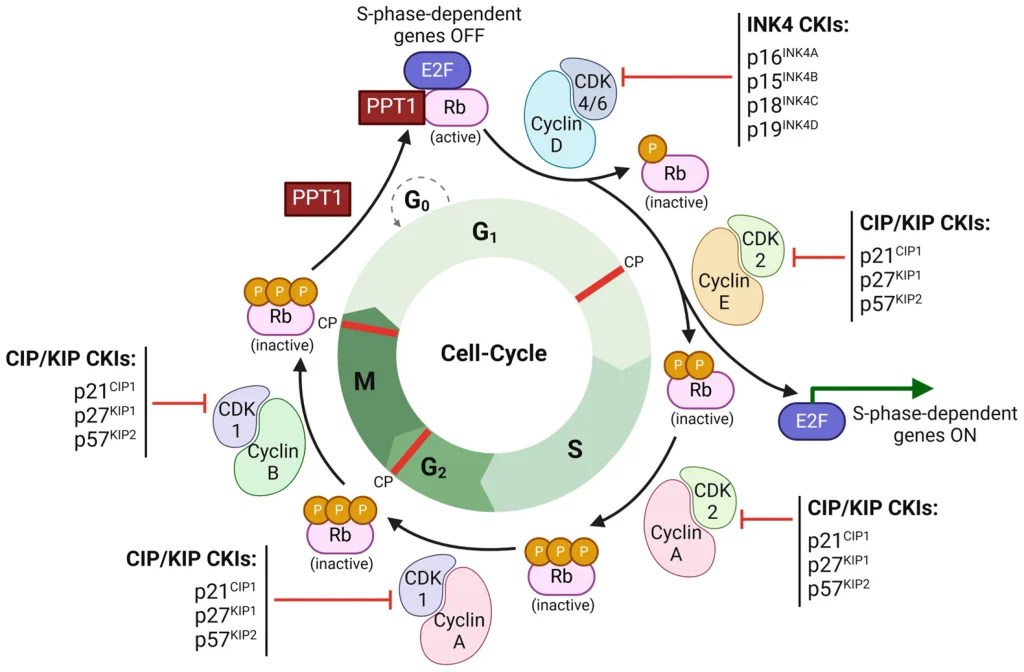
Source: Stojchevski, R.; Sutanto, E.A.; Sutanto, R.; Hadzi-Petrushev, N.; Mladenov, M.; Singh, S.R.; Sinha, J.K.; Ghosh, S.; Yarlagadda, B.; Singh, K.K.; et al. Translational Advances in Oncogene and Tumor-Suppressor Gene Research. Cancers 2025, 17, 1008. https://doi.org/10.3390/cancers17061008
Many tumor suppressor genes function as checkpoints that control cell cycle progression. For example, the RB1 gene encodes the retinoblastoma protein (pRb), which restricts the transition from the G1 to S phase by inhibiting E2F transcription factors. When pRb is phosphorylated or inactivated, uncontrolled cell proliferation can occur. This checkpoint control is a key defense against unregulated growth.
Promotion of DNA Repair
Some tumor suppressor genes, such as BRCA1, BRCA2, and TP53, are central to the detection and repair of DNA damage. BRCA proteins participate in homologous recombination repair, while p53 halts the cell cycle to allow DNA repair or initiates apoptosis if the damage is irreparable. This ensures the transmission of accurate genetic information during cell division.
Induction of Apoptosis
Tumor suppressors also initiate programmed cell death when cellular damage exceeds repair capacity. The p53 protein, for instance, activates pro-apoptotic genes such as BAX and PUMA, preventing the survival of cells with oncogenic potential. This function is essential for eliminating precancerous cells and maintaining tissue homeostasis.
Maintenance of Genomic Stability
Genes like PTEN and ATM contribute to genomic integrity by regulating signaling pathways involved in cell survival and DNA damage response. PTEN negatively regulates the PI3K/AKT pathway, preventing excessive proliferation and survival signaling. ATM detects double-strand breaks and coordinates DNA repair machinery, further ensuring chromosomal stability.
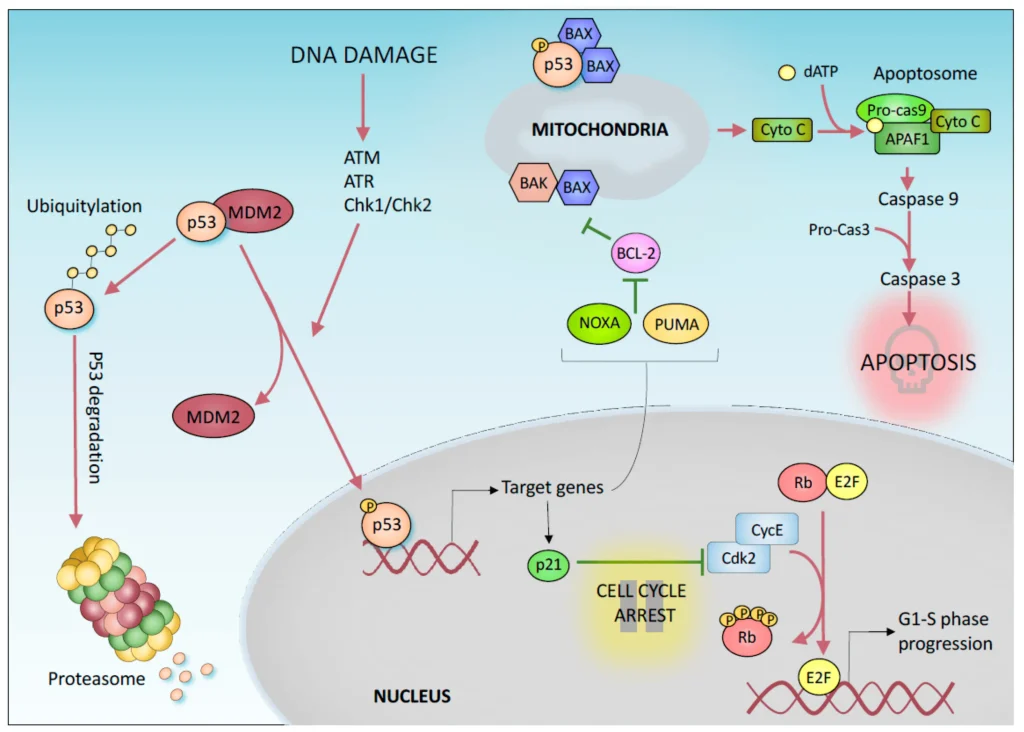
Source: Pitolli, C.; Wang, Y.; Candi, E.; Shi, Y.; Melino, G.; Amelio, I. p53-Mediated Tumor Suppression: DNA-Damage Response and Alternative Mechanisms. Cancers 2019, 11, 1983. https://doi.org/10.3390/cancers11121983
Mechanisms of Tumor Suppressor Gene Inactivation
The inactivation of tumor suppressor genes represents a fundamental step in carcinogenesis. Unlike oncogenes, which require activation to promote cancer, tumor suppressor genes contribute to tumor formation when their normal function is lost. This loss can occur through genetic, epigenetic, or post-transcriptional mechanisms that disrupt their expression or activity.
Genetic Mutations
Mutations are among the most direct mechanisms of tumor suppressor gene inactivation. These can include point mutations, nonsense mutations, insertions, deletions, or frameshift mutations that result in nonfunctional or truncated proteins. For instance, missense mutations in TP53 often impair the protein’s ability to bind DNA and regulate target genes involved in cell cycle arrest or apoptosis. Similarly, deletions of RB1 or PTEN lead to complete loss of their tumor-suppressive functions.
Loss of Heterozygosity (LOH) and the Two-Hit Hypothesis
The “two-hit hypothesis,” proposed by Alfred Knudson, explains that both alleles of a tumor suppressor gene must be inactivated for tumor development to occur. The first “hit” may be a point mutation or a deletion in one allele, while the second “hit” often involves loss of heterozygosity (LOH)—the loss of the remaining normal allele due to chromosomal deletion or recombination. LOH has been observed in several cancers, including those affecting TP53, RB1, and VHL genes.
Epigenetic Silencing
Epigenetic mechanisms, particularly DNA methylation of CpG islands within gene promoters, can silence tumor suppressor gene expression without altering the DNA sequence. For example, hypermethylation of the CDKN2A promoter leads to the loss of p16^INK4a expression, a critical inhibitor of cyclin-dependent kinases. Additionally, histone modifications such as deacetylation and methylation can condense chromatin structure, preventing transcription factor access and suppressing gene expression.
Post-Transcriptional and Post-Translational Regulation
Tumor suppressor gene expression can also be downregulated by microRNAs (miRNAs) that target mRNA transcripts for degradation or translational inhibition. For instance, miR-21 is known to suppress PTEN and TPM1 expression in various cancers. Moreover, post-translational modifications—including phosphorylation, ubiquitination, and acetylation—can affect the stability and function of tumor suppressor proteins, such as the degradation of p53 mediated by MDM2.
Chromosomal Instability and Gene Deletion
Large-scale chromosomal alterations, such as deletions, translocations, or aneuploidy, can result in the physical loss of tumor suppressor loci. Such genomic instability often arises early in tumor progression and contributes to the cumulative inactivation of multiple tumor suppressors within the same cell population.
Major Tumor Suppressor Genes and Their Roles
Tumor suppressor genes form a diverse group of regulatory elements that control multiple cellular pathways involved in growth inhibition, DNA repair, apoptosis, and genomic maintenance. Mutations or deletions in these genes are frequently observed across different types of human cancers. The following section highlights the most well-characterized tumor suppressor genes and their biological functions.
TP53: The “Guardian of the Genome”
The TP53 gene is the most commonly mutated tumor suppressor in human cancers. It encodes the p53 protein, a transcription factor that regulates genes involved in cell cycle arrest, DNA repair, and apoptosis. In response to cellular stress or DNA damage, p53 is activated to halt cell division and promote DNA repair. If the damage is irreparable, it triggers apoptosis to prevent malignant transformation. Mutations in TP53 lead to the loss of this protective function, resulting in unchecked cell proliferation and genomic instability. Defective p53 is associated with several cancers, including lung, breast, colorectal, and bladder cancer.
RB1: Regulator of the Cell Cycle
The RB1 gene encodes the retinoblastoma protein (pRb), which serves as a key checkpoint controller of the G1/S transition in the cell cycle. When active, pRb binds and inhibits E2F transcription factors, preventing the transcription of genes required for DNA synthesis. Phosphorylation of pRb by cyclin-dependent kinases (CDKs) inactivates its suppressive effect, allowing the cell cycle to progress. Mutations or deletions in RB1 disrupt this control, leading to uncontrolled proliferation, as seen in retinoblastoma, osteosarcoma, and small-cell lung carcinoma.
PTEN: Negative Regulator of the PI3K/AKT Pathway
PTEN (Phosphatase and Tensin Homolog) functions as a lipid phosphatase that antagonizes the PI3K/AKT signaling pathway, which promotes cell survival and growth. Loss of PTEN activity results in hyperactivation of AKT, enhancing proliferation, inhibiting apoptosis, and promoting metabolic changes that favor tumor development. PTEN mutations or deletions are common in glioblastoma, endometrial carcinoma, prostate cancer, and melanoma.
BRCA1 and BRCA2: Guardians of DNA Repair
BRCA1 and BRCA2 are critical for homologous recombination (HR)-mediated DNA repair of double-strand breaks. BRCA1 also participates in checkpoint control, while BRCA2 stabilizes RAD51 at DNA damage sites. Germline mutations in these genes significantly increase susceptibility to breast, ovarian, prostate, and pancreatic cancers. Their discovery has led to the development of targeted therapies such as PARP inhibitors, which exploit synthetic lethality in BRCA-mutated tumors.
APC: Regulator of Wnt Signaling
The Adenomatous Polyposis Coli (APC) gene encodes a protein that regulates the Wnt/β-catenin signaling pathway, which influences cell proliferation and differentiation. Loss of APC function causes abnormal accumulation of β-catenin in the nucleus, activating genes that promote cell growth. Mutations in APC are early events in colorectal tumorigenesis, particularly in familial adenomatous polyposis (FAP).
Additional Tumor Suppressors
- VHL (Von Hippel–Lindau): Regulates hypoxia-inducible factors (HIFs) and angiogenesis; mutated in renal cell carcinoma.
- CDKN2A (p16INK4a): Inhibits CDK4/6, preventing pRb phosphorylation and controlling cell cycle progression.
- NF1 (Neurofibromin 1): Negatively regulates Ras signaling; mutations lead to neurofibromatosis type 1 and increased cancer risk.
- SMAD4: Mediates TGF-β signaling for growth inhibition; frequently mutated in pancreatic and colorectal cancers.
Diagnostic and Therapeutic Implications
The study of tumor suppressor genes has profoundly transformed cancer diagnosis, prognosis, and treatment. Because the loss or mutation of these genes plays a central role in tumor initiation and progression, their detection provides essential biomarkers for early diagnosis, risk assessment, and therapeutic decision-making. Moreover, advances in molecular biology and genomics have enabled the development of targeted therapies designed to exploit vulnerabilities arising from tumor suppressor gene defects.
Diagnostic Applications
Molecular analysis of tumor suppressor genes is now a routine component of cancer diagnostics. Techniques such as PCR, Sanger sequencing, and next-generation sequencing (NGS) are used to detect germline and somatic mutations in genes such as TP53, BRCA1, BRCA2, PTEN, and APC.
- Genetic screening allows the identification of individuals at high risk for hereditary cancers, such as those with BRCA or TP53 mutations.
- Loss of heterozygosity (LOH) analysis and methylation profiling are employed to detect epigenetic silencing or chromosomal deletions in tumor samples.
- The integration of tumor suppressor gene testing into liquid biopsy platforms enables non-invasive monitoring of tumor dynamics through circulating DNA in blood samples.
These molecular diagnostic tools support personalized oncology, allowing treatment to be tailored based on a patient’s genetic profile.
Prognostic and Predictive Biomarkers
Mutations in tumor suppressor genes often correlate with disease aggressiveness and prognosis.
- TP53 mutations are associated with poor survival in several cancers, including breast, lung, and colorectal carcinomas.
- Loss of PTEN predicts resistance to targeted inhibitors that act on the PI3K/AKT pathway.
- BRCA1/2 mutations not only indicate hereditary cancer risk but also predict sensitivity to PARP inhibitors and platinum-based chemotherapy.
These insights enable clinicians to stratify patients and design more effective, individualized treatment strategies.
Therapeutic Approaches Targeting Tumor Suppressor Pathways
While direct restoration of tumor suppressor gene function remains challenging, several strategies aim to reactivate or compensate for their loss:
- Gene therapy: Introducing functional copies of tumor suppressor genes (e.g., p53 gene therapy) to restore normal function.
- Epigenetic therapy: Using DNA methyltransferase inhibitors (e.g., azacitidine) or histone deacetylase inhibitors to reverse gene silencing and restore expression.
- Synthetic lethality: Targeting compensatory pathways that become essential when tumor suppressor genes are lost — for example, using PARP inhibitors in BRCA1/2-deficient tumors.
- Immunotherapy: Tumors with defective DNA repair accumulate mutations that increase neoantigen load, making them more responsive to immune checkpoint inhibitors.
These approaches represent a new era of precision oncology where therapeutic design is guided by the genetic and epigenetic landscape of each tumor.
Challenges in Therapeutic Targeting
Unlike oncogenes, which are activated and can be inhibited pharmacologically, tumor suppressors are inactivated, making them difficult to target directly. Additional challenges include tumor heterogeneity, compensatory signaling pathways, and the risk of off-target effects when attempting to restore gene function. Nonetheless, ongoing research in CRISPR-based gene editing, mRNA therapy, and small-molecule reactivators of mutant p53 holds great promise for future therapeutic breakthroughs.
Clinical Implementation and Personalized Oncology
Integration of tumor suppressor gene profiling into clinical practice enhances both diagnostic accuracy and therapeutic precision. Multi-gene testing panels, coupled with AI-driven genomic interpretation, are increasingly used to predict treatment responses and identify novel therapeutic opportunities. These developments mark a transition toward genomics-guided oncology, where understanding the tumor suppressor gene status is essential for optimal patient management.
Comparative Discussion — Tumor Suppressor Genes vs Oncogenes
Understanding cancer development requires examining the dynamic interplay between tumor suppressor genes and oncogenes. While both are critical in regulating cell growth and survival, they operate through opposing mechanisms. The balance between these two gene types determines whether a cell maintains normal function or undergoes malignant transformation.
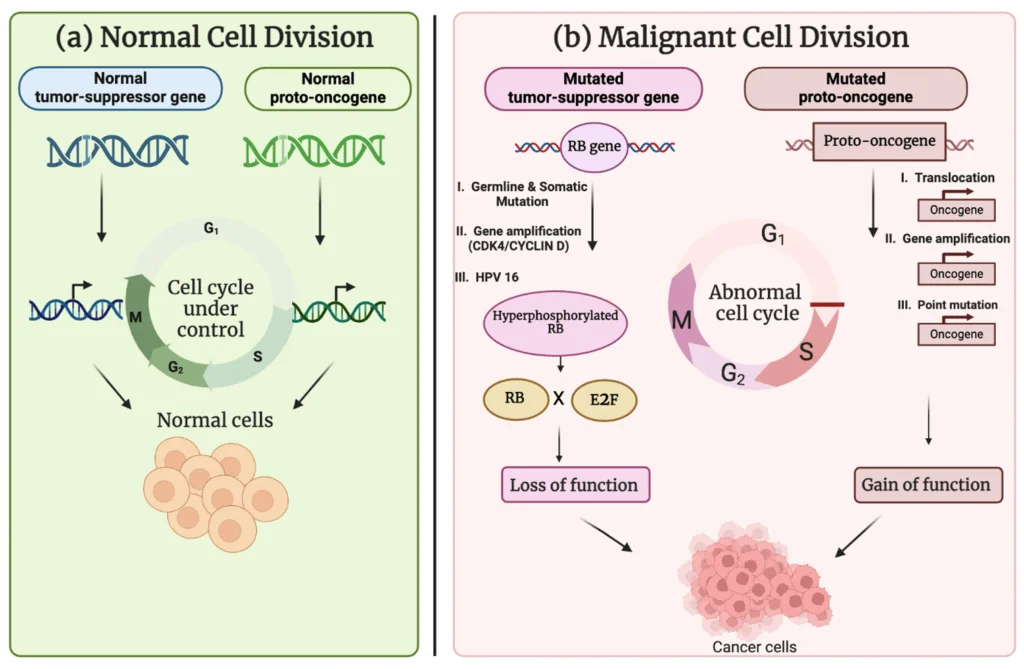
Singh, S.R.; Bhaskar, R.; Ghosh, S.; Yarlagadda, B.; Singh, K.K.; Verma, P.; Sengupta, S.; Mladenov, M.; Hadzi-Petrushev, N.; Stojchevski, R.; et al. Exploring the Genetic Orchestra of Cancer: The Interplay Between Oncogenes and Tumor-Suppressor Genes. Cancers 2025, 17, 1082. https://doi.org/10.3390/cancers17071082
Fundamental Differences
| Feature | Tumor Suppressor Genes | Oncogenes |
|---|---|---|
| Function | Inhibit cell proliferation, promote DNA repair and apoptosis | Promote cell proliferation and survival |
| Effect of Activation | Usually protective | Oncogenic if activated |
| Effect of Loss | Leads to uncontrolled growth and tumorigenesis | Usually no effect unless already activated |
| Examples | TP53, RB1, PTEN, BRCA1/2 | RAS, MYC, HER2, BCR-ABL |
Tumor suppressor genes act as “brakes” on the cell cycle, preventing abnormal division, whereas oncogenes function as “accelerators,” driving proliferation when activated.
Gatekeepers vs Caretakers
Tumor suppressor genes are often classified into two functional categories:
- Gatekeepers: Directly regulate cell growth and apoptosis (e.g., TP53, RB1). Loss of gatekeepers leads to unrestrained proliferation.
- Caretakers: Maintain genomic stability and DNA repair (e.g., BRCA1/2, ATM). Their inactivation results in mutation accumulation, indirectly promoting tumorigenesis.
Oncogenes, in contrast, are typically activated by gain-of-function mutations, gene amplification, or translocations, enhancing growth signaling pathways such as RAS-MAPK, PI3K-AKT, or MYC-driven transcription.
Cooperative Role in Carcinogenesis
Cancer rarely arises from defects in a single gene. Instead, tumorigenesis is the result of synergistic interactions between oncogene activation and tumor suppressor loss:
- Loss of TP53 combined with RAS activation accelerates malignant transformation.
- Defects in RB1 facilitate unchecked proliferation, while oncogene-driven signals further enhance tumor growth.
- Tumors with BRCA1/2 loss often acquire additional oncogenic mutations, increasing genomic instability and heterogeneity.
Conclusion
Tumor suppressor genes are essential guardians of the genome, controlling cell cycle progression, DNA repair, apoptosis, and genomic stability. Their inactivation—through mutations, epigenetic silencing, or post-transcriptional regulation—is a central event in cancer development, disrupting the balance between growth and inhibition. Understanding their molecular functions, mechanisms of loss, and interactions with oncogenes provides critical insights into tumorigenesis and guides the development of diagnostic tools, prognostic biomarkers, and targeted therapies. Advances in genomics, epigenetics, and precision medicine continue to reveal new opportunities for restoring tumor suppressor function, highlighting their pivotal role in both cancer prevention and treatment.
References
- Kontomanolis EN, Koutras A, Syllaios A, Schizas D, Mastoraki A, Garmpis N, Diakosavvas M, Angelou K, Tsatsaris G, Pagkalos A, Ntounis T, Fasoulakis Z. Role of Oncogenes and Tumor-suppressor Genes in Carcinogenesis: A Review. Anticancer Res. 2020 Nov;40(11):6009-6015. doi: 10.21873/anticanres.14622.
- Megino-Luque C, Bravo-Cordero JJ. Metastasis suppressor genes and their role in the tumor microenvironment. Cancer Metastasis Rev. 2023 Dec;42(4):1147-1154. doi: 10.1007/s10555-023-10155-6.
- Tabanifar B, Lau H, Sabapathy K. Tumor suppressor genes in the tumor microenvironment. Dis Model Mech. 2025 Mar 1;18(3):dmm052049. doi: 10.1242/dmm.052049.
- Romagnolo AP, Romagnolo DF, Selmin OI. BRCA1 as target for breast cancer prevention and therapy. Anticancer Agents Med Chem. 2015;15(1):4-14. doi: 10.2174/1871520614666141020153543.
- Liu Y, Hu X, Han C, Wang L, Zhang X, He X, Lu X. Targeting tumor suppressor genes for cancer therapy. Bioessays. 2015 Dec;37(12):1277-86. doi: 10.1002/bies.201500093.


