

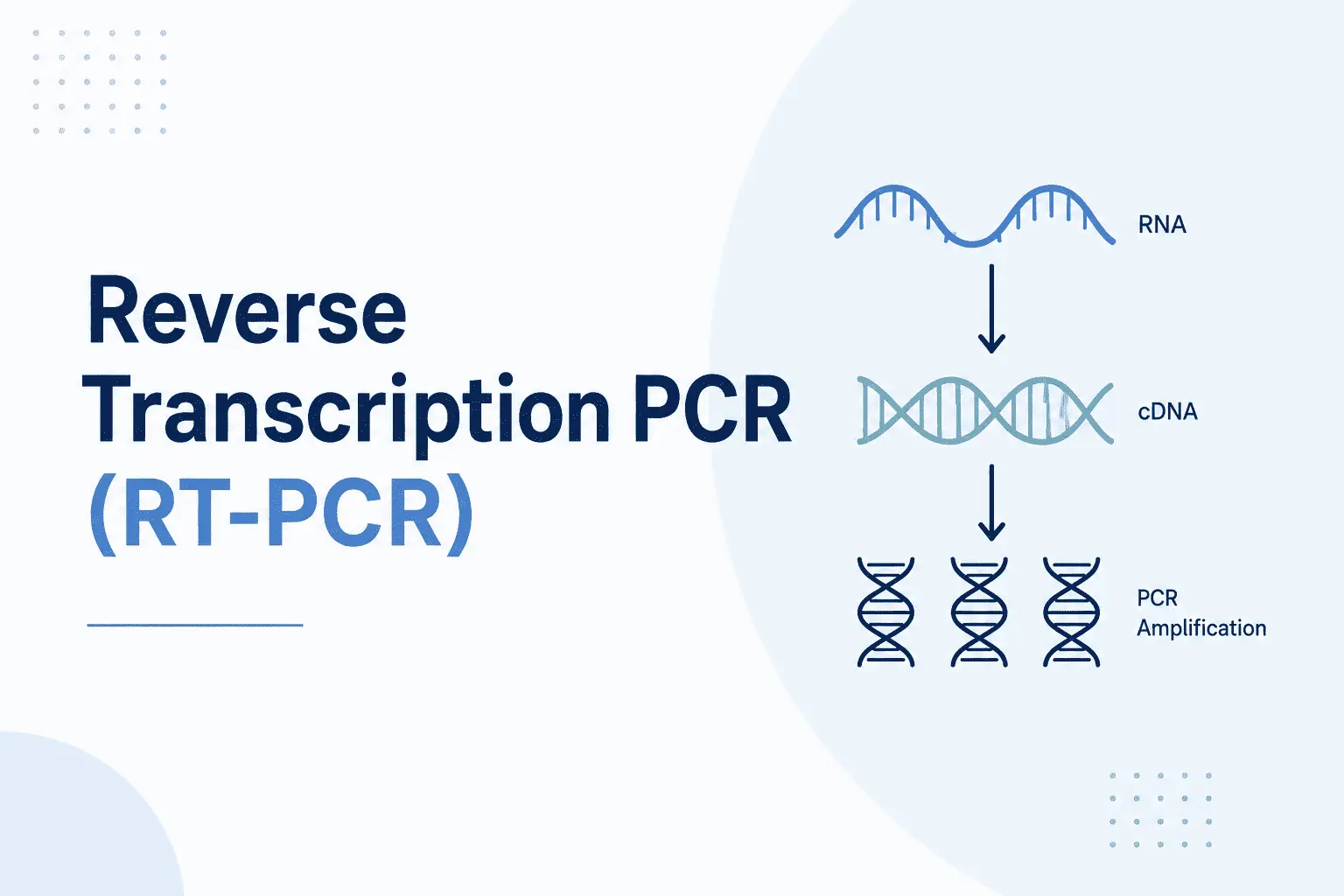
Reverse transcription polymerase chain reaction (RT-PCR) is one of the most widely used molecular biology techniques for studying RNA. By converting RNA into complementary DNA (cDNA) before amplification, RT-PCR allows researchers to detect and analyze gene expression, identify RNA viruses, and investigate numerous biological processes. Its high sensitivity and specificity have made it an essential tool in both research laboratories and clinical diagnostics.
Unlike conventional PCR, which amplifies DNA, RT-PCR begins with RNA as the starting material, making it ideal for analyzing gene activity and detecting RNA-based pathogens.
In this article, you’ll learn the principle of RT-PCR, its workflow, major types, diverse applications, key advantages and limitations, and best practices for obtaining accurate and reliable results.
What Is RT-PCR and How Does It Work?
Definition of RT-PCR
Reverse transcription polymerase chain reaction (RT-PCR) is a laboratory technique used to detect and analyze RNA molecules. It combines two molecular biology methods: reverse transcription, which converts RNA into complementary DNA (cDNA), and the polymerase chain reaction (PCR), which amplifies the resulting cDNA into millions of copies for analysis.
Why Is RNA Converted into cDNA?
PCR enzymes can amplify DNA, but they cannot directly amplify RNA. Therefore, RNA must first be converted into complementary DNA (cDNA) using the enzyme reverse transcriptase.
This conversion offers several advantages:
- Makes RNA compatible with PCR amplification.
- Preserves genetic information from the original RNA molecule.
- Enables the detection of low-abundance RNA transcripts.
- Facilitates gene expression studies and RNA virus detection.
After cDNA synthesis, the PCR reaction amplifies a specific target sequence.
The amplification occurs through repeated temperature cycles that include:
- Denaturation: Double-stranded DNA separates into single strands.
- Annealing: Primers bind to complementary target sequences.
- Extension: DNA polymerase synthesizes new DNA strands.
Each PCR cycle doubles the amount of target DNA, resulting in millions of copies after multiple cycles. These amplified products can then be analyzed using various detection methods.
Essential Components of an RT-PCR Reaction
| Component | Function |
|---|---|
| RNA template | Contains the target RNA sequence to be analyzed. |
| Reverse transcriptase | Converts RNA into complementary DNA (cDNA). |
| DNA polymerase | Amplifies the cDNA during PCR. |
| Primers | Short DNA sequences that define the region to be amplified. |
| dNTPs | Building blocks used to synthesize new DNA strands. |
| Reaction buffer | Maintains optimal conditions for enzyme activity. |
| Magnesium ions (Mg²⁺) | Essential cofactors that support enzyme function and PCR efficiency. |
Additional reagents, such as RNase inhibitors and nuclease-free water, are often included to protect RNA integrity and ensure reliable results.
Step-by-Step RT-PCR Workflow
RT-PCR follows a systematic workflow from RNA isolation to final analysis.
- RNA Extraction
The process begins with the isolation of high-quality RNA from biological samples such as blood, tissues, cultured cells, or microorganisms.
Because RNA is highly susceptible to degradation, careful handling under RNase-free conditions is essential. - RNA Quality Assessment
Before reverse transcription, the extracted RNA is evaluated for its quality and concentration.
Researchers commonly assess:
RNA purity
RNA concentration
RNA integrity
Absence of contaminants such as proteins or genomic DNA
High-quality RNA is critical for obtaining accurate RT-PCR results. - Reverse Transcription
The purified RNA is mixed with reverse transcriptase, primers, nucleotides, and other reaction components.
The enzyme synthesizes complementary DNA (cDNA), which serves as the template for the PCR reaction. - PCR Amplification
The synthesized cDNA is amplified using PCR through repeated cycles of:
Denaturation
Primer annealing
DNA extension
Each cycle increases the amount of target DNA, enabling the detection of even very small amounts of RNA. - Product Analysis
The amplified PCR products are analyzed to determine whether the target sequence is present.
The analysis method depends on the RT-PCR technique used:
Conventional RT-PCR: PCR products are typically visualized by agarose gel electrophoresis.
Real-time RT-PCR (qRT-PCR): Amplification is monitored in real time using fluorescent dyes or probes, allowing both detection and quantification of target RNA.
Types of RT-PCR and Their Differences
RT-PCR can be performed using different approaches depending on the research or diagnostic objective. The main variations include one-step RT-PCR and two-step RT-PCR, as well as conventional RT-PCR and real-time RT-PCR (qRT-PCR).
One-Step RT-PCR
In one-step RT-PCR, reverse transcription and PCR amplification occur in a single reaction tube. Both reactions are carried out sequentially using the same reaction mixture, minimizing sample handling.
Workflow
The one-step RT-PCR workflow includes:
- RNA extraction
- Preparation of a single reaction mixture containing all reagents
- Reverse transcription to synthesize cDNA
- PCR amplification in the same tube
- Detection of amplified products
Advantages
One-step RT-PCR offers several benefits:
- Simple and streamlined workflow
- Reduced hands-on time
- Lower risk of sample contamination
- Ideal for processing large numbers of samples
- Well suited for clinical diagnostics and pathogen detection
Limitations
Despite its convenience, one-step RT-PCR has some drawbacks:
- Less flexibility because cDNA cannot be stored for future experiments
- Difficult to amplify multiple target genes from the same RNA sample
- Limited optimization of reverse transcription and PCR steps independently
Two-Step RT-PCR
In two-step RT-PCR, reverse transcription and PCR amplification are performed as separate reactions. The RNA is first converted into cDNA, which is then used as the template for one or more PCR reactions.
Workflow
The two-step RT-PCR workflow consists of:
- RNA extraction
- Reverse transcription to generate cDNA
- Storage or dilution of the synthesized cDNA
- PCR amplification using gene-specific primers
- Analysis of PCR products
Advantages
Two-step RT-PCR is the preferred method for many research applications because it provides greater flexibility.
Its advantages include:
- cDNA can be stored for repeated analyses
- Multiple genes can be amplified from the same cDNA sample
- Greater flexibility for assay optimization
- Often provides higher sensitivity for low-abundance transcripts
- Well suited for gene expression studies
Limitations
The main disadvantages are:
- More experimental steps
- Longer workflow
- Increased risk of contamination during sample transfer
- Greater reagent consumption
Conventional RT-PCR vs. Real-Time RT-PCR (qRT-PCR)
Although both techniques begin with reverse transcription, they differ in how PCR products are detected and analyzed.
| Feature | Conventional RT-PCR | Real-Time RT-PCR (qRT-PCR) |
|---|---|---|
| Detection method | End-point analysis using agarose gel electrophoresis | Fluorescent dyes or probes monitor amplification in real time |
| Quantification | Primarily qualitative or semi-quantitative | Quantitative measurement of RNA expression levels |
| Sensitivity | High | Very high, capable of detecting low-abundance transcripts |
| Speed | Requires post-PCR analysis | Results obtained during amplification |
| Applications | Gene detection, cloning, confirmation of PCR products | Gene expression analysis, viral load measurement, clinical diagnostics |
Applications of RT-PCR in Research and Clinical Diagnostics
RT-PCR has become one of the most versatile tools in molecular biology. Its ability to detect and amplify RNA with high sensitivity makes it valuable in basic research, clinical diagnostics, biotechnology, and agriculture.
Gene Expression Analysis
One of the most common applications of RT-PCR is gene expression analysis. Since genes are transcribed into messenger RNA (mRNA), measuring RNA levels allows researchers to determine whether a gene is active and to what extent.
RT-PCR is widely used to:
- Compare gene expression between healthy and diseased tissues.
- Investigate cellular responses to drugs or environmental stimuli.
- Study signaling pathways and molecular mechanisms.
- Validate results obtained from RNA sequencing (RNA-seq) or microarray studies.
- Analyze the expression of regulatory RNAs, including microRNAs.
Because of its high sensitivity, RT-PCR can detect even low-abundance transcripts that may be difficult to measure using other techniques.
Detection of RNA Viruses
Many clinically important viruses contain RNA genomes. RT-PCR has become the gold standard for detecting these pathogens because it can identify viral RNA quickly and accurately, even when only a small amount is present.
Common applications include the detection of:
- SARS-CoV-2, the virus responsible for COVID-19
- Influenza A and B viruses
- Human immunodeficiency virus (HIV)
- Hepatitis viruses, including hepatitis C virus (HCV)
- Other emerging and respiratory RNA viruses
During the COVID-19 pandemic, real-time RT-PCR (qRT-PCR) was extensively used worldwide for diagnosing SARS-CoV-2 infection. The technique remains one of the most reliable laboratory methods for confirming active viral infections.
In addition to diagnosis, RT-PCR can be used to:
- Measure viral load
- Monitor disease progression
- Evaluate treatment effectiveness
- Detect viral variants in research settings
Cancer Research
RT-PCR plays a critical role in cancer biology by helping researchers understand the molecular changes that occur during tumor development and progression.
Biomarker Analysis
Many cancers show abnormal expression of specific genes. RT-PCR is frequently used to measure these changes and identify biomarkers that may aid in diagnosis, prognosis, or treatment selection.
Researchers also use RT-PCR to analyze:
- Oncogene expression
- Tumor suppressor genes
- MicroRNAs (miRNAs)
- Long non-coding RNAs (lncRNAs)
Gene Fusion Detection
Certain cancers contain characteristic gene fusion transcripts that result from chromosomal rearrangements.
RT-PCR can detect these fusion genes with high sensitivity, making it useful for diagnosing several hematological malignancies and solid tumors.
Examples include:
- BCR-ABL1 in chronic myeloid leukemia (CML)
- PML-RARA in acute promyelocytic leukemia (APL)
- EML4-ALK in non-small cell lung cancer
Monitoring Treatment Response
RT-PCR is also valuable for evaluating how patients respond to therapy.
By measuring changes in biomarker or fusion transcript levels over time, clinicians can:
- Assess treatment effectiveness
- Detect minimal residual disease (MRD)
- Monitor disease recurrence
- Guide personalized treatment decisions
Stem Cell and Developmental Biology
RT-PCR is widely used to study genes involved in stem cell maintenance, differentiation, and embryonic development.
Researchers use RT-PCR to:
- Monitor stem cell differentiation.
- Evaluate pluripotency markers.
- Study developmental signaling pathways.
- Compare gene expression across developmental stages.
- Assess the effects of growth factors and differentiation protocols.
These applications contribute to advances in regenerative medicine and developmental biology.
Microbiology and Infectious Disease Research
Beyond viral detection, RT-PCR is an important tool for studying microorganisms and host-pathogen interactions.
Common applications include:
- Detecting bacterial and fungal RNA.
- Measuring microbial gene expression.
- Studying pathogen virulence factors.
- Monitoring antimicrobial resistance genes.
- Investigating host immune responses during infection.
- Detecting emerging infectious agents.
Because RT-PCR is highly sensitive and specific, it is widely used in clinical microbiology laboratories and infectious disease research.
Advantages, Limitations, and Best Practices for RT-PCR
Advantages of RT-PCR
RT-PCR offers numerous benefits that have made it a standard technique in research and clinical laboratories.
High Sensitivity
RT-PCR can detect extremely small amounts of RNA, making it suitable for analyzing low-abundance transcripts and early-stage infections.
This high sensitivity enables researchers to identify target RNA molecules even when only a few copies are present.
High Specificity
Carefully designed primers ensure that only the target sequence is amplified.
This minimizes non-specific amplification and improves the accuracy of gene expression analysis and pathogen detection.
Requires Only a Small Amount of RNA
RT-PCR can generate reliable results from relatively small RNA samples.
This is particularly useful when working with:
- Small tissue biopsies
- Rare cell populations
- Clinical specimens
- Limited research samples
Rapid Detection
Compared with many traditional molecular methods, RT-PCR provides results within a few hours.
This rapid turnaround is especially valuable for:
- Clinical diagnosis
- Infectious disease surveillance
- Emergency outbreak response
- Time-sensitive research experiments
Limitations of RT-PCR
Despite its many advantages, RT-PCR has several limitations that should be considered during experimental planning.
RNA Degradation
RNA is highly unstable and can be rapidly degraded by RNases.
Poor RNA quality can reduce cDNA synthesis efficiency and produce inaccurate or inconsistent results.
Risk of Contamination
Because RT-PCR is extremely sensitive, even trace amounts of contaminating DNA or previously amplified PCR products can generate false-positive results.
Strict laboratory practices are essential to minimize contamination.
Primer Design Challenges
Successful RT-PCR depends on well-designed primers.
Poor primer design may lead to:
- Non-specific amplification
- Primer-dimer formation
- Low amplification efficiency
- False-negative results
Variable Reverse Transcription Efficiency
The reverse transcription step is not always equally efficient for every RNA molecule.
Factors such as RNA secondary structure, enzyme performance, and primer selection can influence cDNA synthesis and affect the final results.
Limited Quantification in Conventional RT-PCR
Conventional RT-PCR mainly provides qualitative information about the presence or absence of a target RNA.
Although band intensity on an agarose gel may provide a rough estimate, accurate quantification requires real-time RT-PCR (qRT-PCR).
Tips for Reliable RT-PCR Results
Following good laboratory practices can significantly improve RT-PCR accuracy and reproducibility.
Use High-Quality RNA
Successful RT-PCR begins with intact, high-purity RNA.
Before starting the reaction, verify:
- RNA concentration
- RNA purity
- RNA integrity
- Absence of genomic DNA contamination
Work Under RNase-Free Conditions
Since RNases rapidly degrade RNA, use RNase-free materials throughout the experiment.
Good practices include:
- Wearing clean gloves
- Using RNase-free tubes and pipette tips
- Cleaning work surfaces with RNase-decontamination solutions
- Keeping RNA samples on ice whenever possible
Include Appropriate Controls
Controls help verify that the experiment is working correctly and identify potential sources of error.
Common controls include:
- No-template control (NTC)
- No reverse transcriptase control (No-RT)
- Positive control
- Internal reference control
Validate Primer Design
Before performing RT-PCR, confirm that primers:
- Specifically target the gene of interest
- Produce a single amplification product
- Have appropriate melting temperatures
- Avoid significant secondary structures and primer-dimer formation
Proper primer validation greatly improves amplification efficiency.
Perform Technical and Biological Replicates
Replicates increase confidence in experimental results.
Researchers commonly include:
- Technical replicates to assess experimental precision
- Biological replicates to account for natural biological variation
Use Stable Reference Genes
For gene expression studies, normalization is essential.
Reference (housekeeping) genes should have stable expression across all experimental samples to ensure accurate comparison of target gene expression.
Common RT-PCR Troubleshooting Issues
| Problem | Possible Causes | Possible Solutions |
|---|---|---|
| No amplification | Poor RNA quality, missing reagent, incorrect cycling conditions, failed reverse transcription | Verify RNA integrity, check reagent preparation, optimize cycling parameters |
| Weak amplification | Low RNA concentration, inefficient cDNA synthesis, poor primer design | Increase RNA input, optimize reverse transcription, redesign primers |
| Multiple PCR bands | Non-specific primer binding, low annealing temperature | Increase annealing temperature or redesign primers |
| Primer-dimers | Primer self-complementarity or excessive primer concentration | Optimize primer design and reduce primer concentration if necessary |
| RNA degradation | RNase contamination or improper sample handling | Use RNase-free techniques and process samples promptly |
Conclusion
RT-PCR is a powerful and widely used molecular biology technique for detecting and analyzing RNA. By combining reverse transcription with PCR amplification, it enables researchers and clinicians to study gene expression, detect RNA viruses, and investigate a wide range of biological and disease-related processes with high sensitivity and specificity.
Whether used for basic research, clinical diagnostics, cancer studies, or infectious disease testing, RT-PCR continues to play a vital role in modern science. Understanding its principles, workflows, different methods, and best practices allows researchers to select the most appropriate approach and generate accurate, reliable, and reproducible results.


