

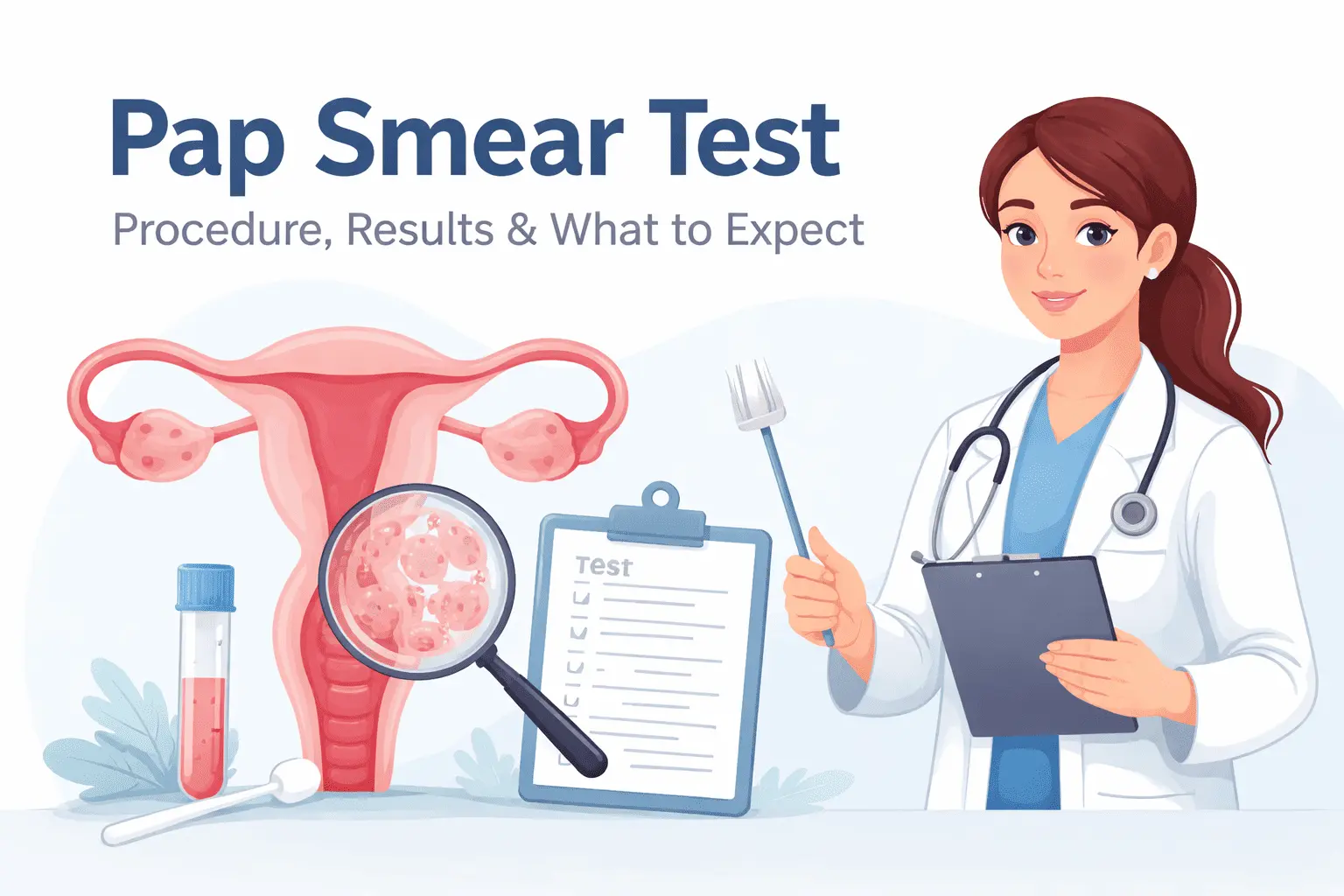
A Pap smear test is a routine screening procedure used to detect abnormal cells in the cervix, the lower part of the uterus. These cellular changes are often linked to infections such as human papillomavirus (HPV) and may develop into cervical cancer if left undetected.
One of the key advantages of a Pap smear is its role in early detection. Cervical cell changes typically occur slowly and without noticeable symptoms, which makes regular screening essential for identifying potential problems at an early, manageable stage.
The procedure itself is quick and generally painless, taking only a few minutes to perform. Despite its simplicity, it remains one of the most effective tools for preventing cervical cancer and protecting long-term reproductive health.
In this article, we will explore what a Pap smear test is, how it is performed, how to interpret the results, and what steps to take next depending on your outcome.
What Is a Pap Smear Test?
A Pap smear test, also known as a Pap test, is a medical screening used to examine cells collected from the cervix, which is the lower part of the uterus that opens into the vagina.
The purpose of this test is to detect abnormal changes in cervical cells at an early stage. These changes are often associated with infection by the human papillomavirus (HPV), a common virus transmitted through sexual contact.
Unlike diagnostic tests, the Pap smear is designed to prevent disease by identifying early cellular changes that could eventually develop into cervical cancer if left untreated.
Why Is a Pap Smear Important?
The Pap smear is a key tool in the prevention of cervical cancer. It allows healthcare providers to detect precancerous changes before they progress into more serious conditions.
Regular screening provides several benefits:
- It helps identify abnormal cells early
- It reduces the risk of developing cervical cancer
- It enables timely follow-up and treatment
- It supports long-term reproductive health
Because cervical cancer develops slowly, routine Pap smear testing can significantly reduce both incidence and mortality.
When Should You Get a Pap Smear?
Screening guidelines vary slightly, but general recommendations are as follows:
Ages 21 to 29
A Pap smear is recommended every three years.
Ages 30 to 65
A Pap smear combined with HPV testing is recommended every five years, or a Pap smear alone every three years.
Over age 65
Screening may no longer be necessary if previous results have been consistently normal.
Higher-risk individuals
More frequent screening may be recommended for individuals with a history of abnormal results, weakened immune systems, or known HPV infection.
Pap Smear Procedure: Step by Step
Understanding the procedure can help reduce uncertainty and make the experience more manageable.
The test typically includes the following steps:
- The patient lies on an examination table with feet supported.
- A speculum is gently inserted into the vagina to allow visualization of the cervix.
- A small brush or spatula is used to collect a sample of cervical cells.
- The sample is sent to a laboratory for microscopic analysis.
How Long Does It Take?
The procedure usually takes between five and ten minutes.
Does a Pap Smear Hurt?
Most individuals experience mild discomfort or pressure rather than pain. The sensation is brief and generally well tolerated.
To reduce discomfort, it may help to relax, breathe slowly, and schedule the test when not menstruating.
Understanding Pap Smear Results
Receiving test results can be stressful, but understanding the possible outcomes can provide reassurance.
Normal Result
A normal result indicates that no abnormal cervical cells were detected. In this case, routine screening should continue according to recommended guidelines.
Abnormal Result
An abnormal result does not mean that cancer is present. It indicates that some cervical cells appear different and may require monitoring or further evaluation.
If your results include epithelial cell abnormalities, it is important to understand what this means before drawing conclusions.
These changes are often mild and manageable, and in many cases, they resolve on their own.
For a complete explanation of the different types of abnormalities and the recommended next steps, read our full guide on epithelial cell abnormalities after a Pap smear.
Types of Abnormal Results
| Result Type | Meaning |
|---|---|
| ASC-US | Mild cellular changes, often linked to HPV |
| LSIL | Low-grade changes, usually temporary |
| HSIL | More significant changes that may require treatment |
| AGC | Changes in glandular cells requiring further evaluation |
What Causes Abnormal Pap Smear Results?
Abnormal findings can be caused by several factors.
HPV Infection
Human papillomavirus is the most common cause of abnormal cervical cell changes. In many cases, the immune system clears the infection naturally.
Inflammation or Infection
Bacterial or yeast infections can temporarily affect cervical cells.
Hormonal Changes
Hormonal fluctuations related to pregnancy or menopause may influence test results.
Other Factors
Smoking and a weakened immune system can increase the likelihood of abnormal findings.
What Happens After an Abnormal Pap Smear?
If abnormal cells are detected, additional tests may be recommended.
These may include:
- HPV testing to identify high-risk virus strains
- Colposcopy to closely examine the cervix
- Biopsy to analyze a small tissue sample
In many cases, especially when abnormalities are mild, monitoring over time is sufficient.
How to Prepare for a Pap Smear
Proper preparation can improve the accuracy of the test.
Before the procedure, it is recommended to avoid:
- Sexual intercourse for 24 to 48 hours
- Vaginal medications or creams
- Douching
The test should ideally be scheduled when not menstruating.
Tips to Stay Calm During the Test
Feeling anxious before a medical test is common. The following strategies may help:
- Practice slow and steady breathing
- Keep muscles relaxed
- Communicate any concerns with the healthcare provider
- Remember that the procedure is brief and routine
Are There Any Risks?
Pap smears are considered very safe. Some individuals may experience mild spotting or slight discomfort after the test. Serious complications are rare.
Conclusion
The Pap smear test is an essential component of preventive healthcare. It provides a reliable way to detect early changes in cervical cells before they become serious.
Although receiving abnormal results can be concerning, most cases do not indicate cancer and can be managed effectively with appropriate follow-up.
Maintaining regular screening according to medical guidelines is one of the most effective ways to protect long-term health.
FAQs
A Pap test is a screening procedure that collects cells from the cervix to detect abnormal changes that could lead to cervical cancer.
An abnormal result means some cervical cells look different than normal. It does not mean cancer, but further testing may be needed.
Yes, a Pap smear is a safe and routine procedure. It may cause mild discomfort or light spotting, but serious risks are very rare.
A Pap smear can detect early cell changes and sometimes cancer, but its main purpose is to identify precancerous abnormalities before cancer develops.
Most individuals should be screened every three to five years, depending on age and health history.
Yes. Cervical cell changes often occur without noticeable symptoms, making routine screening essential.
A Pap smear may indicate HPV-related changes, but a specific HPV test is required for confirmation.
References
- World Health Organization (WHO). Cervical cancer screening guidelines and recommendations. Available at: https://www.who.int/publications/i/item/9789240030824
- American College of Obstetricians and Gynecologists (ACOG). Cervical Cancer Screening. Available at: https://www.acog.org
- Centers for Disease Control and Prevention (CDC). Pap Test (Pap Smear). Available at: https://www.cdc.gov
- National Cancer Institute (NCI). Pap Test and HPV Testing. Available at: https://www.cancer.gov
- U.S. Preventive Services Task Force (USPSTF). Cervical Cancer: Screening Recommendation. Available at: https://www.uspreventiveservicestaskforce.org
- Mayo Clinic. Pap smear: What you can expect. Available at: https://www.mayoclinic.org
- American Cancer Society. The Pap Test. Available at: https://www.cancer.org
Medical Disclaimer: This content is for informational and educational purposes only and does not constitute medical advice. It is not intended to replace professional medical consultation, diagnosis, or treatment. Always seek the advice of a qualified healthcare provider with any questions regarding a medical condition.


