

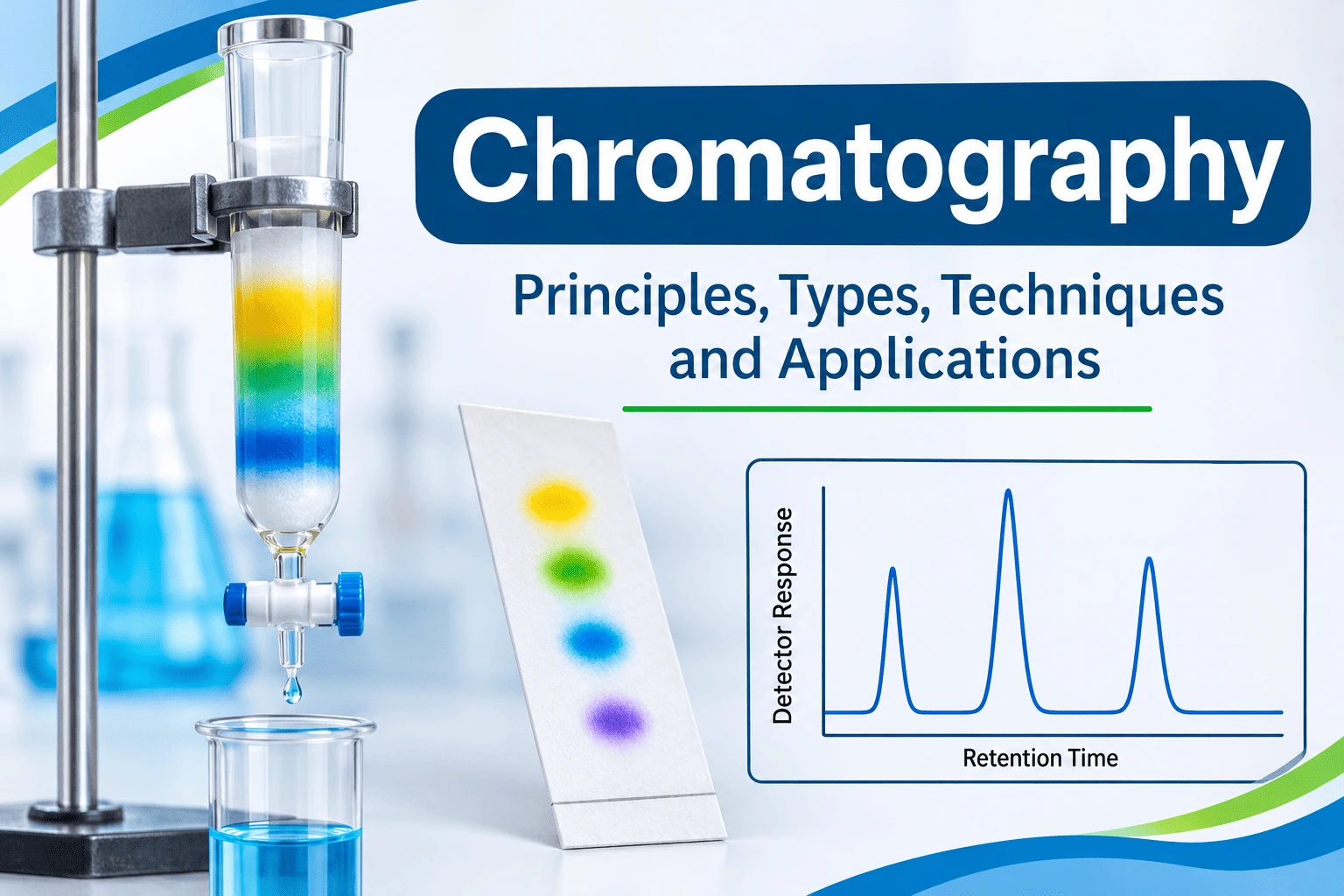
Chromatography is an essential analytical laboratory technique used to separate, identify, and quantify the individual components of complex mixtures. It is widely employed in biology, biochemistry, medicine, pharmaceutical research, environmental science, and food analysis. By exploiting differences in the physical and chemical interactions of compounds with two different phases, chromatography allows researchers to isolate substances that would otherwise be difficult to distinguish.
The technique relies on the interaction between a stationary phase, which remains fixed, and a mobile phase, which moves through or over the stationary phase. As a sample travels through the chromatographic system, its components interact differently with these phases, resulting in different migration rates and ultimately separating the compounds.
Several types of chromatography have been developed, including paper chromatography, thin-layer chromatography (TLC), gas chromatography (GC), liquid chromatography (LC), and high-performance liquid chromatography (HPLC). More specialized techniques, such as ion-exchange, size-exclusion, and affinity chromatography, are particularly important for separating biological molecules.
This article explores the fundamental principles of chromatography, its major types, experimental procedures, analytical applications, advantages, and limitations.
1. What Is Chromatography? Principles and Fundamentals
Definition of Chromatography
Chromatography is a separation technique that enables the individual components of a mixture to be separated based on their different interactions with a stationary phase and a mobile phase.
The technique was introduced in the early twentieth century by the Russian botanist Mikhail Tswett, who used it to separate plant pigments, including chlorophyll and carotenoids. The separated pigments appeared as distinct colored bands within a column containing an adsorbent material.
The term chromatography comes from the Greek words chroma, meaning color, and graphein, meaning to write.
Today, chromatography is no longer limited to separating colored substances. Modern chromatographic systems can separate and detect compounds present at very low concentrations, including proteins, amino acids, hormones, drugs, metabolites, lipids, and environmental contaminants.
Chromatography can be used for two main analytical purposes:
- Qualitative analysis: Identifying the compounds present in a sample based on their chromatographic behavior and comparison with reference standards.
- Quantitative analysis: Determining the concentration or amount of individual compounds using appropriate calibration methods and detector responses.
Basic Principle of Chromatography
The fundamental principle of chromatography is the differential distribution of sample components between two phases: the stationary phase and the mobile phase.
When a mixture is introduced into a chromatographic system, its components are transported by the mobile phase. During migration, each compound interacts with the stationary phase according to its chemical and physical properties.
Compounds that have a stronger affinity for the stationary phase tend to move more slowly because they spend more time interacting with it. Conversely, compounds that have a greater affinity for the mobile phase move more rapidly through the system.
As a result, the different components become spatially separated.
Several molecular interactions can contribute to chromatographic separation:
- Adsorption: Molecules attach to the surface of a solid stationary phase through physical or chemical interactions.
- Partitioning: Compounds distribute themselves between two phases according to their relative solubility.
- Ionic interactions: Charged molecules interact with oppositely charged groups present in the stationary phase.
- Size-based exclusion: Molecules are separated according to their hydrodynamic size.
- Specific affinity interactions: Biological molecules bind selectively to immobilized ligands.
The dominant separation mechanism depends on the chromatographic technique being used.
Main Components of a Chromatographic System
A chromatographic system generally contains several essential components that work together to achieve separation.
Stationary Phase
The stationary phase is the material that remains fixed inside the chromatographic system. It provides the surface or medium with which sample components interact during separation.
The nature of the stationary phase strongly influences chromatographic selectivity.
Common stationary-phase materials include:
- Silica gel.
- Alumina.
- Cellulose.
- Modified silica particles.
- Polymer-based resins.
- Immobilized biological ligands.
Depending on the technique, the stationary phase can be a solid material or a liquid immobilized on a solid support.
For example, silica gel is commonly used in thin-layer chromatography, while chemically modified silica particles are widely used in HPLC columns.
Mobile Phase
The mobile phase is the fluid that transports the sample through the chromatographic system. It can be a liquid or a gas, depending on the analytical technique.
In liquid chromatography, the mobile phase consists of one or more solvents, such as water, methanol, or acetonitrile.
In gas chromatography, the mobile phase is a carrier gas, commonly helium, hydrogen, or nitrogen.
The mobile phase influences separation by controlling the solubility, migration, and interaction of analytes with the stationary phase.
Important mobile-phase parameters include:
- Solvent polarity.
- pH.
- Ionic strength.
- Flow rate.
- Solvent composition.
- Temperature.
Sample and Analytes
The sample is the mixture introduced into the chromatographic system, while analytes are the specific compounds being separated, identified, or quantified.
Samples can originate from biological, pharmaceutical, environmental, or chemical sources.
Examples include:
- Blood and plasma.
- Urine.
- Tissue extracts.
- Protein solutions.
- Pharmaceutical formulations.
- Food samples.
- Environmental water samples.
Proper sample preparation is important because impurities, suspended particles, and excessive sample concentrations can interfere with chromatographic separation.
How Does Chromatography Work?
Although the experimental procedure differs between chromatographic techniques, the general separation process involves several common steps.
- Sample preparation: The sample is collected, extracted, diluted, filtered, or purified when necessary.
- Sample introduction: A defined amount of sample is introduced into the chromatographic system.
- Migration: The mobile phase transports the sample through or across the stationary phase.
- Differential interactions: Individual compounds interact differently with the stationary phase, resulting in different migration rates.
- Separation: The sample components become separated into individual zones or bands.
- Detection: Separated compounds are detected using an appropriate visualization or detection system.
- Data analysis: The resulting chromatogram or separated fractions are analyzed to identify or quantify the compounds.
The final result depends on the nature of the analytes, the stationary and mobile phases, and the operating conditions.
2. Major Types of Chromatography
Chromatography includes several techniques that differ according to the physical state of the mobile phase, the nature of the stationary phase, and the mechanism responsible for separation.
Paper Chromatography
Paper chromatography is a simple planar chromatographic technique that uses paper, usually cellulose-based, as the support for separation.
The separation mainly involves partitioning of compounds between the mobile solvent and water associated with the cellulose fibers.
Principle:
A small quantity of sample is applied near the bottom of a chromatography paper strip. The paper is placed in a container containing a suitable solvent, ensuring that the sample spot remains above the solvent level.
As the solvent moves through the paper by capillary action, it carries the sample components. Different compounds migrate at different rates depending on their interactions with the mobile phase and the stationary environment.
Experimental procedure:
- Cut a suitable strip of chromatography paper.
- Draw an origin line near the bottom using a pencil.
- Apply a small sample spot to the origin.
- Place the paper in a developing chamber containing the mobile solvent.
- Allow the solvent to migrate through the paper.
- Remove the paper before the solvent reaches the top.
- Mark the solvent front and visualize the separated compounds.
Applications:
- Separation of plant pigments.
- Identification of amino acids.
- Analysis of food colorants.
- Separation of simple mixtures of organic compounds.
Paper chromatography is inexpensive and easy to perform, although it generally provides lower separation efficiency than modern chromatographic methods.
Thin-Layer Chromatography (TLC)
Thin-layer chromatography is a planar separation technique that uses a thin layer of adsorbent material deposited on a rigid support, usually glass, aluminum, or plastic.
The stationary phase commonly consists of silica gel or alumina, while the mobile phase is an appropriate solvent or solvent mixture.
Principle:
TLC generally separates compounds according to their different affinities for the stationary and mobile phases.
In normal-phase TLC using silica gel, polar compounds usually interact more strongly with the polar stationary phase and therefore migrate more slowly. Less polar compounds often travel farther with the mobile phase.
Experimental procedure:
- Prepare or select a TLC plate coated with silica gel.
- Draw an origin line using a pencil.
- Apply a small quantity of sample using a capillary tube.
- Place the plate inside a developing chamber containing the mobile phase.
- Allow the solvent to migrate through the stationary phase.
- Remove the plate and mark the solvent front.
- Dry the plate and visualize the separated spots.
Visualization can be performed using UV light, iodine vapor, or chemical staining reagents.
Retention Factor (Rf)
The retention factor is an important parameter used to describe the migration of compounds in planar chromatography.
It is calculated by dividing the distance traveled by the center of the analyte spot by the distance traveled by the solvent front, both measured from the origin.
Applications of TLC
- Identification of organic compounds.
- Monitoring chemical reactions.
- Analysis of plant pigments.
- Screening of pharmaceutical substances.
- Checking the purity of extracted compounds.
- Preliminary analysis of lipid and amino acid mixtures.
Column Chromatography
Column chromatography is a technique in which the stationary phase is packed inside a vertical column, while the mobile phase passes through it under gravity or applied pressure.
It is widely used for separating and purifying individual compounds from complex mixtures.
Principle:
The sample is introduced at the top of the column and transported by the mobile phase.
As the sample moves through the stationary phase, its components interact differently with the adsorbent material. Compounds with weaker interactions generally move faster, while compounds with stronger interactions are retained for longer periods.
Consequently, the different components leave the column at different times.
Main experimental steps:
- Pack a glass column with the stationary-phase material.
- Equilibrate the column using the selected mobile phase.
- Apply the sample carefully to the top of the column.
- Add the mobile phase to initiate elution.
- Allow the different components to migrate through the column.
- Collect the separated compounds in individual fractions.
- Analyze the fractions to determine their composition.
Applications:
- Purification of natural products.
- Separation of plant pigments.
- Isolation of organic compounds.
- Purification of reaction products.
- Preparation of compounds for further analytical studies.
Gas Chromatography (GC)
Gas chromatography is an analytical technique used to separate and analyze volatile and thermally stable compounds.
It is particularly useful in pharmaceutical analysis, toxicology, environmental monitoring, food science, and forensic investigations.
Principle:
In gas chromatography, the mobile phase is an inert carrier gas that transports vaporized sample components through a chromatographic column.
The stationary phase is generally a nonvolatile liquid film or a solid adsorbent material located inside the column.
Sample compounds are separated according to their volatility and interactions with the stationary phase.
Compounds that interact weakly with the stationary phase or have higher volatility generally elute earlier, whereas compounds with stronger interactions or lower volatility tend to have longer retention times.
Main components of a GC instrument:
- Carrier gas supply: Provides the mobile phase, commonly helium, hydrogen, or nitrogen.
- Injector: Introduces and vaporizes the sample.
- Column: Contains the stationary phase and provides the environment for separation.
- Oven: Controls the column temperature.
- Detector: Detects compounds as they leave the column.
- Data system: Records and processes the detector signal.
Common GC detectors:
- Flame Ionization Detector (FID): Commonly used to detect organic compounds based on the ions generated during combustion in a hydrogen-air flame.
- Thermal Conductivity Detector (TCD): Detects changes in thermal conductivity of the carrier gas caused by analytes.
- Electron Capture Detector (ECD): Particularly sensitive to electronegative compounds, including many halogenated substances.
- Mass Spectrometer (MS): Identifies compounds based on the mass-to-charge ratios of generated ions.
Applications of Gas Chromatography
- Detection of volatile organic compounds.
- Analysis of alcohols and solvents.
- Identification of pesticides.
- Detection of environmental pollutants.
- Analysis of fatty acid methyl esters.
- Forensic toxicology.
- Pharmaceutical quality control.
An important limitation of GC is that it is generally unsuitable for compounds that are nonvolatile or thermally unstable unless appropriate derivatization or specialized methods are used.
Liquid Chromatography (LC)
Liquid chromatography is a separation technique in which a liquid serves as the mobile phase and transports sample components through a stationary phase.
It is widely used for analyzing compounds that are nonvolatile, thermally unstable, or poorly suited to gas chromatography.
Principle:
The sample is dissolved in a suitable solvent and introduced into the chromatographic system.
The mobile phase carries the analytes through the stationary phase, where different interactions result in different retention times.
The separation mechanism may involve adsorption, partitioning, ionic interactions, molecular size, or specific affinity.
Liquid chromatography is particularly useful for analyzing biological molecules, pharmaceutical compounds, and complex chemical mixtures.
High-Performance Liquid Chromatography (HPLC)
High-performance liquid chromatography is an advanced form of liquid chromatography that uses high-pressure pumps to move the mobile phase through a column packed with small stationary-phase particles.
The use of small particles provides a large surface area for analyte interactions and improves separation efficiency.
HPLC is one of the most widely used analytical techniques in pharmaceutical research, clinical laboratories, and biomedical sciences.
Principle of HPLC:
A liquid sample is injected into a flowing mobile phase. The mobile phase transports the analytes through a packed chromatographic column.
Individual compounds interact differently with the stationary phase, producing different retention times.
As the compounds leave the column, a detector records their signals and generates a chromatogram.
Main components of an HPLC system:
- Solvent reservoir: Stores the mobile-phase solvents.
- Degasser: Removes dissolved gases that could interfere with the system.
- Pump: Delivers the mobile phase at a controlled flow rate and pressure.
- Injector: Introduces a defined volume of sample.
- Column: Contains the stationary phase where separation occurs.
- Detector: Monitors the compounds eluting from the column.
- Computer and software: Acquire and analyze chromatographic data.
Common HPLC separation modes:
- Normal-phase HPLC: Uses a relatively polar stationary phase and a less polar mobile phase.
- Reverse-phase HPLC: Uses a nonpolar stationary phase and a relatively polar mobile phase.
- Ion-exchange HPLC: Separates compounds according to their electrical charge.
- Size-exclusion HPLC: Separates molecules according to their hydrodynamic size.
Reverse-phase HPLC is particularly common in pharmaceutical and biochemical analysis.
Isocratic and gradient elution:
- Isocratic elution: The mobile-phase composition remains constant throughout the analysis.
- Gradient elution: The mobile-phase composition changes during the separation to improve the elution of compounds with different retention characteristics.
Applications of HPLC
- Drug identification and quantification.
- Analysis of vitamins and hormones.
- Protein and peptide analysis.
- Detection of pharmaceutical impurities.
- Therapeutic drug monitoring.
- Analysis of metabolites.
- Clinical and toxicological investigations.
Ion-Exchange Chromatography
Ion-exchange chromatography separates molecules according to their electrical charge.
The stationary phase contains charged functional groups that interact with oppositely charged molecules in the sample.
Principle:
The stationary phase contains positively or negatively charged groups that attract molecules with opposite charges.
Two major types are used:
- Cation-exchange chromatography: The stationary phase is negatively charged and retains positively charged molecules (cations).
- Anion-exchange chromatography: The stationary phase is positively charged and retains negatively charged molecules (anions).
The retained molecules can subsequently be eluted by changing the salt concentration or pH of the mobile phase.
Applications:
- Protein purification.
- Separation of amino acids.
- Analysis of inorganic ions.
- Purification of nucleic acids.
- Separation of hemoglobin variants.
Ion-exchange chromatography is particularly important in biochemical research because proteins have different net charges depending on their amino acid composition and the pH of the surrounding solution.
Size-Exclusion Chromatography
Size-exclusion chromatography separates molecules according to their hydrodynamic size using a porous stationary-phase material.
It is also known as gel filtration chromatography when used with aqueous mobile phases for biological molecules.
Principle:
The stationary phase contains porous particles with pores of different sizes.
Large molecules cannot enter most of these pores and therefore travel through the column relatively quickly.
Smaller molecules enter the pores and follow longer migration pathways, resulting in later elution.
The general elution order is:
- Large molecules: elute first.
- Intermediate-sized molecules: elute afterward.
- Small molecules: elute last.
Applications:
- Protein purification.
- Estimation of molecular size.
- Separation of protein aggregates.
- Analysis of protein complexes.
- Desalting and buffer exchange.
Affinity Chromatography
Affinity chromatography is a highly selective separation technique based on specific biological or biochemical interactions between a target molecule and a ligand immobilized on the stationary phase.
Principle:
The stationary phase contains a ligand capable of selectively binding the target molecule.
When the sample passes through the column, the target molecule binds to the immobilized ligand, while unrelated molecules are washed away.
The target molecule is subsequently recovered by changing the conditions of the mobile phase, such as pH, ionic strength, or the concentration of a competing ligand.
Examples of affinity interactions include:
- Antigen-antibody binding.
- Enzyme-substrate interactions.
- Receptor-ligand interactions.
- Histidine-tag and immobilized metal interactions.
Applications:
- Purification of monoclonal antibodies.
- Isolation of recombinant proteins.
- Purification of enzymes.
- Isolation of specific receptors.
- Purification of tagged proteins using immobilized metal affinity chromatography (IMAC).
3. Chromatography Techniques and Experimental Procedures
The performance of chromatographic analysis depends not only on the selected separation technique but also on sample preparation, operating conditions, detection methods, and data interpretation.
Sample Preparation Before Chromatographic Analysis
Sample preparation is an essential step that aims to obtain a suitable sample for chromatographic analysis while minimizing interfering substances.
Biological samples, pharmaceutical formulations, and environmental specimens often contain complex mixtures that require treatment before injection.
Common sample preparation procedures include:
1. Extraction
Extraction allows the target compounds to be transferred from a sample matrix into a suitable solvent.
Examples include liquid-liquid extraction and solid-phase extraction.
2. Centrifugation
Centrifugation separates suspended particles and insoluble material from the liquid sample based on differences in sedimentation behavior.
3. Filtration
Filtration removes particles that could damage chromatographic columns or interfere with analytical measurements.
Membrane filters are commonly used before HPLC analysis.
4. Protein precipitation
In biological samples, proteins may be precipitated using suitable reagents or organic solvents to reduce matrix interference during small-molecule analysis.
5. Dilution
Samples with concentrations exceeding the analytical range may require dilution to obtain reliable measurements.
The selection of sample preparation procedures depends on the nature of the analytes, sample matrix, and analytical method.
Chromatographic Separation Methods
Chromatographic separation can occur through several mechanisms.
The most important include:
- Adsorption chromatography: Separation depends on the strength of interactions between analytes and the surface of a solid stationary phase.
- Partition chromatography: Separation depends on the distribution of compounds between two phases.
- Ion-exchange chromatography: Separation is based on differences in electrical charge.
- Size-exclusion chromatography: Separation occurs according to molecular size.
- Affinity chromatography: Separation depends on specific interactions between a target molecule and an immobilized ligand.
Understanding these mechanisms is important when selecting the appropriate chromatographic method for a particular analytical problem.
Elution Techniques
Elution refers to the process of transporting retained analytes through a chromatographic system using the mobile phase.
Different elution strategies can be used depending on the complexity of the sample.
Isocratic elution
The mobile-phase composition remains constant during the entire chromatographic analysis.
It is commonly used when the analytes have relatively similar retention characteristics.
Gradient elution
The mobile-phase composition changes progressively during the analysis.
For example, in reverse-phase HPLC, the proportion of organic solvent may gradually increase to facilitate the elution of strongly retained compounds.
Gradient elution is particularly useful for complex samples containing compounds with a wide range of polarities.
Stepwise elution
The mobile-phase composition changes in defined steps rather than continuously.
This approach can be useful in preparative chromatography and some purification procedures.
Chromatographic Detection Methods
After separation, analytes must be detected to obtain qualitative or quantitative information.
The detector converts the presence of an analyte into a measurable signal.
The selection of a detector depends on the properties of the compounds being analyzed and the chromatographic technique.
UV-Visible detection
UV-Visible detectors measure the absorption of ultraviolet or visible radiation by compounds passing through the detector flow cell.
They are commonly used in HPLC for analyzing molecules containing chromophores.
Fluorescence detection
Fluorescence detectors measure light emitted by compounds following excitation at a specific wavelength.
They can provide high sensitivity and selectivity for naturally fluorescent compounds or compounds that have been chemically derivatized.
Refractive index detection
Refractive index detectors measure changes in the refractive index of the mobile phase caused by analytes.
They are useful for compounds that do not absorb UV radiation, although they are generally less sensitive than UV detectors and are not suitable for many gradient applications.
Flame Ionization Detection (FID)
FID is widely used in gas chromatography to detect organic compounds through the ions produced when compounds are burned in a hydrogen-air flame.
Mass Spectrometry (MS)
Mass spectrometry detects ions according to their mass-to-charge ratio (m/z).
When coupled with chromatography, it provides powerful analytical information about compound identity and quantity.
Common hyphenated techniques include:
- GC-MS: Gas chromatography coupled with mass spectrometry.
- LC-MS: Liquid chromatography coupled with mass spectrometry.
- LC-MS/MS: Liquid chromatography coupled with tandem mass spectrometry.
These techniques are particularly important for identifying and quantifying compounds in complex biological samples.
Chromatogram Analysis and Interpretation
A chromatogram is the graphical representation of detector response as a function of time or mobile-phase volume.
In most analytical HPLC and GC systems, the horizontal axis represents retention time, while the vertical axis represents detector response.
Each peak generally corresponds to a compound or group of compounds detected during the analysis.
Several chromatographic parameters are used to evaluate the quality of separation.
Retention Time
Retention time (tR) is the time required for a compound to travel through the chromatographic system from sample injection to detection.
It is measured from the injection point to the maximum of the corresponding chromatographic peak.
Under controlled conditions, retention time can help identify compounds by comparison with reference standards.
However, retention time alone is generally insufficient for definitive compound identification because different compounds may have similar retention times.
Peak Area and Peak Height
The peak area corresponds to the integrated detector response across a chromatographic peak.
Peak height represents the maximum detector response at the top of the peak.
Both parameters can be used for quantitative analysis, depending on the detector and analytical method.
Peak area is commonly preferred because it is generally less sensitive to moderate changes in peak broadening.
The concentration of an analyte can be determined using a calibration curve prepared from reference standards.
Peak Resolution
Resolution (Rs) describes the degree of separation between two adjacent chromatographic peaks.
It is an important parameter for evaluating the ability of a chromatographic method to distinguish between different compounds.
A higher resolution indicates better separation.
A resolution of approximately 1.5 is commonly considered sufficient for baseline separation of two peaks under conventional chromatographic conditions.
Retention Factor (Rf)
The retention factor is used in planar chromatography, particularly TLC and paper chromatography.
It expresses the relative migration distance of a compound compared with the solvent front.
Unlike retention time in column chromatography, the Rf value is calculated from distances measured on the chromatographic plate or paper.
It is useful for comparing compounds under standardized experimental conditions.
4. Applications of Chromatography in Biology, Medicine, and Research
Chromatography is widely used in scientific research and diagnostic laboratories because it provides reliable separation and analytical characterization of complex mixtures.
Applications in Clinical and Medical Laboratories
Chromatography plays an important role in clinical chemistry, laboratory medicine, and diagnostic investigations.
It can be used to analyze biological samples such as blood, plasma, serum, and urine.
Some important applications include:
Hemoglobin analysis
HPLC and other chromatographic techniques are used to separate and quantify different hemoglobin fractions.
This is particularly important in the diagnosis and characterization of hemoglobinopathies, including:
- Sickle cell disease.
- Beta-thalassemia.
- Other hemoglobin variants.
The separation of hemoglobin fractions helps identify abnormal variants and determine their relative proportions.
Therapeutic drug monitoring
Chromatographic methods, particularly LC-MS/MS, can measure drug concentrations in biological fluids.
This is important for medications with narrow therapeutic ranges, where insufficient or excessive concentrations may compromise treatment.
Toxicological analysis
GC-MS and LC-MS/MS are widely used to detect and quantify drugs, toxic substances, and their metabolites in blood and urine.
Metabolic disorder screening
Chromatographic techniques can be used to analyze amino acids, organic acids, and other metabolites associated with inherited metabolic disorders.
For example, amino acid analysis can help investigate phenylketonuria and other metabolic abnormalities.
Hormone and vitamin analysis
Liquid chromatography coupled with appropriate detectors or mass spectrometry can be used to quantify hormones, vitamin D metabolites, and other biologically important compounds.
Applications in Biochemistry and Molecular Biology
Chromatography is an important tool in biochemical research because it allows the separation and purification of biological molecules.
Protein purification
Affinity chromatography, ion-exchange chromatography, and size-exclusion chromatography are commonly used to purify proteins from complex biological mixtures.
These methods are particularly useful for isolating enzymes, antibodies, receptors, and recombinant proteins.
Amino acid analysis
Ion-exchange chromatography can separate amino acids according to their charge and chemical properties.
This approach is used in biochemical research and the characterization of protein hydrolysates.
Lipid analysis
Gas chromatography is frequently used to analyze fatty acid composition following conversion into volatile derivatives, such as fatty acid methyl esters.
HPLC and LC-MS are also used for lipid profiling.
Carbohydrate analysis
Chromatographic methods can separate and quantify monosaccharides, oligosaccharides, and other carbohydrates.
Nucleic acid purification
Size-exclusion, ion-exchange, and affinity-based chromatographic methods can be used in certain nucleic acid purification workflows.
They are particularly useful for removing impurities and separating different nucleic acid species.
Applications in Pharmaceutical Research
Chromatography is essential throughout pharmaceutical development and quality control.
It helps ensure that pharmaceutical products contain the correct active ingredients and meet established purity and quality requirements.
Important applications include:
- Identification of active pharmaceutical ingredients (APIs).
- Quantification of drugs in pharmaceutical formulations.
- Detection of impurities and degradation products.
- Stability testing of pharmaceutical compounds.
- Analysis of drug metabolites.
- Quality control of raw materials and finished products.
HPLC is particularly important in pharmaceutical laboratories because it can provide high separation efficiency, reproducibility, and quantitative accuracy when properly validated.
Applications in Food Science and Environmental Analysis
Chromatographic techniques are widely used to evaluate the chemical composition and safety of food products and environmental samples.
Food analysis
- Detection of pesticide residues.
- Identification of food additives and preservatives.
- Analysis of artificial colorants.
- Measurement of vitamins and nutritional compounds.
- Detection of mycotoxins.
- Analysis of flavor and aroma compounds.
Environmental analysis
- Detection of organic pollutants in water.
- Analysis of pesticide residues in soil.
- Monitoring of volatile organic compounds in air.
- Detection of industrial contaminants.
- Analysis of persistent organic pollutants.
GC-MS and LC-MS are particularly useful for environmental monitoring because they combine separation efficiency with sensitive and selective detection.
Applications in Cancer Biology and Biomedical Research
Chromatography contributes significantly to cancer biology research by allowing researchers to investigate the molecular composition of biological samples and characterize changes associated with cancer development.
Metabolomics
LC-MS and GC-MS are widely used in metabolomics to analyze small molecules involved in cellular metabolism.
These approaches help researchers investigate metabolic changes associated with tumor development, progression, and treatment response.
Proteomics
Chromatographic techniques are frequently combined with mass spectrometry to separate peptides and proteins before their identification and quantification.
For example, liquid chromatography coupled with tandem mass spectrometry (LC-MS/MS) is widely used in proteomic studies.
Biomarker discovery
Chromatography can help separate and characterize candidate biomarkers present in blood, tissue, and other biological samples.
Lipidomics
LC-MS and GC-MS can be used to investigate lipid composition and metabolic alterations in cancer cells.
These approaches provide information about lipid metabolism, membrane composition, and signaling pathways involved in tumor biology.
5. Advantages, Limitations, and Factors Affecting Chromatographic Separation
Although chromatography is one of the most versatile analytical techniques, its performance depends on the experimental conditions and the selected separation method.
Advantages of Chromatography
Chromatography offers several important advantages:
High separation efficiency
It can separate complex mixtures containing compounds with similar chemical properties.
Qualitative and quantitative analysis
Chromatography can be used to identify compounds and determine their concentrations when suitable reference standards and analytical procedures are available.
High sensitivity
When coupled with appropriate detectors, particularly fluorescence detectors and mass spectrometry, chromatography can detect compounds at very low concentrations.
Versatility
Different chromatographic techniques are available for analyzing a wide range of compounds, including proteins, lipids, amino acids, drugs, and metabolites.
Compatibility with biological samples
Chromatography is widely used to analyze complex biological matrices such as plasma, serum, urine, and tissue extracts.
Purification capabilities
Preparative chromatography allows researchers to isolate and recover individual compounds for subsequent experiments.
Limitations of Chromatography
Despite its advantages, chromatography has several limitations.
Equipment costs
Advanced chromatographic systems, particularly HPLC and GC-MS instruments, can require substantial initial investment and maintenance expenses.
Technical expertise
Accurate chromatographic analysis requires knowledge of method development, instrument operation, sample preparation, and data interpretation.
Sample preparation requirements
Complex biological samples often require extraction, filtration, protein precipitation, or other preparation procedures.
Solvent consumption
Some chromatographic methods consume significant amounts of organic solvents, generating chemical waste that must be managed appropriately.
Method-specific limitations
Not all chromatographic techniques are suitable for every compound. For example, conventional GC is generally limited to volatile and thermally stable analytes.
Potential analytical interferences
Co-elution, matrix effects, contamination, and detector interference can affect analytical accuracy.
Factors Affecting Chromatographic Separation
Several factors influence chromatographic performance and determine the quality of separation.
1. Nature of the stationary phase
The chemical composition, polarity, particle size, and surface properties of the stationary phase influence analyte retention and selectivity.
2. Mobile-phase composition
Solvent polarity and composition can strongly affect the migration of compounds.
In reverse-phase HPLC, increasing the organic solvent concentration generally increases the elution strength for hydrophobic compounds.
3. Flow rate
The mobile-phase flow rate influences the time analytes spend interacting with the stationary phase.
An inappropriate flow rate may reduce separation efficiency.
4. Temperature
Temperature affects solvent viscosity, analyte volatility, diffusion, and interactions with the stationary phase.
It control is particularly important in gas chromatography.
5. Column characteristics
Column length, internal diameter, particle size, and stationary-phase chemistry influence retention and separation efficiency.
6. Sample concentration and injection volume
Excessive sample concentration or injection volume can cause column overload and produce distorted chromatographic peaks.
7. pH and ionic strength
For ionizable compounds, mobile-phase pH can influence molecular charge and interactions with the stationary phase.
Ionic strength can also affect retention in ion-exchange chromatography.
Common Chromatography Problems and Troubleshooting
Chromatographic analysis can be affected by several technical problems that reduce separation quality and analytical reliability.
Poor Peak Resolution
Poor resolution occurs when two or more chromatographic peaks overlap.
Possible causes include:
- Inappropriate mobile-phase composition.
- Incorrect flow rate.
- Insufficient column efficiency.
- Inadequate selectivity.
- Column deterioration.
Possible solutions include optimizing the mobile phase, adjusting the flow rate, changing the column, or modifying the separation conditions.
Peak Tailing and Peak Fronting
Peak tailing occurs when a chromatographic peak displays an extended trailing edge.
Common causes include unwanted interactions with active sites in the column, inappropriate mobile-phase pH, and column contamination.
Peak fronting occurs when the front of a peak becomes distorted, often because of column overload or excessive sample injection.
Reducing the sample concentration or injection volume may help correct these problems.
Irregular Baseline and Baseline Drift
Baseline instability can result from:
- Temperature fluctuations.
- Inadequate solvent degassing.
- Detector instability.
- Contaminated mobile phases.
- Pump-related problems.
Proper instrument maintenance and mobile-phase preparation are important for maintaining a stable baseline.
Low Sensitivity and Weak Peaks
Weak chromatographic signals may result from low analyte concentration, inappropriate detector settings, sample degradation, or incomplete sample recovery.
Optimizing sample preparation and detector conditions can improve sensitivity.
Long Retention Times
Long retention times can increase analytical run time and reduce laboratory productivity.
Possible causes include low mobile-phase flow rates, excessive analyte retention, inappropriate solvent composition, and unsuitable column conditions.
Adjusting the mobile phase or optimizing the separation method can help reduce retention time without compromising resolution.
Conclusion
Chromatography is a fundamental analytical technique used to separate, identify, quantify, and purify compounds present in complex mixtures. Its principle relies on the differential interactions of analytes with a stationary phase and a mobile phase, resulting in differences in migration rates and retention behavior.
Several chromatographic techniques are available, including paper chromatography, thin-layer chromatography, column chromatography, gas chromatography, liquid chromatography, and HPLC. Specialized methods such as ion-exchange, size-exclusion, and affinity chromatography provide additional possibilities for separating biological molecules according to their charge, size, and specific interactions.
Chromatography has numerous applications in clinical diagnostics, biochemistry, pharmaceutical research, environmental monitoring, and cancer biology. Its integration with advanced detection technologies, particularly mass spectrometry, has further expanded its analytical capabilities.
As analytical technologies continue to develop, chromatography remains an indispensable tool in modern biological and biomedical laboratories.
FAQs
What is chromatography used for?
Chromatography is used to separate, identify, quantify, and purify individual compounds from complex mixtures. It is widely applied in clinical laboratories, pharmaceutical research, food analysis, environmental monitoring, and biochemical investigations.
What are the two main phases in chromatography?
The two main phases are:
- Stationary phase: The fixed material with which sample components interact.
- Mobile phase: The liquid or gas that transports sample components through the chromatographic system.
What are the five main types of chromatography?
Five commonly encountered types are:
- Paper chromatography.
- Thin-layer chromatography (TLC).
- Column chromatography.
- Gas chromatography (GC).
- Liquid chromatography (LC).
Other important methods include ion-exchange, size-exclusion, and affinity chromatography.
What is the difference between GC and HPLC?
Gas chromatography uses a gaseous mobile phase and is primarily suitable for volatile and thermally stable compounds.
HPLC uses a liquid mobile phase and is suitable for a broader range of compounds, including nonvolatile and thermally unstable substances.
What is the difference between TLC and paper chromatography?
TLC uses a thin layer of adsorbent material, commonly silica gel, deposited on a solid support. Paper chromatography uses chromatography paper as the separation support.
TLC generally provides better separation efficiency and faster analysis for many applications.
What is the Rf value in chromatography?
The Rf value is the ratio between the distance traveled by a compound and the distance traveled by the solvent front in planar chromatography.
It is used to compare the migration behavior of compounds under identical experimental conditions.
What is the difference between qualitative and quantitative chromatography?
Qualitative chromatography aims to identify the compounds present in a sample, while quantitative chromatography determines the amount or concentration of each compound.
Why is chromatography important in medical laboratories?
Chromatography helps medical laboratories analyze biological compounds, identify abnormal metabolites, quantify therapeutic drugs, detect toxic substances, and characterize hemoglobin variants.


