

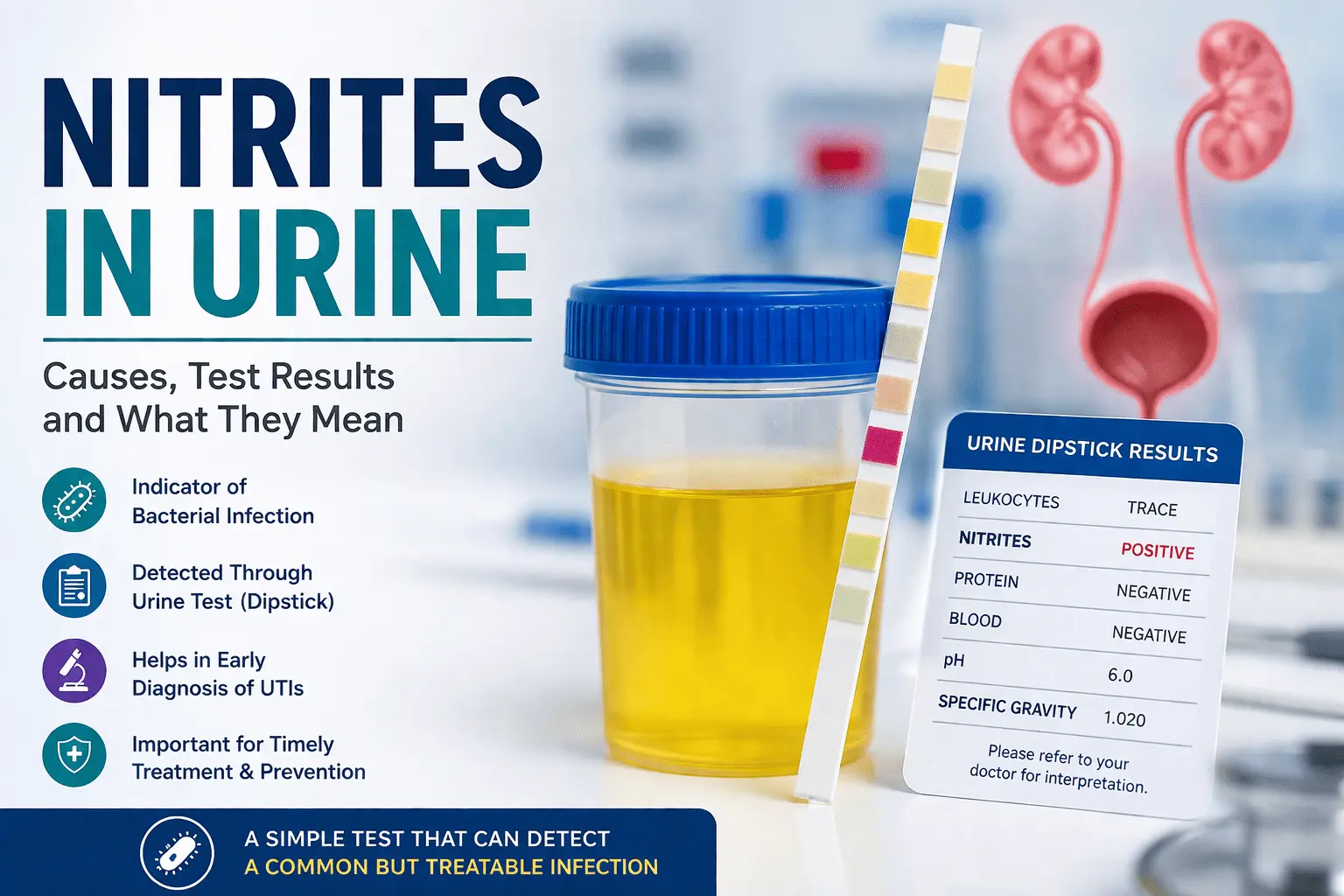
Key Takeaway
- Nitrites in urine are a strong indicator of bacterial infection, most commonly a urinary tract infection (UTI).
- They form when bacteria convert nitrates into nitrites, a process typical of organisms like E. coli.
- A positive nitrite test is highly specific for infection, but a negative result does not completely rule it out.
- The test is quick and part of a routine urinalysis using a dipstick method.
- False negatives can occur, especially with non–nitrite-producing bacteria or frequent urination.
- Nitrites are often interpreted alongside leukocytes (white blood cells) to improve diagnostic accuracy.
- Urine culture is the gold standard for confirming infection and guiding antibiotic treatment.
- Early detection and proper treatment help prevent complications such as kidney infection.
Introduction
Nitrites in urine are an important diagnostic marker commonly detected during routine urinalysis. Their presence often indicates a bacterial infection in the urinary tract, making this parameter highly valuable in clinical practice. Because urinary tract infections (UTIs) are among the most frequent bacterial infections worldwide, understanding nitrites in urine is essential for both patients and healthcare professionals.
This article provides a complete, in-depth explanation of nitrites in urine, including their biological basis, how they are detected, interpretation of results, causes, limitations of testing, and their role in diagnosis and treatment.
What Are Nitrites in Urine?
Nitrites are chemical compounds that can appear in urine as a result of bacterial activity. Under normal conditions, urine contains nitrates, which are naturally derived from dietary sources such as vegetables. These nitrates are typically harmless and are excreted unchanged in urine.
However, certain bacteria—particularly Gram-negative organisms—have the ability to convert nitrates into nitrites through an enzymatic process. This conversion is clinically significant because it indicates the presence of bacteria in the urinary tract.
Key Concept:
- Nitrates (normal) → Nitrites (suggest infection)
- This conversion is primarily carried out by bacteria such as Escherichia coli, the most common cause of UTIs.
It is important to note that not all bacteria can produce nitrites, which has implications for test accuracy.
Nitrites in Urine Test: Overview
The nitrite urine test is a simple, rapid diagnostic tool used as part of a standard urinalysis. It is typically performed using a dipstick method, which involves immersing a chemically treated strip into a urine sample.
How the Test Works
The dipstick contains reagents that react with nitrites in the urine. If nitrites are present, a color change occurs, indicating a positive result. This reaction is based on the Griess reaction, a well-established chemical method for detecting nitrites.
When Is the Test Ordered?
Healthcare providers may order a nitrite urine test when a patient presents with symptoms suggestive of a urinary tract infection, such as:
- Painful urination
- Frequent urination
- Urgency
- Lower abdominal discomfort
It is also routinely included in general health checkups and screening tests.
How Is the Test Performed?
Sample Collection
Accurate results depend on proper urine collection. The recommended method is the clean-catch midstream technique, which minimizes contamination.
Steps:
- Clean the genital area with a sterile wipe.
- Begin urinating into the toilet.
- Collect the midstream portion in a sterile container.
- Seal and deliver the sample promptly.
Important Considerations
- Urine should ideally be tested within 1–2 hours of collection.
- Early morning urine is preferred because it has been in the bladder longer, allowing bacteria more time to convert nitrates into nitrites.
- Improper storage can lead to inaccurate results.
Normal vs Abnormal Results
Normal Results
A normal test result is negative for nitrites, meaning no detectable conversion of nitrates has occurred. This typically suggests:
- No bacterial infection
- Or absence of nitrite-producing bacteria
Positive Nitrites in Urine
A positive result indicates the presence of nitrites and strongly suggests a bacterial infection in the urinary tract. This is especially significant when accompanied by symptoms.
However, a positive result alone is not sufficient for a definitive diagnosis and should be interpreted alongside other findings.
Causes of Nitrites in Urine
The primary cause of nitrites in urine is a bacterial infection, particularly a urinary tract infection.
Common Bacteria Involved
- Escherichia coli (most common)
- Klebsiella species
- Proteus species
- Enterobacter species
These organisms possess nitrate reductase enzymes that convert nitrates into nitrites.
Risk Factors
Several factors increase the likelihood of developing nitrite-positive urine:
- Poor personal hygiene
- Urinary catheter use
- Female anatomy (shorter urethra)
- Sexual activity
- Urinary retention
- Diabetes mellitus
- Immunosuppression
Symptoms Associated with Nitrites in Urine
When nitrites are present due to infection, patients may experience symptoms typical of UTIs:
- Burning sensation during urination (dysuria)
- Increased frequency of urination
- Urgent need to urinate
- Cloudy or foul-smelling urine
- Lower abdominal or pelvic pain
- Fever and chills (in more severe infections)
In some cases, especially in elderly individuals, symptoms may be mild or atypical.
False Positive and False Negative Results
While the nitrite test is useful, it is not perfect and can produce inaccurate results.
False Positive Results
They are less common but may occur due to:
- Contamination of the urine sample
- Prolonged storage of urine at room temperature
- Exposure of the dipstick to air
False Negative Results
They are more frequent and can occur for several reasons:
- Infection with non–nitrite-producing bacteria (e.g., Enterococcus, Staphylococcus)
- Frequent urination (insufficient time for nitrate conversion)
- Low dietary nitrate intake
- Diluted urine
- Early-stage infection
Because of these limitations, a negative nitrite test does not completely rule out infection.
Nitrites vs Leukocytes in Urine
Nitrites are often evaluated alongside leukocyte esterase, another marker detected in urinalysis.
Key Differences
| Parameter | Nitrites | Leukocytes |
|---|---|---|
| Indicates | Bacterial activity | White blood cells (inflammation) |
| Specificity | High for certain bacteria | Broad (any inflammation) |
| Sensitivity | Moderate | Higher |
Combined Interpretation
- Nitrites positive + leukocytes positive: Strong evidence of UTI
- Nitrites negative + leukocytes positive: Possible infection or inflammation
- Both negative: Infection less likely
Using both markers together improves diagnostic accuracy.
Clinical Significance
The detection of nitrites in urine plays a crucial role in:
- Early diagnosis of urinary tract infections
- Guiding further testing
- Supporting clinical decision-making
Follow-Up Tests
If nitrites are detected, additional tests may be required:
- Urine culture: Confirms the presence and type of bacteria
- Antibiotic sensitivity testing: Determines effective treatment options
These tests are essential for targeted therapy and preventing antibiotic resistance.
Treatment and Management
Antibiotic Therapy
The main treatment for nitrite-positive UTIs is antibiotics. The choice of antibiotic depends on:
- Type of bacteria
- Severity of infection
- Patient factors (age, pregnancy, comorbidities)
Commonly used antibiotics include:
- Nitrofurantoin
- Trimethoprim-sulfamethoxazole
- Fosfomycin
Supportive Measures
- Increased fluid intake
- Pain relief medications
- Rest
Importance of Completing Treatment
Incomplete antibiotic courses can lead to:
- Recurrence of infection
- Development of antibiotic resistance
Follow-up testing may be required to ensure the infection has cleared.
Prevention Tips
Preventing UTIs can reduce the occurrence of nitrites in urine.
Practical Strategies
- Maintain good personal hygiene
- Drink plenty of water
- Urinate regularly (avoid holding urine)
- Urinate after sexual activity
- Avoid unnecessary catheter use
- Wear breathable, cotton underwear
These measures help reduce bacterial growth and colonization.
When to See a Doctor
Medical attention is necessary if:
- Symptoms persist or worsen
- There is recurrent infection
- Fever or flank pain develops (possible kidney infection)
- The patient is pregnant
- The patient is elderly or immunocompromised
Early intervention can prevent complications such as pyelonephritis.
Nitrites in Urine During Pregnancy
Screening for nitrites in urine is particularly important during pregnancy because:
- UTIs may be asymptomatic
- Untreated infections can lead to complications such as preterm labor or kidney infection
Routine urinalysis is often performed during prenatal visits to detect infections early.
FAQs
Rarely. Nitrites are usually associated with bacterial presence, though contamination may cause false positives.
Not always, but it should not be ignored. It typically requires further evaluation.
Hydration and hygiene help, but bacterial infections usually require antibiotics.
They persist as long as the infection is present and resolve with effective treatment.
Foods rich in nitrates (e.g., leafy greens) influence nitrate levels but do not directly cause nitrites without bacterial conversion.
Conclusion
Nitrites in urine are a valuable diagnostic marker, primarily used to detect bacterial urinary tract infections. While a positive result strongly suggests infection, it should always be interpreted alongside clinical symptoms and additional laboratory findings.
Understanding the limitations of the test, including false negatives and false positives, is essential for accurate diagnosis. When combined with leukocyte testing and confirmed by urine culture, nitrite detection becomes a powerful tool in clinical practice.
Early diagnosis and appropriate treatment are key to preventing complications and ensuring optimal urinary health.
Medical Disclaimer: This content is for informational and educational purposes only and does not constitute medical advice. It is not intended to replace professional medical consultation, diagnosis, or treatment. Always seek the advice of a qualified healthcare provider with any questions regarding a medical condition.


