


DNA extraction is a fundamental laboratory technique used to isolate deoxyribonucleic acid (DNA) from cells or tissues, allowing scientists to study the genetic material that encodes the blueprint of life. This process involves breaking open cell membranes, removing proteins and other cellular debris, and purifying the DNA for use in molecular biology experiments.
As the starting point for many genetic and biomedical analyses, DNA extraction plays a crucial role in applications such as PCR amplification, DNA sequencing, forensic identification, and genetic diagnostics. The purity and quality of the extracted DNA directly influence the accuracy of these downstream techniques.
In this blog post, we will explore the steps, sample types, and methods of DNA extraction, along with its applications.
What is DNA Extraction?
DNA extraction is the process of isolating deoxyribonucleic acid (DNA) from cells or biolgical samples. The goal of this procedure is to obtain pure and intact DNA molecules that can be used for molecular and genetic analyses.
In a typical cell, DNA is tightly packed within the nucleus (in eukaryotes) or freely located in the cytoplasm (in prokaryotes). To access this genetic material, scientists must first break open the cell membrane and nuclear envelope using chemical or physical methods. The DNA is then separated from proteins, lipids, and other cellular components through a series of purification steps.
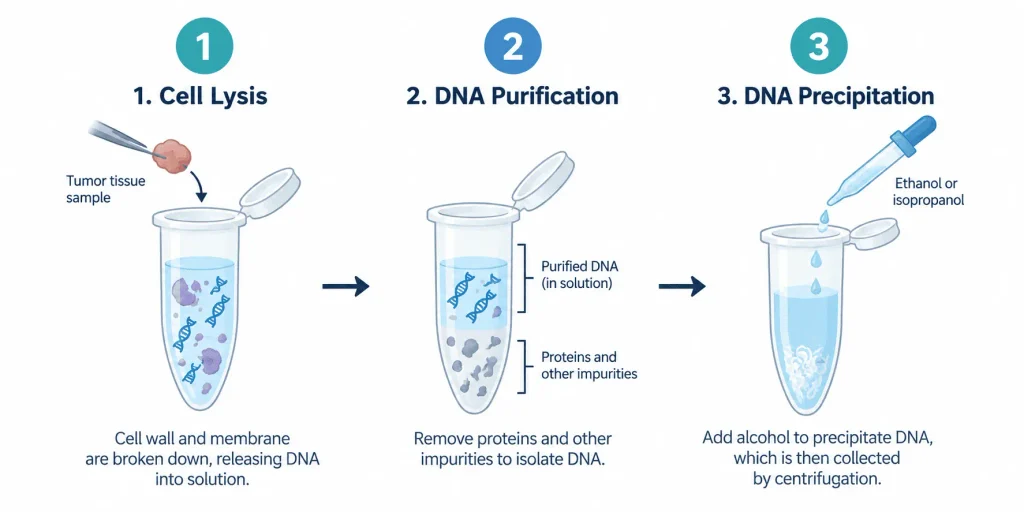
A standard DNA extraction process consists of three main stages:
- Cell lysis – breaking down the cell wall and membrane to release DNA.
- DNA purification – removing proteins and other impurities.
- DNA precipitation – concentrating and collecting DNA using alcohol (ethanol or isopropanol).
Sample Types for DNA Extraction
DNA can be extracted from a wide range of biological samples. However, the structure and composition of each sample influence DNA yield, purity, integrity, and the extraction method required.
Peripheral Blood
Peripheral blood is one of the most common sources of human genomic DNA. In whole blood, white blood cells (leukocytes) are the primary source of nuclear DNA because mature red blood cells lack nuclei.
- EDTA-treated blood is commonly preferred for genomic DNA extraction.
- DNA yield depends largely on the number of leukocytes present.
- Hemoglobin and other blood components can interfere with downstream applications if not adequately removed.
- Clotted or poorly stored blood may result in reduced DNA recovery or quality.
Bone Marrow Aspirate
Bone marrow contains numerous nucleated hematopoietic cells and can therefore provide genomic DNA for molecular and hematological studies.
- Cellular composition can vary considerably between samples.
- Clot formation can reduce DNA recovery.
- Efficient cell lysis and removal of cellular contaminants are important.
Fresh and Frozen Tissue
Fresh or appropriately frozen tissue can provide relatively high-quality genomic DNA but generally requires more extensive disruption than blood or cultured cells.
- Mechanical homogenization is often required.
- Proteinase K digestion can improve tissue lysis.
- Tissue composition, including fat, connective tissue, and extracellular matrix, can affect extraction.
- In cancer research, the proportion of tumor cells can strongly influence the molecular results.
Cultured Cells
Cultured mammalian cells are generally a convenient and relatively clean source of genomic DNA.
Buccal or Cheek Swabs
Buccal swabs provide a simple, non-invasive source of human DNA, mainly from epithelial cells lining the cheek.
Amniocytes
Amniocytes are fetal cells present in amniotic fluid and can serve as a source of fetal genomic DNA.
- The number of available cells can be limited.
- Efficient cell recovery and lysis are important.
- Low-input extraction methods may be useful when cell numbers are small.
- DNA can be used for prenatal genetic and chromosomal analysis.
Bacterial Samples
Bacterial DNA extraction requires efficient disruption of the bacterial cell envelope. The approach differs depending on the bacterial cell-wall structure.
Gram-positive bacteria:
- Have a thick peptidoglycan layer.
- Often require stronger enzymatic or mechanical lysis.
- Lysozyme or other cell-wall-degrading enzymes may be used.
Gram-negative bacteria:
- Have a thinner peptidoglycan layer but an additional outer membrane containing lipopolysaccharide (LPS).
- Many standard bacterial extraction methods can efficiently lyse these cells.
In both cases, excessive bacterial biomass or incomplete purification can reduce DNA purity and interfere with downstream applications.
Plant Samples
Plant DNA extraction is often more challenging because plant cells have a rigid cell wall and contain compounds that can interfere with DNA purification.
- Cellulose, hemicellulose, and pectin make cell disruption more difficult.
- Mechanical grinding is commonly required.
- Polysaccharides and polyphenols can co-purify with DNA.
- These contaminants may inhibit PCR and other enzymatic reactions.
- Different tissues, such as leaves, roots, seeds, and woody material, may require different extraction strategies.
FFPE Tissue
Formalin-fixed, paraffin-embedded (FFPE) tissue is an important source of archived DNA, particularly in pathology and cancer research. However, FFPE processing can substantially affect DNA quality.
- Formalin fixation causes DNA fragmentation and molecular crosslinking.
- Paraffin must be removed before DNA purification.
- Extracted DNA is generally more fragmented than DNA from fresh or frozen tissue.
- Prolonged fixation can further reduce DNA quality.
Commercial DNA Extraction Kits
Commercial DNA extraction kits provide standardized reagents and protocols designed to simplify DNA isolation and improve reproducibility. Importantly, there is no single kit that is optimal for every sample type. Manufacturers offer specialized kits or protocols for blood, tissue, cultured cells, bacteria, plants, saliva, FFPE tissue, and other biological specimens.
Some of the major companies providing DNA extraction and purification solutions include:
- QIAGEN — offers the DNeasy and QIAamp families, with products for blood and tissue, plants, microorganisms, FFPE samples, and cell-free DNA.
- Thermo Fisher Scientific — provides PureLink, MagMAX, and other extraction systems covering samples such as blood, tissues, cells, bacteria, buccal swabs, saliva, and FFPE tissue.
- DNA Genotek — particularly known for Oragene and ORAcollect systems for saliva-based DNA collection, stabilization, and transportation.
- Promega — offers Wizard, ReliaPrep, and Maxwell systems for genomic DNA extraction from blood, cells, tissues, plants, microbes, FFPE tissue, and other sample types.
DNA Extraction Steps: a General Protocol
Follow these steps to successfully extract high-quality DNA from a biological sample for downstream applications such as PCR or sequencing.
- Collect and Prepare the Sample
Start by collecting a suitable biological sample (e.g., blood, tissue, bacterial culture, or plant material). Keep the sample cold or use preservatives to prevent DNA degradation. Proper handling at this stage is essential to maintain DNA integrity.
- Lyse the Cells
Break open the cells to release DNA into solution.
Add a lysis buffer containing detergents (such as SDS or CTAB) to dissolve cell membranes.
Use mechanical disruption (grinding or vortexing) if working with tough samples like plant tissue.
Ensure the buffer contains components like Tris, EDTA, and NaCl to stabilize DNA and inhibit nucleases. - Remove Proteins and Contaminants
Separate DNA from proteins, lipids, and RNA.
Add Proteinase K to digest proteins.
Use phenol–chloroform extraction or a silica column purification method to isolate DNA.
Optionally treat with RNase to remove RNA contamination. - Precipitate and Wash the DNA
Recover purified DNA from the solution.
Add ethanol or isopropanol along with salt (e.g., sodium acetate) to precipitate DNA.
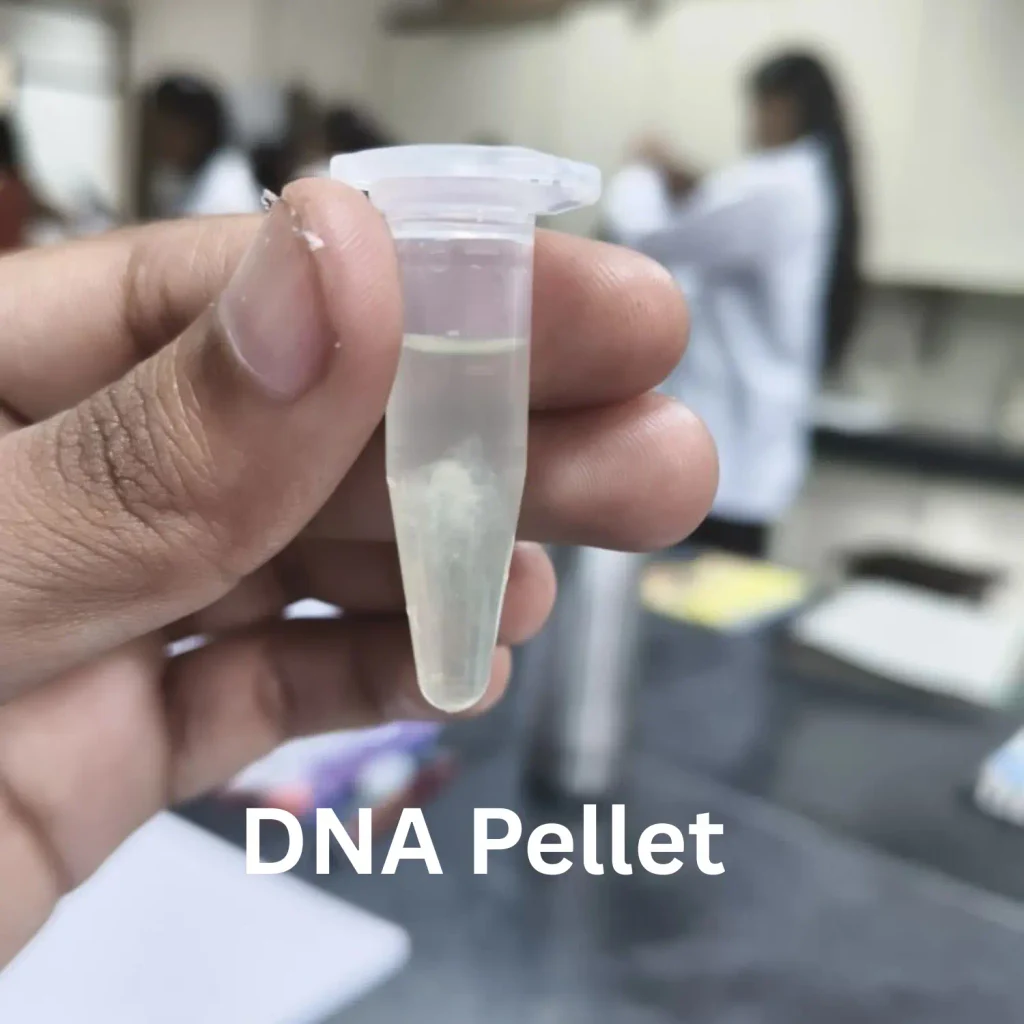
Centrifuge to collect the DNA as a visible pellet.
Wash the pellet with 70% ethanol to remove residual impurities. - Resuspend and Store the DNA
Dissolve the DNA pellet in TE buffer or nuclease-free water.
Store at –20°C for short-term use or –80°C for long-term storage.
Measure DNA concentration and purity using a spectrophotometer (A260/A280 ratio) before use.
Result: You now have purified DNA ready for molecular biology applications.
Materials and Reagents Used in DNA Extraction
Common Reagents in DNA Extraction
- Sodium Dodecyl Sulfate (SDS):
A detergent used to disrupt the cell membrane and nuclear envelope by dissolving lipids and denaturing proteins. SDS initiates cell lysis, the first step in DNA isolation. - Tris Buffer (Tris-HCl):
Maintains a stable pH environment during extraction, which helps preserve DNA integrity and prevent degradation. - EDTA (Ethylenediaminetetraacetic Acid):
Acts as a chelating agent that binds divalent metal ions (Mg²⁺, Ca²⁺) necessary for nuclease activity, thus protecting DNA from enzymatic degradation. - Proteinase K:
An enzyme that digests proteins and nucleases, facilitating the removal of contaminants and improving DNA purity. - Phenol–Chloroform Mixture:
Used in organic extraction methods to separate DNA from proteins and lipids based on solubility differences. DNA remains in the aqueous phase, while proteins partition into the organic phase. - Ethanol or Isopropanol:
Alcohols used to precipitate DNA from the aqueous solution, allowing visible collection of the DNA pellet. - Sodium Acetate or Ammonium Acetate:
Provides the salt necessary for effective DNA precipitation by neutralizing the negative charge on the DNA backbone. - TE Buffer (Tris-EDTA Buffer):
Commonly used for DNA resuspension and storage, maintaining pH stability and protecting DNA from degradation.
Essential Laboratory Equipment
- Centrifuge: Separates the DNA precipitate from the solution during washing and purification steps.
- Pipettes and Micropipette Tips: Used for accurate handling of small volumes of reagents and samples.
- Microcentrifuge Tubes: Containers for sample preparation and centrifugation.
- Vortex Mixer: Ensures proper mixing of reagents and cell lysates.
- Water Bath or Incubator: Provides controlled temperature conditions for enzymatic reactions (e.g., proteinase K digestion).
- Spectrophotometer or NanoDrop: Measures DNA concentration and purity based on absorbance ratios (A260/A280).
DNA Extraction Methods and Techniques
Several DNA extraction methods have been developed to suit different sample types, laboratory settings, and research objectives. Although all techniques share the same basic principles—cell lysis, DNA purification, and DNA precipitation—the specific reagents and approaches vary depending on the nature of the sample and the desired purity or yield.
Below are the most commonly used DNA extraction techniques, classified into traditional and modern methods.
1. Manual (Traditional) DNA Extraction Methods
Traditional extraction methods are widely used in teaching and research laboratories due to their cost-effectiveness and flexibility. However, they often require more time and manual handling.
a. Organic Extraction (Phenol–Chloroform Method)
- One of the earliest and most reliable methods for DNA isolation.
- Involves cell lysis, followed by extraction with a phenol–chloroform–isoamyl alcohol mixture.
- Proteins partition into the organic phase, while DNA remains in the aqueous phase.
- The DNA is then precipitated using ethanol or isopropanol and resuspended in buffer.
- Produces high-quality DNA, but requires careful handling due to the toxicity of organic solvents.
b. Chelex Resin Method
- A simplified extraction method that uses Chelex 100 resin to bind metal ions, which inactivate nucleases that could degrade DNA.
- Commonly used in forensic analysis and PCR-based applications, especially when working with small or degraded samples.
- Quick and inexpensive, but may yield DNA of lower purity compared to column-based methods.
c. Salting-Out Method
- Uses high concentrations of salt (e.g., sodium chloride or ammonium acetate) to precipitate proteins from the lysate.
- DNA remains in the supernatant and can be recovered by alcohol precipitation.
- Non-toxic and easy to perform, suitable for routine laboratory use.
2. Kit-Based and Automated DNA Extraction Methods
With advances in molecular biology, commercial extraction kits and automated platforms have become increasingly popular for their speed, reproducibility, and safety.
a. Silica Column-Based Extraction
- One of the most widely used modern techniques.
- Under high salt conditions, DNA binds to silica membranes while researchers wash away contaminants.
- Researchers elute DNA in a buffer after several wash steps.
- Produces highly pure DNA suitable for PCR, sequencing, and cloning.
b. Magnetic Bead-Based Extraction
- Uses magnetic silica-coated beads to capture DNA molecules.
- A magnet separates the beads, allowing researchers to wash and elute them easily.
- Ideal for high-throughput and automated extraction systems used in diagnostics and research.
c. Automated Extraction Systems
- Combine robotic handling with magnetic bead or column technologies.
- Reduce human error, increase throughput, and standardize results.
- Commonly used in clinical laboratories and genomic research facilities.
3. Comparison of DNA Extraction Methods
| Method | Advantages | Limitations | Applications |
|---|---|---|---|
| Phenol–Chloroform | High purity and yield | Toxic reagents, time-consuming | Research, genomic studies |
| Chelex Resin | Quick, inexpensive | Lower DNA purity | Forensic and PCR analysis |
| Salting-Out | Simple, non-toxic | May leave protein contaminants | Routine lab use |
| Silica Column | High purity, consistent | Higher cost | PCR, sequencing, diagnostics |
| Magnetic Beads | Fast, automatable | Requires specialized equipment | Clinical and high-throughput labs |
Quality, Purity, and Quantification of Extracted DNA
After DNA extraction, evaluating the quality, quantity, and purity of the isolated DNA is a crucial step before proceeding to downstream applications. Impurities like proteins, RNA, or residual solvents can interfere with enzymatic reactions and reduce the reliability of experimental results.
1. Spectrophotometric Analysis (A260/A280 and A260/A230 Ratios)
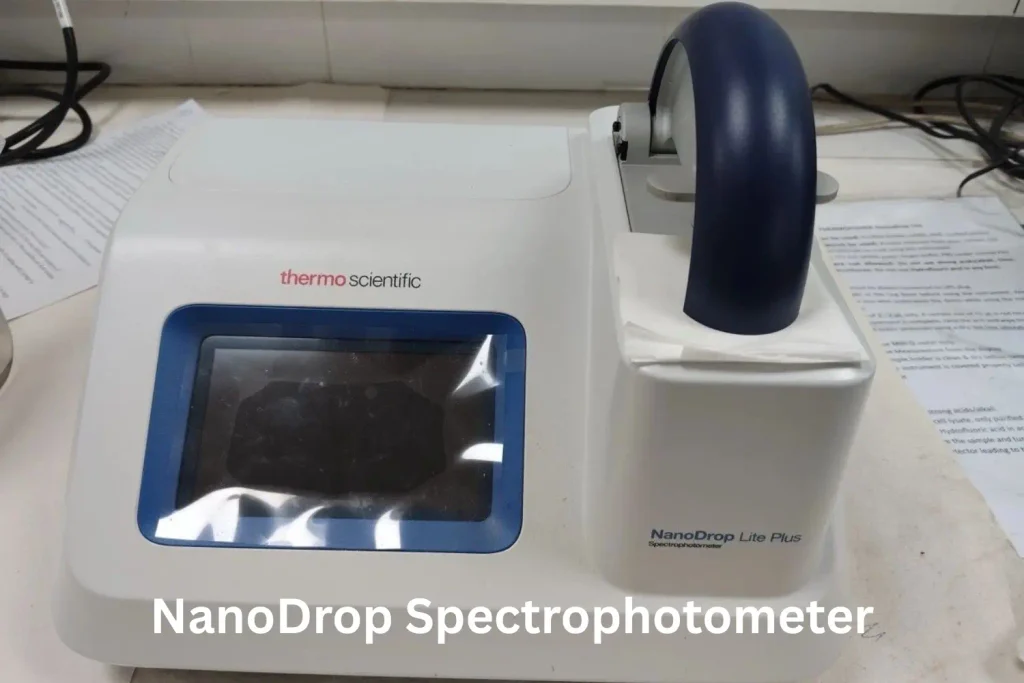
Spectrophotometric measurement is the most common and straightforward method to assess DNA purity and concentration. Instruments such as a NanoDrop spectrophotometer measure absorbance at specific wavelengths:
- DNA absorbs UV light at 260 nm, and researchers use this value to estimate DNA concentration.
- An absorbance value of 1.0 at 260 nm equals a double-stranded DNA concentration of 50 µg/mL (or 50 ng/µL) using a standard 1 cm pathlength.
- A280 nm: Indicates protein contamination, as aromatic amino acids absorb at this wavelength.
- A230 nm: Detects contaminants such as phenol, carbohydrates, or guanidine salts.
Ideal Purity Ratios:
- A260/A280 ≈ 1.8 → indicates pure DNA.
- A260/A230 between 2.0–2.2 → suggests minimal contamination.
If the ratios are significantly lower, it may indicate the presence of protein or chemical contaminants from the extraction process.
2. Gel Electrophoresis
Agarose gel electrophoresis provides a visual assessment of DNA integrity and size.
- Intact, high–molecular-weight DNA appears as a single, sharp band near the top of the gel.
- Smearing indicates DNA degradation.
- RNA contamination can appear as faint lower bands.
Using ethidium bromide or safer alternatives like SYBR Safe allows visualization of DNA under UV or blue light.
3. Fluorometric Quantification
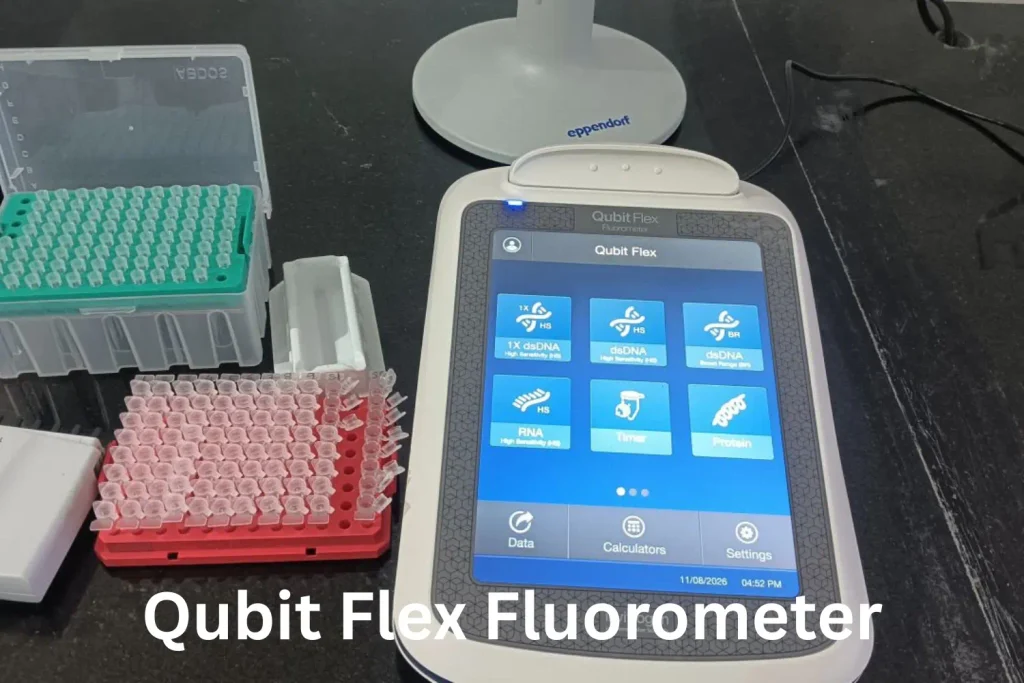
For more accurate DNA measurement, fluorometric assays such as Qubit or PicoGreen use fluorescent dyes that specifically bind to double-stranded DNA.
- Offers greater sensitivity and specificity than spectrophotometric methods.
- Ideal for low-concentration or precious samples.
4. Functional Validation
In addition to physical and chemical assessments, functional testing confirms whether the extracted DNA performs well in downstream applications.
- Researchers often use PCR amplification as a functional test for DNA quality.
- A successful amplification indicates that the DNA is free of inhibitors and suitable for molecular assays.
Applications of Extracted DNA
Once DNA has been successfully extracted and purified, it serves as the foundation for a wide range of molecular biology, genetic, and biomedical applications.
1. Polymerase Chain Reaction (PCR)
- Extracted DNA acts as a template for PCR amplification, a technique used to produce millions of copies of a specific DNA segment.
- PCR is essential in diagnostics, genotyping, forensic analysis, and research studies.
2. DNA Sequencing
- DNA sequencing allows researchers to determine the exact nucleotide sequence of a DNA molecule.
- Applications include genome mapping, mutation detection, and microbial identification.
- Pure, intact DNA is critical for reliable sequencing results using platforms like Sanger sequencing or Next-Generation Sequencing (NGS).
3. Cloning and Recombinant DNA Technology
- Researchers can insert extracted DNA into plasmids or vectors for gene cloning and expression studies.
- Enables functional analysis of genes, protein production, and development of genetically modified organisms (GMOs).
4. Forensic and Legal Applications
- DNA extraction is a cornerstone in forensic science, allowing identification of individuals from blood, hair, saliva, or other biological evidence.
- Used in criminal investigations, paternity testing, and human identification in disaster scenarios.
5. Molecular Diagnostics and Genetic Testing
- Scientists analyze extracted DNA to detect genetic disorders, mutations, or pathogens.
- Applications include prenatal genetic testing, cancer diagnostics, and infectious disease detection.
6. Biotechnology and Research Applications
- Researchers use DNA extracted from organisms for phylogenetic studies, population genetics, and environmental DNA (eDNA) analysis.
- Supports research in agriculture, medicine, and evolutionary biology.
Conclusion
DNA extraction is a foundational technique in molecular biology, enabling the isolation of high-quality genetic material from a variety of biological samples. By carefully following the principles, steps, and methods of extraction—and addressing common challenges—researchers can obtain pure DNA suitable for PCR, sequencing, cloning, forensic analysis, and genetic testing. Advances in extraction technologies, including commercial kits and automated systems, have streamlined the process, making DNA analysis faster, more reliable, and accessible across research, clinical, and diagnostic applications.
FAQs: DNA Extraction
DNA extraction is the process of isolating DNA from cells or tissues by breaking open the cells, removing proteins and contaminants, and purifying the genetic material for analysis.
The main steps include:
Sample collection and preparation
Cell lysis (breaking open cells)
Removal of proteins and contaminants
DNA precipitation and washing
DNA resuspension and storage
Extracted DNA is used in various applications such as PCR, DNA sequencing, genetic testing, disease diagnosis, forensic analysis, and research studies.
High DNA purity ensures accurate and reliable results in downstream applications like PCR and sequencing, as contaminants can inhibit enzymatic reactions.
DNA can be extracted from blood, saliva, tissue samples, bacteria, plant material, and even hair follicles.
DNA quality and concentration are typically measured using spectrophotometry (A260/A280 ratio) or fluorometric methods, and sometimes verified by gel electrophoresis.
References
- Green, Michael R, and Joseph Sambrook. Molecular Cloning : A Laboratory Manual. 4th ed. Cold Spring Harbor, N.Y: Cold Spring Harbor Laboratory Press, 2012. Print.
- Brown, T. A. (2022). Gene cloning and DNA analysis : an introduction / T.A. Brown. (Eighth edition.). Wiley-Blackwell, John Wiley & Sons, Inc.
- Alberts, B., Johnson, A., Lewis, J., et al. (2022).
Molecular Biology of the Cell (7th ed.). Garland Science. - Tan, Siun Chee, Yiap, Beow Chin, DNA, RNA, and Protein Extraction: The Past and The Present, BioMed Research International, 2009, 574398, 10 pages, 2009. https://doi.org/10.1155/2009/574398
- Stephanie A Thatcher, DNA/RNA Preparation for Molecular Detection, Clinical Chemistry, Volume 61, Issue 1, 1 January 2015, Pages 89–99, https://doi.org/10.1373/clinchem.2014.221374
- Ali, Nasir, Rampazzo, Rita de Cássia Pontello, Costa, Alexandre Dias Tavares, Krieger, Marco Aurelio, Current Nucleic Acid Extraction Methods and Their Implications to Point-of-Care Diagnostics, BioMed Research International, 2017, 9306564, 13 pages, 2017. https://doi.org/10.1155/2017/9306564
- Rudi, K., Kroken, M., Dahlberg, O. J., Deggerdal, A., Jakobsen, K. S., & Larsen, F. (1997). Rapid, Universal Method to Isolate PCR-Ready DNA Using Magnetic Beads. BioTechniques, 22(3), 506–511. https://doi.org/10.2144/97223rr01
- Mullegama SV, Alberti MO, Au C, Li Y, Toy T, Tomasian V, Xian RR. Nucleic Acid Extraction from Human Biological Samples. Methods Mol Biol. 2019;1897:359-383. doi: 10.1007/978-1-4939-8935-5_30.


