

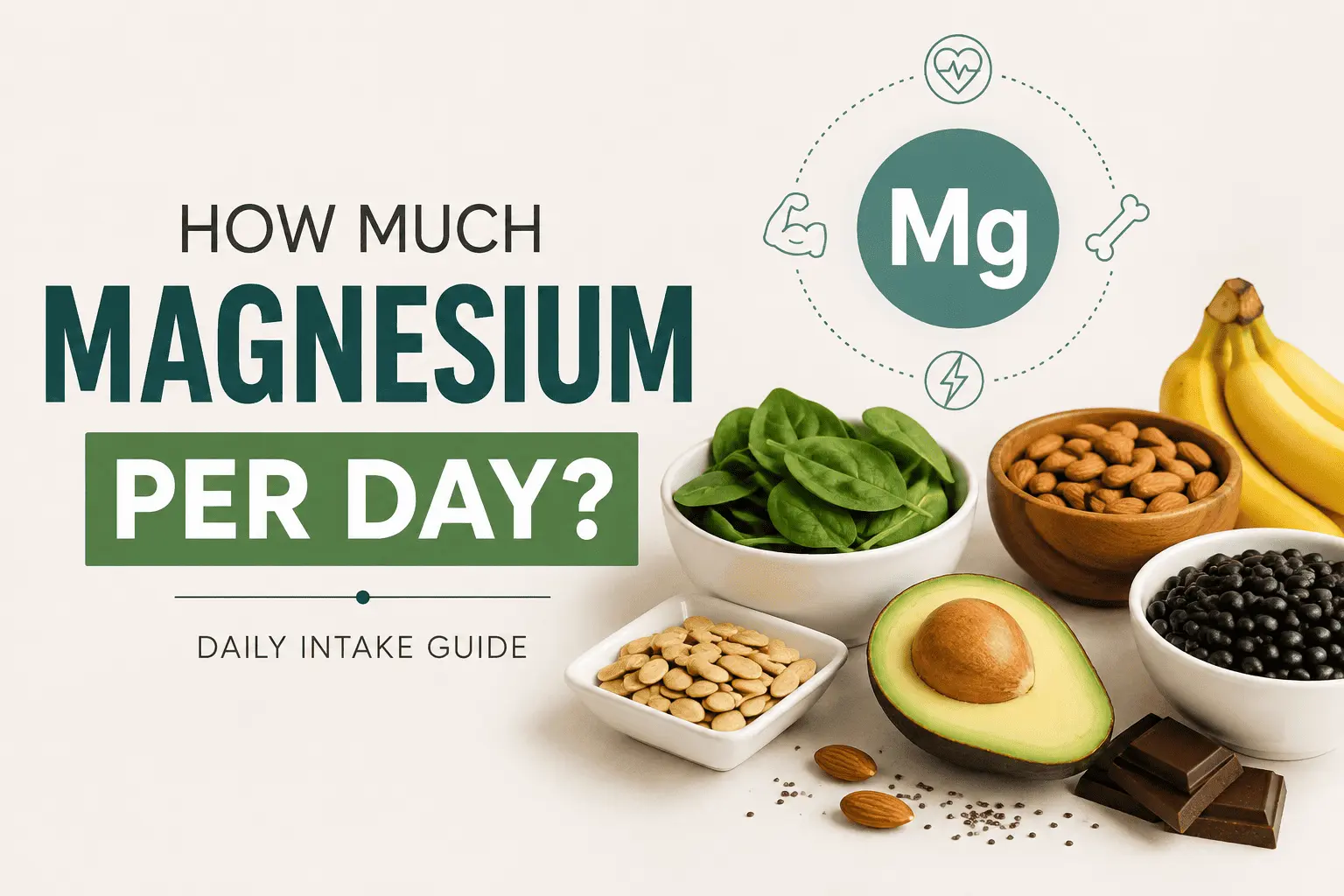
Magnesium is an essential mineral involved in hundreds of processes throughout the body, including energy production, muscle function, nerve signaling, and maintaining normal heart rhythm. Because the body does not produce magnesium on its own, you need to obtain it regularly through your diet.
But how much magnesium do you actually need each day? The answer depends on factors such as age, sex, pregnancy, and breastfeeding status.
How Much Magnesium Do You Need Per Day?
The recommended daily intake of magnesium varies throughout life. For healthy adults, the recommended amount is generally 310–420 mg per day.
| Age or life stage | Recommended magnesium per day |
|---|---|
| Adult men | 400–420 mg |
| Adult women | 310–320 mg |
| Pregnancy | 350–360 mg |
| Breastfeeding | 310–320 mg |
| Children 1–3 years | 80 mg |
| Children 4–8 years | 130 mg |
| Children 9–13 years | 240 mg |
| Boys 14–18 years | 410 mg |
| Girls 14–18 years | 360 mg |
These values represent the Recommended Dietary Allowance (RDA) for most healthy people.
Your individual needs can vary depending on your diet, overall health, medications, and other factors. Most people should aim to meet their magnesium requirements primarily through food.
Why Does Your Body Need Magnesium?
Magnesium plays an important role in many essential biological functions. It acts as a cofactor for numerous enzymes involved in energy metabolism and other cellular reactions.
One of its major roles is supporting normal muscle and nerve function. Magnesium is also involved in maintaining normal blood glucose levels, regulating blood pressure, and supporting normal heart rhythm.
The mineral also contributes to maintaining healthy bones. A substantial amount of the body’s magnesium is stored in bone tissue, where it works alongside other minerals involved in skeletal health.
Not getting enough magnesium over time can contribute to inadequate magnesium status. Severe deficiency is uncommon in otherwise healthy people, but certain health conditions, medications, or consistently poor dietary intake can increase the risk.
How to Get Enough Magnesium From Food
A balanced diet can provide a significant amount of your daily magnesium requirement. Some of the best dietary sources of magnesium include nuts, seeds, legumes, whole grains, leafy green vegetables, and certain seafood.
Examples of magnesium-rich foods include:
- Pumpkin seeds
- Chia seeds
- Almonds
- Cashews
- Spinach and other leafy greens
- Black beans
- Whole grains
- Avocado
- Yogurt
- Fatty fish
For example, adding nuts or seeds to breakfast, eating beans or lentils with lunch or dinner, and choosing whole grains can make it easier to reach your daily magnesium target.
It’s generally better to obtain nutrients from a varied diet rather than relying on supplements when your nutritional needs can be met through food.
Can You Take Too Much Magnesium?
Getting too much magnesium from food alone is unlikely to cause problems in healthy people because the kidneys normally remove excess magnesium.
The situation is different with magnesium supplements and medications. For adults, the tolerable upper intake level for magnesium from supplements and medications is 350 mg per day. This upper limit does not include magnesium naturally present in food.
Taking excessive amounts of supplemental magnesium can cause gastrointestinal side effects, particularly diarrhea, nausea, and abdominal cramping. Very high intakes can be dangerous, especially in people with impaired kidney function.
If you are considering a magnesium supplement, check the amount of elemental magnesium provided rather than focusing only on the total weight of the magnesium compound. Different forms of magnesium can contain different amounts of elemental magnesium.
People taking medications or those with kidney problems should speak with a healthcare professional before using magnesium supplements.
The Bottom Line
So, how much magnesium per day do you need? Most adult men need about 400–420 mg daily, while adult women generally need 310–320 mg daily. Requirements are higher during pregnancy and vary for children and teenagers.
The best approach is to obtain magnesium from a varied diet containing nuts, seeds, legumes, whole grains, and green vegetables. Supplements can be useful in some situations, but taking more magnesium is not necessarily better and excessive supplemental magnesium can cause side effects.


