

The HbA1c test is one of the most commonly used blood tests for assessing blood sugar control. It can help healthcare professionals determine whether a person has normal blood glucose levels, prediabetes, or diabetes. For people already living with diabetes, the test is also an important tool for monitoring how well blood sugar is being controlled over time.
Unlike a blood glucose test that measures your blood sugar at one particular moment, the HbA1c test provides a broader picture. It estimates your average blood glucose levels over approximately the previous two to three months.
Understanding what HbA1c means, how the test is performed, and how to interpret the results can help you better understand your metabolic health. However, an HbA1c result should always be interpreted in the context of your overall health and, when necessary, other blood glucose tests.
What Is an HbA1c Test?
HbA1c stands for hemoglobin A1c, also known as glycated hemoglobin or simply A1C. Hemoglobin is a protein found inside red blood cells that carries oxygen throughout the body.
When glucose circulates in the bloodstream, some of it naturally attaches to hemoglobin. This process is called glycation. The more glucose present in the blood, the greater the amount of glucose that becomes attached to hemoglobin.
Because red blood cells generally remain in circulation for around three months, measuring the amount of glycated hemoglobin provides an indication of a person’s average blood glucose exposure during this period.
This is the basic principle behind the HbA1c test. Instead of showing what your blood sugar is right now, it gives an indication of how high your blood glucose has generally been over the preceding weeks and months.
The test is particularly useful because blood glucose can change considerably throughout the day. Eating, exercising, stress, illness, medications, and other factors can all affect glucose levels. A single blood glucose measurement may therefore not provide a complete picture.
The HbA1c test helps overcome this limitation by providing a longer-term measurement.
Why Is the HbA1c Test Important?
The HbA1c test has several important clinical uses. One of its major applications is helping identify people with prediabetes or diabetes.
Type 2 diabetes can develop gradually, and some people may have elevated blood glucose for a long period without noticing obvious symptoms. An HbA1c test can help identify abnormal glucose levels before complications develop.
The test may also be used to monitor people who have already been diagnosed with diabetes. Repeated HbA1c measurements can show whether blood glucose management is improving, remaining stable, or becoming less controlled.
For example, if lifestyle changes and prescribed treatment are successfully lowering average blood glucose, the HbA1c level may decrease over time. Conversely, a rising HbA1c may indicate that blood glucose has been elevated more consistently.
However, the HbA1c test is not simply a measure of whether someone is “healthy” or “unhealthy.” Results need to be interpreted alongside factors such as age, medical history, medications, pregnancy status, and other laboratory findings.
What Are Normal HbA1c Levels?
HbA1c results are commonly reported as a percentage. They may also be reported in mmol/mol, particularly in countries that use the International Federation of Clinical Chemistry (IFCC) reporting system.
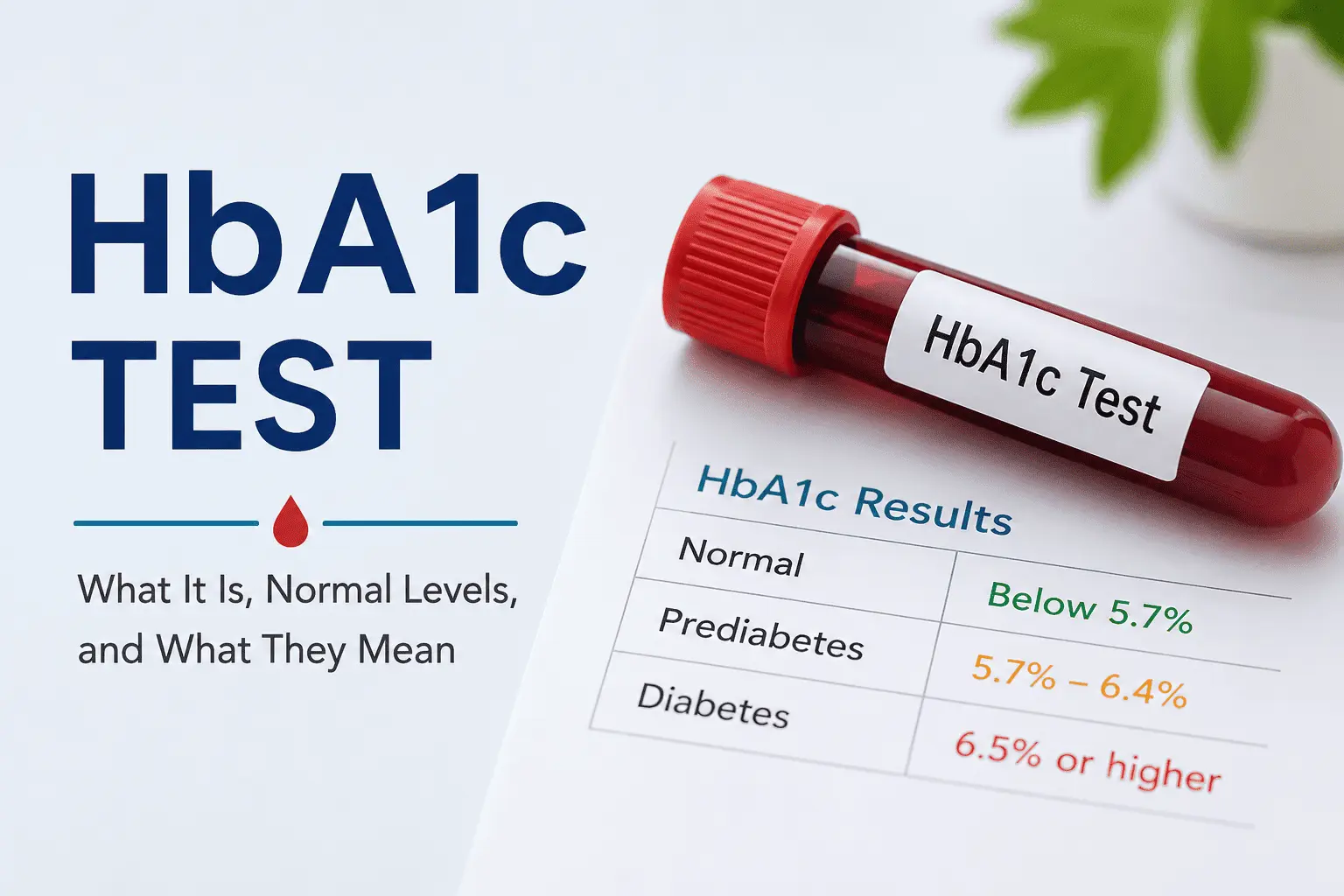
For many adults who are not pregnant, commonly used diagnostic categories are:
- Below 5.7%: generally considered the normal range
- 5.7%–6.4%: generally consistent with prediabetes
- 6.5% or higher: consistent with diabetes when confirmed according to appropriate diagnostic criteria
These ranges are useful for understanding HbA1c results, but a single result does not always tell the entire story.
For example, a healthcare professional may recommend repeating a test or performing another type of glucose test if a result is unexpectedly high or does not match a person’s symptoms and other laboratory findings.
It is also important to distinguish between diagnostic thresholds and treatment targets. A person who already has diabetes may have an individualized HbA1c target that is different from the diagnostic ranges above.
HbA1c Levels for Prediabetes
Prediabetes refers to blood glucose levels that are higher than normal but not high enough to meet the diagnostic criteria for diabetes.
An HbA1c level between 5.7% and 6.4% is generally classified as the prediabetes range.
Prediabetes does not necessarily mean that a person will develop type 2 diabetes. However, it indicates an increased risk and provides an opportunity to make lifestyle changes and receive appropriate medical follow-up.
Depending on the individual’s circumstances, healthcare professionals may recommend changes such as increasing physical activity, improving dietary habits, managing body weight when appropriate, and monitoring blood glucose.
The important point is that prediabetes can be an opportunity for early intervention. Identifying elevated blood glucose before diabetes develops may allow a person and their healthcare team to take steps to reduce future risk.
HbA1c Levels and Diabetes
An HbA1c result of 6.5% or higher is within the diabetes range according to commonly used diagnostic criteria.
However, diagnosis should not be based on an isolated number without considering the clinical context. If a person does not have clear symptoms of diabetes, an abnormal result may need confirmation with a repeat HbA1c test or another recommended glucose test.
Diabetes is associated with chronically elevated blood glucose, which can gradually affect blood vessels and different organs. Long-term high blood glucose can contribute to complications involving the eyes, kidneys, nerves, heart, and blood vessels.
This is one reason why monitoring HbA1c can be important for people with diabetes.
HbA1c Test vs. Blood Glucose Test
One common question is how the HbA1c test differs from a regular blood glucose test.
A blood glucose test measures the amount of glucose in your blood at a specific point in time. Depending on the type of test, it may be performed while fasting, after eating, or at any time of day.
The HbA1c test works differently. It reflects average glucose exposure over a much longer period.
For example, someone could have a normal blood glucose measurement at the time of testing but still have an elevated HbA1c if their glucose levels have frequently been high during the preceding months.
Conversely, a single elevated glucose measurement does not necessarily mean that someone’s average glucose has been consistently high.
For this reason, the two types of tests provide different but complementary information.
Does the HbA1c Test Require Fasting?
One of the advantages of the HbA1c test is that fasting is generally not required.
You can usually eat and drink normally before the test unless your healthcare professional has instructed you to fast because other blood tests are being performed at the same time.
This makes the HbA1c test relatively convenient compared with tests that require fasting or timed blood samples.
Nevertheless, always follow the specific instructions provided by your healthcare professional or laboratory.
How Is the HbA1c Test Performed?
The HbA1c test is usually performed using a blood sample.
Depending on the testing method, blood may be collected from a vein in the arm or from a finger prick. The sample is then analyzed to determine the proportion of hemoglobin that has glucose attached to it.
The procedure itself is generally quick. A healthcare professional may clean the area, collect the sample, and send it to a laboratory for analysis.
Some point-of-care devices can also measure HbA1c outside a traditional laboratory setting.
The exact procedure and turnaround time can vary depending on the healthcare facility and testing method.
How Long Does an HbA1c Test Reflect Blood Sugar?
The HbA1c test reflects blood glucose exposure over approximately two to three months, but it does not give equal weight to every day within that period.
More recent blood glucose levels tend to have a greater influence on the HbA1c measurement than glucose levels from several months earlier.
This means that changes in blood glucose control during the weeks before testing can influence the result.
For example, if someone has recently made significant changes to their diet, physical activity, or diabetes treatment, the HbA1c level may not immediately reflect the full effect of those changes.
This is because HbA1c depends partly on the lifespan and turnover of red blood cells.
What Is Estimated Average Glucose?
HbA1c results can also be translated into an estimate called estimated average glucose (eAG).
The eAG expresses the HbA1c result in the same general units used for daily blood glucose measurements, helping some people understand the result more easily.
However, estimated average glucose is not exactly the same as an individual’s measured glucose readings. A person’s glucose levels can fluctuate significantly throughout the day even when their average level is relatively stable.
Therefore, HbA1c and daily glucose monitoring should not be viewed as interchangeable measurements.
What Can Cause a High HbA1c?
A high HbA1c generally indicates that average blood glucose has been elevated over time.
Several factors can contribute to a high result. These may include:
- Diabetes that is not adequately controlled
- Prediabetes
- Certain dietary patterns
- Physical inactivity
- Some medications
- Changes in body weight
- Illness or other health conditions
- Insufficient or ineffective diabetes treatment
However, an elevated HbA1c does not automatically identify the specific reason blood glucose is high.
A healthcare professional may consider symptoms, medical history, glucose measurements, medications, lifestyle factors, and additional laboratory tests to determine the underlying situation.
Can HbA1c Results Be Inaccurate?
Although HbA1c is a valuable test, it is not perfect.
The test depends on the normal lifespan and characteristics of red blood cells. Conditions that affect red blood cells or hemoglobin can therefore sometimes influence HbA1c results.
Certain blood disorders, anemia, recent blood loss, blood transfusions, kidney disease, pregnancy, and some hemoglobin variants can affect the relationship between HbA1c and average blood glucose.
For this reason, an HbA1c result may sometimes appear inconsistent with a person’s glucose measurements.
If your HbA1c result does not seem to match your home glucose readings or other test results, discuss this with a healthcare professional. They may recommend additional testing or a different method of assessing blood glucose.
How Can You Lower HbA1c Levels?
For people with elevated blood glucose, improving everyday glucose management can help lower HbA1c over time.
Lifestyle changes may include adopting a balanced eating pattern, becoming more physically active, getting adequate sleep, and managing body weight when appropriate.
For people with diabetes, medications may also be an important part of treatment. Diabetes medications should be taken according to the treatment plan provided by a qualified healthcare professional.
It is important to avoid extreme diets or suddenly changing medication doses without professional guidance.
Because HbA1c reflects glucose levels over several months, improvements may take time to appear fully in the test result.
How Often Should HbA1c Be Tested?
The frequency of HbA1c testing depends on the individual’s circumstances.
People with diabetes may have the test several times per year, particularly when treatment is being changed or blood glucose is not within the desired range.
People with stable diabetes may require testing less frequently.
For people without diabetes, testing frequency depends on their risk factors and whether previous results were normal or within the prediabetes range.
Your healthcare professional can determine an appropriate testing schedule based on your individual situation.
What Should You Do After Receiving Your HbA1c Results?
Receiving an HbA1c result can raise questions, especially if the number is higher than expected.
The first step is to understand what the result means in your particular situation. Do not assume that one abnormal result automatically means you have diabetes.
If the result is within the prediabetes or diabetes range, your healthcare professional may recommend repeating the test, performing another glucose test, or reviewing other aspects of your health.
If you already have diabetes, your result can help your healthcare team evaluate your current treatment and determine whether adjustments may be appropriate.
Remember that HbA1c is one measurement. Your healthcare professional may consider it alongside blood pressure, cholesterol, kidney function, glucose readings, medications, and other factors.
Frequently Asked Questions About the HbA1c Test
Is the HbA1c test the same as an A1C test?
Yes. HbA1c, hemoglobin A1c, and A1C generally refer to the same blood test.
Can I eat before an HbA1c test?
In most cases, yes. The HbA1c test generally does not require fasting. However, you should follow any instructions provided by your healthcare professional, especially if other blood tests are being performed.
What is considered a normal HbA1c?
For many adults who are not pregnant, an HbA1c below 5.7% is generally considered within the normal range. Individual interpretation can vary depending on the clinical situation.
What HbA1c level indicates prediabetes?
An HbA1c of 5.7% to 6.4% is generally classified as the prediabetes range.
What HbA1c level indicates diabetes?
An HbA1c of 6.5% or higher is within the diabetes range. Depending on the circumstances, confirmation with repeat testing or another diagnostic test may be necessary.
How quickly can HbA1c levels change?
HbA1c changes gradually because it reflects blood glucose exposure over several weeks to months. Recent changes in blood glucose can influence the result, but the full effect of lifestyle or treatment changes may take time to appear.
Can stress affect HbA1c?
Long-term factors that influence blood glucose can contribute to changes in HbA1c. Short-term stress may affect blood glucose temporarily, but HbA1c primarily reflects longer-term glucose exposure.
Medical Disclaimer: This content is for informational and educational purposes only and does not constitute medical advice. It is not intended to replace professional medical consultation, diagnosis, or treatment. Always seek the advice of a qualified healthcare provider with any questions regarding a medical condition.


