

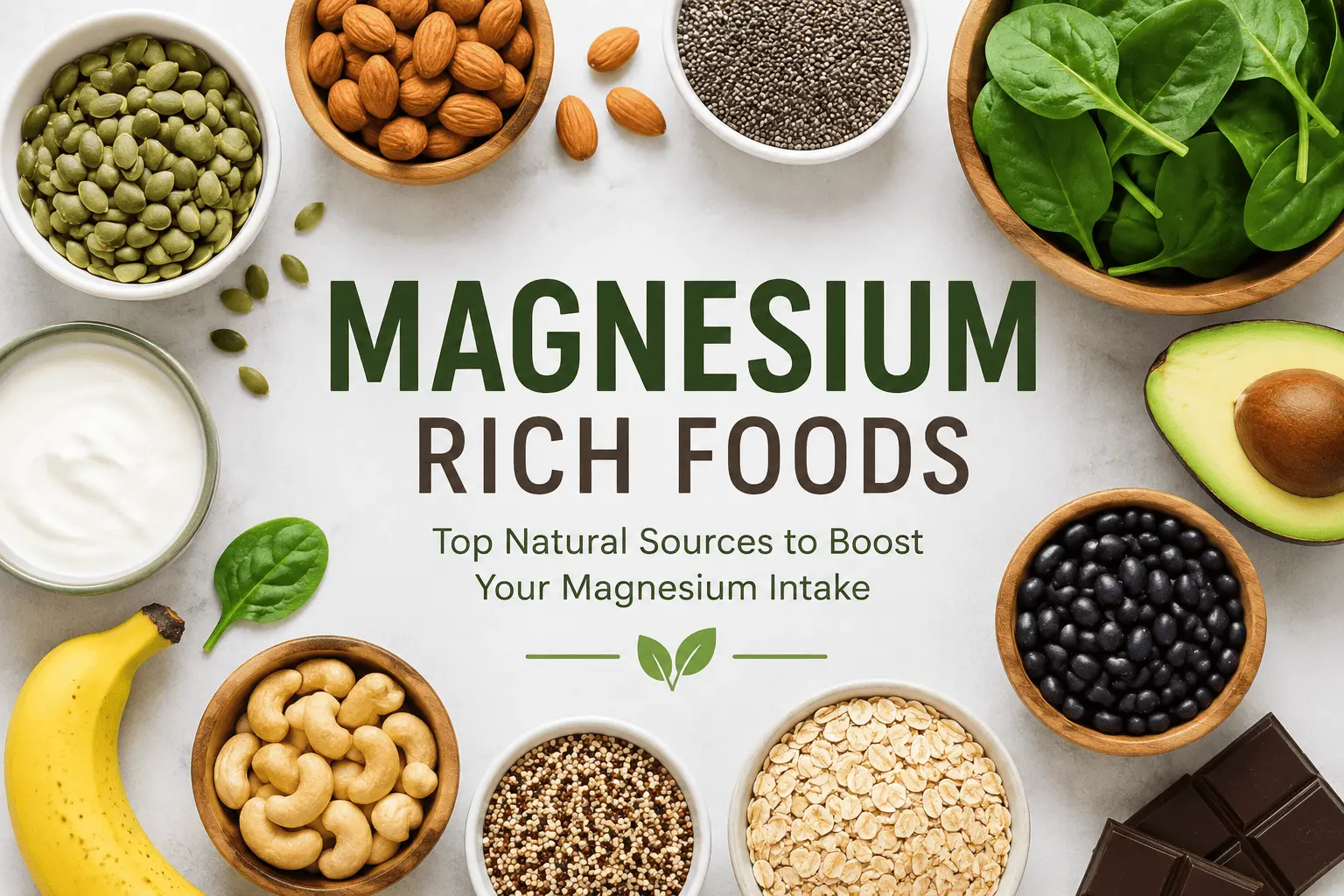
Magnesium is an essential mineral that supports hundreds of biochemical reactions in the body. It plays a key role in muscle and nerve function, energy production, heart health, and bone strength. However, many people do not get enough magnesium from their daily diet.
Fortunately, adding more magnesium rich foods to your meals is an easy and natural way to increase your intake.
In this guide, you’ll discover some of the best food sources of magnesium, their health benefits, and simple tips for meeting your daily needs.
Why Is Magnesium Important?
Magnesium is involved in more than 300 enzymatic reactions that help keep your body functioning properly. Getting enough magnesium may help:
- Support healthy muscle and nerve function
- Maintain strong bones and teeth
- Promote normal heart rhythm
- Help regulate blood sugar levels
- Support energy production
- Contribute to normal protein synthesis
A balanced diet that includes a variety of magnesium-rich foods can help maintain adequate magnesium levels and support overall health.
Read our complete guide to magnesium before exploring the best food sources
15 Magnesium Rich Foods You Should Eat
Here are some of the best natural sources of magnesium.
| Food | Approximate Magnesium (per serving) |
|---|---|
| Pumpkin seeds (1 oz) | 156 mg |
| Chia seeds (1 oz) | 111 mg |
| Almonds (1 oz) | 80 mg |
| Cashews (1 oz) | 74 mg |
| Cooked spinach (½ cup) | 78 mg |
| Black beans (½ cup) | 60 mg |
| Edamame (½ cup) | 50 mg |
| Avocado (1 medium) | 58 mg |
| Dark chocolate (1 oz, 70–85% cocoa) | 64 mg |
| Firm tofu (½ cup) | 37 mg |
| Oatmeal (1 cup cooked) | 63 mg |
| Brown rice (1 cup cooked) | 84 mg |
| Quinoa (1 cup cooked) | 118 mg |
| Banana (1 medium) | 32 mg |
| Plain yogurt (1 cup) | 42 mg |
Top Magnesium Food Choices
Pumpkin seeds are among the richest dietary sources of magnesium. They also provide zinc, healthy fats, and antioxidants.
Leafy green vegetables, such as spinach, are excellent choices because magnesium is a component of chlorophyll, the pigment that gives plants their green color.
Nuts and seeds, including almonds, cashews, and chia seeds, make convenient snacks while supplying healthy fats, fiber, and protein.
Whole grains like quinoa, brown rice, and oats contain more magnesium than refined grains because much of the mineral is removed during processing.
Legumes, including black beans and edamame, provide magnesium along with plant-based protein and fiber.
How Much Magnesium Do You Need Daily?
The Recommended Dietary Allowance (RDA) for magnesium varies by age and sex.
| Group | Recommended Daily Intake |
|---|---|
| Adult men (19–30 years) | 400 mg |
| Adult men (31+ years) | 420 mg |
| Adult women (19–30 years) | 310 mg |
| Adult women (31+ years) | 320 mg |
| Pregnant women | 350–360 mg |
Most healthy adults can meet these recommendations by eating a varied diet that includes whole grains, vegetables, legumes, nuts, seeds, and dairy products.
Tips for Increasing Magnesium Intake Naturally
Improving your magnesium intake doesn’t require major dietary changes. Try these simple strategies:
- Include leafy green vegetables in your meals several times each week.
- Snack on almonds, cashews, or pumpkin seeds instead of processed snacks.
- Replace refined grains with whole grains such as brown rice or quinoa.
- Add beans or lentils to soups, salads, and side dishes.
- Enjoy moderate amounts of dark chocolate as part of a balanced diet.
- Eat a variety of plant-based foods to maximize your magnesium intake.
If you have difficulty meeting your magnesium needs through food or have a medical condition that affects absorption, talk with your healthcare provider before using magnesium supplements.
FAQs
Pumpkin seeds are among the richest natural sources of magnesium, providing approximately 156 mg per ounce.
Bananas contain magnesium but are not considered a high-magnesium food. One medium banana provides about 32 mg of magnesium.
Yes. Most healthy people can meet their magnesium needs by eating a balanced diet rich in nuts, seeds, legumes, whole grains, leafy green vegetables, and other magnesium-rich foods.
Low magnesium levels may contribute to symptoms such as muscle cramps, fatigue, weakness, irregular heartbeat, and numbness. Because these symptoms can have many causes, consult a healthcare professional for proper evaluation.
Yes. Dark chocolate with a high cocoa content (70% or more) is a good source of magnesium and also contains beneficial antioxidants.
Conclusion
Including more magnesium rich foods in your diet is a simple and effective way to support your overall health. Foods such as pumpkin seeds, spinach, almonds, quinoa, beans, and dark chocolate provide magnesium along with many other essential nutrients. By eating a balanced variety of whole foods, most people can meet their daily magnesium needs naturally and enjoy the many health benefits this essential mineral provides.


