

What Is Hematocrit?
Hematocrit Meaning in Simple Terms
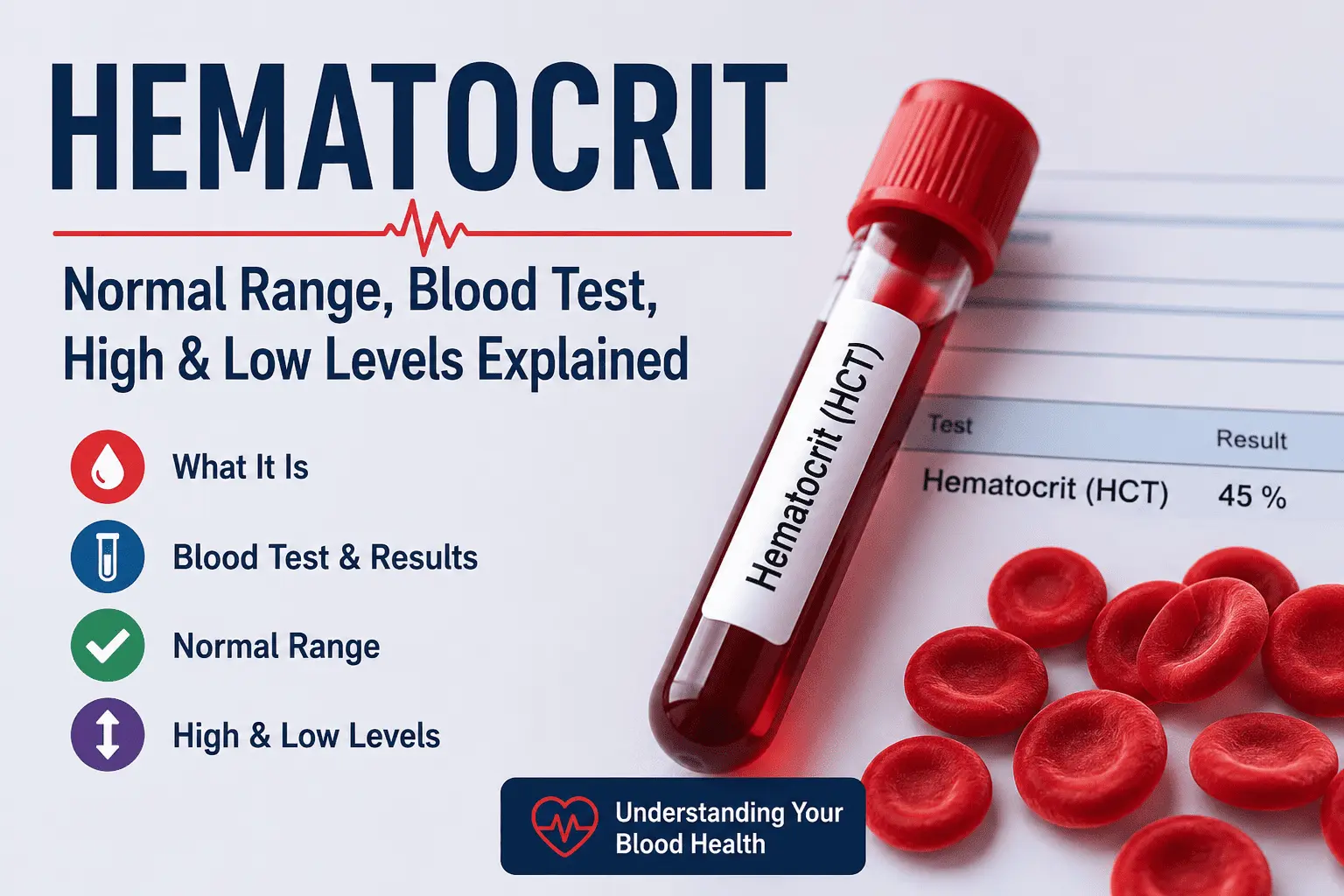
Hematocrit refers to the percentage of red blood cells (RBCs) in your total blood volume. In simple terms, it tells you how much of your blood is made up of oxygen-carrying cells compared to plasma (the liquid portion).
For example, if your hematocrit level is 45%, it means that 45% of your blood volume consists of red blood cells, while the remaining 55% is plasma and other components.
Hematocrit is a key indicator of your body’s ability to transport oxygen efficiently. Since red blood cells contain hemoglobin, which binds oxygen, this measurement is crucial for assessing overall health and detecting blood-related disorders.
Hematocrit Abbreviation (HCT) Explained
In medical reports, hematocrit is commonly abbreviated as HCT. You may also encounter the term PCV (Packed Cell Volume), which essentially refers to the same measurement.
- HCT = Hematocrit
- PCV = Packed Cell Volume
Both terms describe the proportion of red blood cells in the blood after it has been processed (typically by centrifugation or automated analyzers).
Why Hematocrit Is Important for Health
Hematocrit plays a vital role in evaluating your overall blood health and oxygen delivery capacity. Maintaining a normal hematocrit level is essential because:
- Low hematocrit may indicate anemia, blood loss, or nutritional deficiencies
- High hematocrit may suggest dehydration or conditions that thicken the blood
- It helps doctors monitor chronic diseases and treatment responses
Since oxygen is essential for every cell in your body, even small changes in hematocrit levels can have noticeable effects on your energy levels, organ function, and overall well-being.
Hematocrit Blood Test: Purpose, Procedure, and Uses
What Is a Hematocrit Blood Test?
A hematocrit blood test is a simple laboratory test that measures the percentage of red blood cells in your blood. It is most commonly included as part of a Complete Blood Count (CBC), one of the most routine blood tests used in clinical practice.
The test helps evaluate how well your blood can carry oxygen throughout the body.
Why Doctors Order a Hematocrit Test
Doctors request a hematocrit test for several important reasons. It is widely used for both diagnosis and monitoring of various conditions.
Common reasons include:
- Detecting anemia (low red blood cell levels)
- Identifying polycythemia (abnormally high red blood cell levels)
- Assessing dehydration, which can falsely elevate hematocrit
- Monitoring chronic diseases such as kidney disorders or lung disease
- Evaluating treatment effectiveness, especially in patients receiving therapies that affect blood cell production
Because it is quick and informative, the hematocrit test is often one of the first steps in investigating symptoms like fatigue, weakness, or dizziness.
How the Test Is Performed
The hematocrit test is straightforward and minimally invasive:
- A healthcare professional draws a small sample of blood, usually from a vein in your arm.
- The sample is sent to a laboratory for analysis.
- In the lab, the blood may be:
- Centrifuged to separate red blood cells from plasma
- Or analyzed using automated hematology analyzers
The result is reported as a percentage, representing the proportion of red blood cells in the total blood volume.
Preparing for a Hematocrit Test
In most cases, no special preparation is required for a hematocrit blood test. However, a few factors can influence your results:
- Hydration status: Dehydration can increase hematocrit levels
- Recent blood loss: May lower results
- High altitude: Can naturally raise hematocrit
- Pregnancy: May slightly lower hematocrit values
Your doctor may provide specific instructions depending on whether the test is part of a broader evaluation.
Normal Hematocrit Levels: Age and Gender Differences
Hematocrit Normal Range for Men
In adult men, hematocrit levels are typically higher due to the influence of testosterone, which stimulates red blood cell production.
- Normal range for men: approximately 41% to 50%
Values within this range indicate a healthy proportion of red blood cells, supporting efficient oxygen delivery throughout the body.
Hematocrit Normal Range for Women
Women generally have slightly lower hematocrit levels compared to men. This difference is influenced by hormonal factors and, in some cases, menstrual blood loss.
- Normal range for women: approximately 36% to 44%
Levels within this range are considered normal and adequate for maintaining proper physiological function.
Hematocrit Levels in Children
Hematocrit values in children vary depending on age, especially during infancy and early development.
- Newborns: 55% to 68% (higher at birth)
- Infants (1–2 months): 30% to 42%
- Children: 32% to 44%
These variations reflect changes in oxygen needs and red blood cell production as the body grows.
Factors That Affect Hematocrit Levels
Several physiological and environmental factors can influence hematocrit levels, even in healthy individuals:
- Altitude: Higher altitudes increase hematocrit due to lower oxygen availability
- Hydration status: Dehydration raises hematocrit, while overhydration lowers it
- Pregnancy: Often leads to slightly reduced hematocrit due to increased plasma volume
- Smoking: Can elevate hematocrit levels
- Physical fitness: Athletes may show mild variations
Because of these factors, hematocrit results should always be interpreted in the context of the individual’s overall health and lifestyle.
High Hematocrit Levels: Causes, Symptoms, and Risks
What Does High Hematocrit Mean?
High hematocrit refers to a condition where the percentage of red blood cells in the blood is above the normal range. This means the blood becomes more concentrated and, in some cases, thicker than usual.
While a slight increase may not always be harmful, significantly elevated hematocrit levels can interfere with normal blood flow and oxygen delivery.
Common Causes of High Hematocrit
There are several possible causes of elevated hematocrit levels, ranging from temporary conditions to more serious disorders:
- Dehydration: Reduced plasma volume makes red blood cells appear more concentrated
- Polycythemia vera: A bone marrow disorder that leads to excessive red blood cell production
- Chronic lung diseases: Conditions like COPD reduce oxygen levels, stimulating RBC production
- Smoking: Increases carbon monoxide exposure, triggering higher red blood cell production
- Living at high altitude: The body compensates for lower oxygen levels by producing more RBCs
- Use of performance-enhancing drugs: Such as erythropoietin (EPO)
Identifying the underlying cause is essential for proper management.
Symptoms of High Hematocrit
Some individuals with high hematocrit may not experience symptoms, especially in mild cases. However, when levels become significantly elevated, symptoms may include:
- Headaches
- Dizziness or lightheadedness
- Fatigue
- Blurred vision
- Reddened skin (especially on the face)
These symptoms are often related to reduced blood flow efficiency due to increased blood viscosity.
Health Risks of High Hematocrit
Persistently high hematocrit levels can increase the risk of serious health complications:
- Blood clots (thrombosis)
- Stroke or heart attack
- High blood pressure
- Reduced oxygen delivery to tissues
Thicker blood flows less easily through blood vessels, which can strain the cardiovascular system and increase the likelihood of clot formation.
Low Hematocrit Levels: Causes, Symptoms, and Hematocrit vs Hemoglobin
What Does Low Hematocrit Mean?
Low hematocrit means that the percentage of red blood cells in the blood is below the normal range. This condition often indicates that the body is not producing enough red blood cells or that they are being lost or destroyed.
Low hematocrit is commonly associated with anemia, a condition that reduces the blood’s ability to carry oxygen efficiently to tissues and organs.
Causes of Low Hematocrit Levels
Several medical and physiological factors can lead to decreased hematocrit levels:
- Iron deficiency anemia: The most common cause, due to insufficient iron for red blood cell production
- Vitamin deficiencies: Low levels of vitamin B12 or folate
- Blood loss: From injury, surgery, or heavy menstruation
- Chronic diseases: Such as kidney disease or cancer
- Bone marrow disorders: Reduced production of red blood cells
- Overhydration: Excess fluid dilutes red blood cell concentration
Identifying the underlying cause is essential for effective treatment.
Symptoms of Low Hematocrit
Low hematocrit levels can lead to reduced oxygen delivery, causing noticeable symptoms such as:
- Fatigue and weakness
- Pale or yellowish skin
- Shortness of breath
- Dizziness or lightheadedness
- Cold hands and feet
- Rapid heartbeat (in more severe cases)
These symptoms can vary depending on how low the hematocrit level is and how quickly it drops.
Hematocrit vs Hemoglobin: Key Differences
Hematocrit and hemoglobin are closely related but measure different aspects of blood health:
- Hematocrit (HCT): Measures the percentage of red blood cells in blood volume
- Hemoglobin (Hb): Measures the amount of oxygen-carrying protein inside red blood cells
In most cases, the two values correlate. For example, low hematocrit is often accompanied by low hemoglobin in anemia. However, they are not identical:
- Hematocrit reflects cell volume proportion
- Hemoglobin reflects oxygen-carrying capacity
Doctors often evaluate both together in a Complete Blood Count (CBC) to get a more complete picture of a patient’s condition.
How to Improve Low Hematocrit Levels
Improving low hematocrit depends on the underlying cause, but common approaches include:
- Iron-rich diet: Red meat, spinach, lentils, and fortified cereals
- Vitamin supplementation: Vitamin B12 and folic acid when deficient
- Treating underlying conditions: Such as chronic disease or bleeding disorders
- Medical treatments: Iron supplements, erythropoietin therapy, or blood transfusion in severe cases
This post may contain affiliate links. As an Amazon Associate, I earn from qualifying purchases at no extra cost to you.

- Active B12: Each capsule provides 1 mg vitamin B12 as methylcobalamin, which is more efficiently used by the body compar…
- Heart & Brain Health: Supports a normal level of homocysteine in the body to benefit healthy cardiac function, blood cel…
- Sleep Support: Helps maintain normal circadian rhythms to support restful sleep and supports healthy methylation process…

- High Potency Folic Acid: Provides 5 mg (5,000 mcg) of Folic Acid per vegetarian tablet, equivalent to 8,333 mcg DFE.
- Supports Healthy Cell Growth: Helps support healthy cell growth, DNA synthesis, and normal red blood cell formation.*
- Essential Vitamin B9: An essential B vitamin that supports heart health, nervous system function, and overall wellness.*
It’s important to consult a healthcare professional before starting any treatment, especially if symptoms are persistent or severe.
FAQs
Hematocrit is the percentage of red blood cells in your total blood volume.
Normal levels are about 41–50% for men and 36–44% for women.
High hematocrit means too many red blood cells, often due to dehydration or underlying conditions.
Low hematocrit usually indicates anemia, blood loss, or nutritional deficiencies.
It is used to diagnose and monitor conditions like anemia, dehydration, and blood disorders.
No. Hematocrit measures red blood cell percentage, while hemoglobin measures oxygen-carrying protein.
Yes. Dehydration can falsely increase hematocrit levels.
By improving diet (iron, B12, folate) or treating the underlying cause.
Medical Disclaimer: This content is for informational and educational purposes only and does not constitute medical advice. It is not intended to replace professional medical consultation, diagnosis, or treatment. Always seek the advice of a qualified healthcare provider with any questions regarding a medical condition.


