

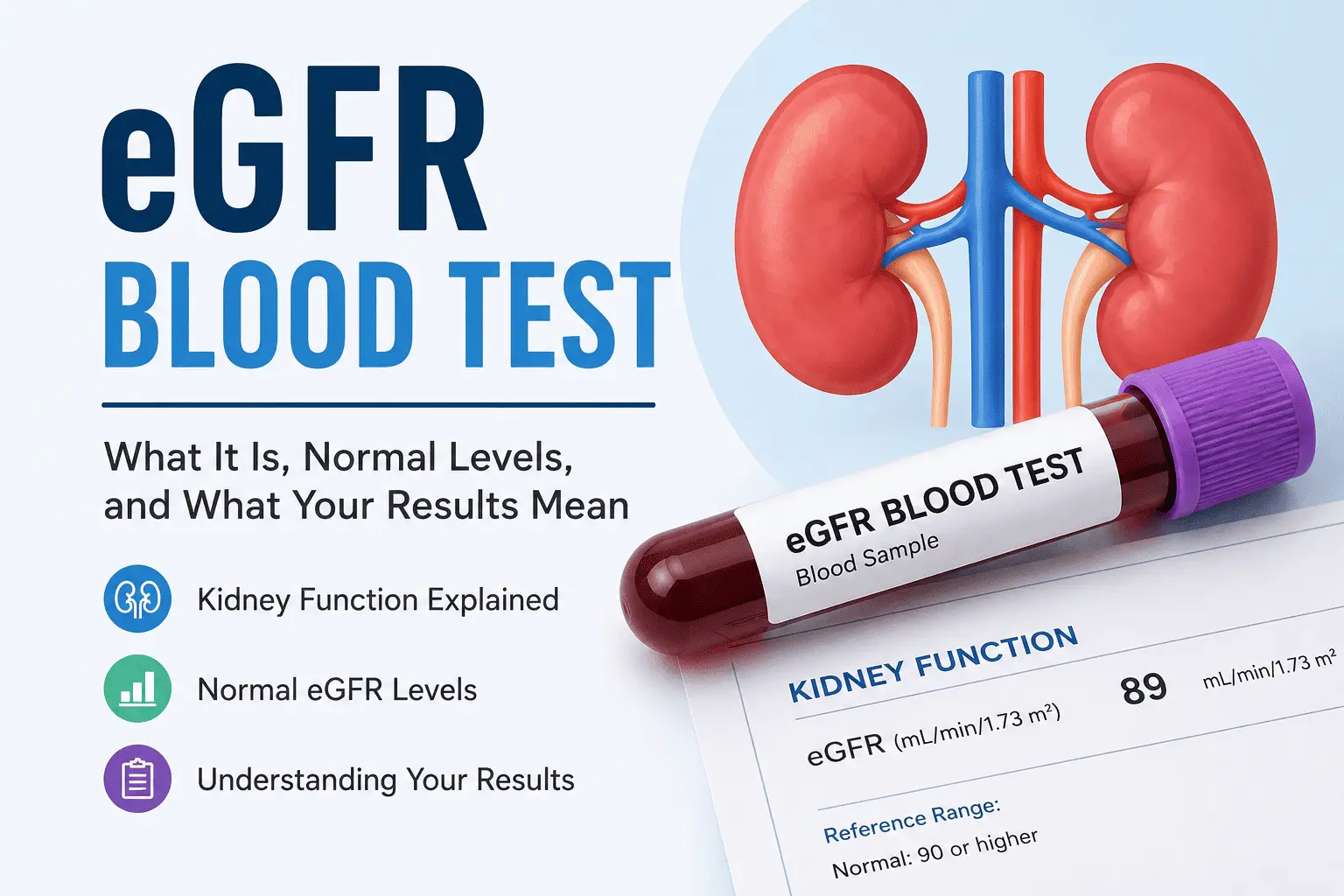
What Is eGFR?
eGFR stands for estimated glomerular filtration rate, a key measure used to assess how well your kidneys are functioning. It estimates how much blood your kidneys filter each minute.
Your kidneys play a vital role in removing waste, excess fluids, and toxins from the blood. The eGFR value helps determine whether this filtration process is working properly.
Unlike direct measurement of kidney filtration (GFR), eGFR is calculated using a formula that includes:
- Blood creatinine level
- Age
- Sex
- Sometimes race (depending on the formula used)
Because of its simplicity and accuracy, eGFR is widely used in routine blood tests to evaluate kidney health.
What Is Glomerular Filtration Rate (GFR)?
Glomerular filtration rate (GFR) refers to the actual amount of blood filtered by the kidneys per minute. It reflects the efficiency of the tiny filtering units in the kidneys called glomeruli.
A healthy GFR indicates that the kidneys are effectively clearing waste products. When GFR decreases, it suggests impaired kidney function.
Measuring true GFR directly is complex and not commonly done in routine practice. Instead, doctors rely on eGFR, which provides a reliable estimate.
What Is an eGFR Blood Test?
The eGFR blood test is not a standalone test. It is calculated from a creatinine blood test, which measures the level of creatinine—a waste product from muscle metabolism—in your blood.
When creatinine levels rise, it usually indicates reduced kidney function, which lowers eGFR.
Doctors may order an eGFR test to:
- Detect early kidney disease
- Monitor chronic kidney disease (CKD)
- Evaluate kidney function in patients with diabetes or high blood pressure
- Check kidney health before prescribing certain medications
This test is simple, quick, and requires only a standard blood sample.
Normal eGFR Levels
eGFR is measured in mL/min/1.73 m². Normal values depend on age, but general guidelines are:
- 90 or higher: Normal kidney function
- 60–89: Mild decrease (may still be normal in older adults)
- 30–59: Moderate decrease (Stage 3 CKD)
- 15–29: Severe decrease (Stage 4 CKD)
- Below 15: Kidney failure (Stage 5 CKD)
It is important to interpret these values alongside other clinical findings and repeat tests.
What Do Low eGFR Results Mean?
A low eGFR indicates that the kidneys are not filtering blood effectively.
Common causes include:
- Chronic kidney disease (CKD)
- Diabetes
- High blood pressure
- Kidney infections or damage
- Autoimmune diseases
Early stages of kidney disease often have no symptoms. As the condition progresses, symptoms may include:
- Fatigue
- Swelling in legs or face
- Changes in urination
- Nausea
Early detection through eGFR testing is crucial to slow disease progression.
Can eGFR Be High? What Does It Mean?
In most cases, a higher eGFR (above normal) is not a concern and may simply reflect normal kidney function.
However, mildly elevated eGFR can occur in:
- Pregnancy
- Early stages of diabetes (hyperfiltration)
- Individuals with low muscle mass
In general, high eGFR values are less clinically significant than low values.
eGFR Blood Test Meaning and Interpretation
Understanding your eGFR result requires looking beyond a single number.
Key points for interpretation:
- A single low result does not confirm kidney disease
- Persistent reduction over 3 months suggests chronic kidney disease
- Trends over time are more important than one measurement
Doctors often interpret eGFR alongside:
- Creatinine levels
- Urinalysis (protein in urine)
- Imaging tests if needed
Symptoms of Abnormal eGFR Levels
Kidney disease is often called a “silent condition” because symptoms may not appear until later stages.
Possible symptoms include:
- Swelling (edema)
- Persistent fatigue
- Loss of appetite
- Difficulty concentrating
- Changes in urine frequency or appearance
If you experience these symptoms, medical evaluation is important.
Causes of Abnormal eGFR Levels
Several conditions can affect eGFR:
- Diabetes: Leading cause of kidney damage
- High blood pressure: Damages blood vessels in kidneys
- Dehydration: Temporarily lowers eGFR
- Medications: Some drugs can affect kidney function
- Kidney infections or obstruction
Identifying the underlying cause is essential for proper treatment.
How to Prepare for an eGFR Blood Test
Preparation is simple, but a few precautions can improve accuracy:
- No fasting is usually required
- Avoid heavy meat intake before the test
- Stay well hydrated
- Inform your doctor about medications or supplements
These steps help ensure reliable results.
How to Improve or Protect Your eGFR
Maintaining healthy kidney function involves lifestyle and medical management:
- Control blood sugar levels
- Manage blood pressure
- Follow a balanced, low-salt diet
- Stay hydrated
- Avoid excessive use of painkillers (NSAIDs)
- Exercise regularly
Regular monitoring is especially important for high-risk individuals.
When Should You See a Doctor?
You should seek medical advice if:
- Your eGFR is consistently below 60
- You notice symptoms of kidney problems
- You have diabetes or hypertension
- Your results show a sudden decline
Early intervention can prevent serious complications.
FAQs
A normal eGFR is typically 90 or higher, though it may decline slightly with age.
It depends on the cause. Acute conditions may be reversible, while chronic kidney disease is usually managed rather than cured.
eGFR is a reliable estimate but may be less accurate in certain populations, such as those with very high or low muscle mass.
Creatinine is a waste product measured in blood, while eGFR is a calculated value based on creatinine and other factors.
Yes, dehydration can temporarily lower eGFR results.
Conclusion
The eGFR blood test is an essential tool for evaluating kidney function and detecting early signs of kidney disease. By understanding your eGFR levels and monitoring changes over time, you can take proactive steps to protect your kidney health. Regular testing, combined with a healthy lifestyle and medical guidance, plays a crucial role in preventing and managing kidney-related conditions.
Medical Disclaimer: This content is for informational and educational purposes only and does not constitute medical advice. It is not intended to replace professional medical consultation, diagnosis, or treatment. Always seek the advice of a qualified healthcare provider with any questions regarding a medical condition.


