

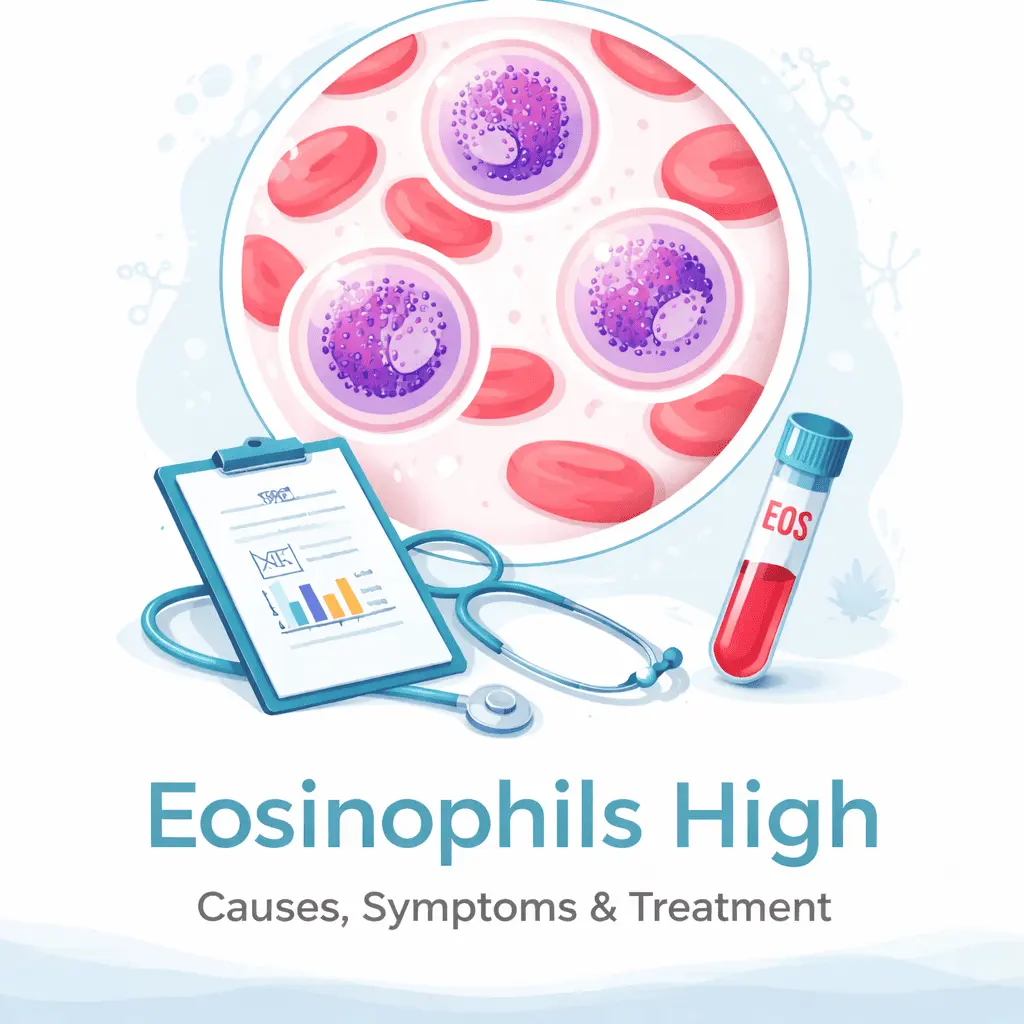
If your blood test results show that your eosinophils are high, it is natural to feel concerned. Eosinophils are a specific type of white blood cell that play an important role in your immune system. When their levels rise above normal, a condition known as eosinophilia, it can indicate a wide range of underlying issues, from mild allergies to more serious medical conditions.
Understanding what high eosinophils mean is essential for interpreting your lab results correctly. In many cases, elevated eosinophil levels are temporary and not dangerous. However, persistent or very high levels may require medical attention and further investigation.
This article provides a complete, easy-to-understand guide to eosinophils, including their function, normal ranges, causes of elevation, symptoms, diagnostic tests, and treatment options.
What Are Eosinophils?
Eosinophils are a type of white blood cell, also known as leukocytes. They are produced in the bone marrow and released into the bloodstream, where they circulate and help defend the body against harmful invaders.
Their primary functions include:
- Fighting parasitic infections, particularly helminths (worms)
- Participating in allergic reactions
- Modulating inflammation
- Supporting immune system signaling
Eosinophils contain granules filled with toxic proteins and enzymes. When activated, they release these substances to destroy pathogens. However, this same mechanism can also damage healthy tissues when eosinophil levels are too high or improperly regulated.
What Does “Eosinophils High” Mean?
When eosinophil levels exceed the normal range, the condition is called eosinophilia. This can be detected through a routine blood test, most commonly a complete blood count (CBC).
There are two main ways eosinophils are measured:
- Absolute eosinophil count (cells per microliter of blood)
- Percentage of total white blood cells
Normal Range of Eosinophils
Typical reference values are:
- Absolute count: 0 to 500 cells per microliter (cells/µL)
- Percentage: 1 to 4 percent of total white blood cells
These ranges may vary slightly depending on the laboratory.
Classification of Eosinophilia
Eosinophilia is often categorized based on severity:
- Mild: 500 to 1,500 cells/µL
- Moderate: 1,500 to 5,000 cells/µL
- Severe: more than 5,000 cells/µL
Higher levels are more likely to be associated with significant underlying conditions and may increase the risk of organ damage if persistent.
Causes of High Eosinophils
High eosinophils can result from many different conditions. Identifying the cause is essential for determining the appropriate treatment.
Parasitic Infections
Parasitic infections are one of the most common causes of eosinophilia worldwide, especially in regions where such infections are prevalent.
Common parasites associated with elevated eosinophils include:
- Roundworms
- Hookworms
- Schistosoma species
Eosinophils increase as part of the immune response to these organisms, particularly when they invade tissues.
Allergic Conditions
Allergies are a frequent cause of mild to moderate eosinophilia.
Examples include:
- Asthma
- Allergic rhinitis (hay fever)
- Atopic dermatitis (eczema)
- Food allergies
In these conditions, eosinophils contribute to inflammation and tissue irritation, especially in the airways and skin.
Drug Reactions
Certain medications can trigger eosinophilia as part of an immune-mediated reaction. This may occur with:
- Antibiotics such as penicillins
- Nonsteroidal anti-inflammatory drugs (NSAIDs)
- Anticonvulsants
In some cases, drug-induced eosinophilia can be part of a more severe reaction involving skin rash and organ involvement.
Autoimmune and Inflammatory Diseases
Eosinophil levels may increase in autoimmune disorders where the immune system mistakenly attacks the body’s own tissues.
Examples include:
- Eosinophilic granulomatosis with polyangiitis
- Systemic lupus erythematosus
- Inflammatory bowel disease
These conditions often involve chronic inflammation and immune dysregulation.
Blood Disorders and Cancers
Certain hematologic conditions can lead to elevated eosinophils, including:
- Leukemia
- Lymphoma
- Myeloproliferative disorders
In these cases, eosinophilia may result from abnormal production of white blood cells in the bone marrow.
Infections Other Than Parasites
Although less common, some infections can also cause eosinophilia, such as:
- Fungal infections
- Certain bacterial infections
The mechanism may involve immune system activation rather than direct parasitic invasion.
Other Causes
Additional causes of high eosinophils include:
- Adrenal insufficiency
- Hypereosinophilic syndrome, a rare condition characterized by persistently high eosinophil levels and organ damage
- Certain skin diseases
- Chronic respiratory conditions
Symptoms of High Eosinophils
In many cases, eosinophilia does not cause symptoms on its own. Instead, symptoms are usually related to the underlying condition responsible for the elevated eosinophils.
Common symptoms may include:
- Skin rash or itching
- Wheezing or shortness of breath
- Nasal congestion
- Abdominal pain or diarrhea
- Fatigue
- Fever in some cases
In more severe cases, particularly when eosinophil levels are very high and persistent, organ damage can occur. This may affect the heart, lungs, skin, or nervous system.
Eosinophils Blood Test
Eosinophil levels are measured through a standard blood test called a complete blood count.
How the Test Works
A healthcare professional collects a small sample of blood, usually from a vein in the arm. The sample is then analyzed in a laboratory to determine the number and types of blood cells.
The test provides:
- Total white blood cell count
- Differential count, including eosinophils
When the Test Is Ordered
Doctors may order an eosinophil test when:
- Investigating allergy symptoms
- Suspecting a parasitic infection
- Evaluating unexplained inflammation
- Monitoring known medical conditions
- Performing routine health check-ups
How to Interpret High Eosinophils Results
Interpreting eosinophil levels requires considering the full clinical context, including symptoms, medical history, and other laboratory findings.
Key points to consider:
- Mild eosinophilia is often linked to allergies or minor infections and may not be serious
- Moderate to severe eosinophilia requires further evaluation
- Persistent elevation over time is more concerning than a single abnormal result
- Additional tests may be needed to identify the underlying cause
It is important not to interpret eosinophil levels in isolation. A healthcare professional will assess the complete picture before making a diagnosis.
Complications of Severe Eosinophilia
If eosinophil levels remain very high for an extended period, they can cause damage to various organs due to chronic inflammation.
Potential complications include:
- Heart damage, including myocarditis
- Lung involvement leading to breathing difficulties
- Skin disorders
- Gastrointestinal inflammation
- Nervous system involvement in rare cases
Hypereosinophilic syndrome is a serious condition characterized by persistent eosinophilia and organ damage. Early diagnosis and treatment are essential to prevent complications.
Treatment for High Eosinophils
Treatment for eosinophilia focuses on addressing the underlying cause rather than the eosinophil count itself.
Common Treatments
Depending on the cause, treatment options may include:
- Antiparasitic medications for parasitic infections
- Antihistamines for allergic conditions
- Corticosteroids to reduce inflammation
- Discontinuation of the offending drug in medication-related cases
Advanced Treatments
In more severe or complex cases, additional therapies may be required:
- Immunosuppressive drugs
- Targeted therapies for specific cancers or syndromes
- Biologic agents that reduce eosinophil activity
The choice of treatment depends on the diagnosis and severity of the condition.
When to See a Doctor
You should consult a healthcare professional if:
- Your blood test shows persistently high eosinophils
- You experience symptoms such as breathing difficulties, rash, or unexplained fatigue
- Your eosinophil count is above 1,500 cells/µL
- You have a known condition that may be associated with eosinophilia
Early evaluation can help identify the cause and prevent potential complications.
Prevention Tips
While not all causes of eosinophilia can be prevented, certain measures can reduce the risk:
- Practice good hygiene to prevent parasitic infections
- Avoid known allergens when possible
- Use medications responsibly and report side effects
- Maintain regular medical check-ups
These steps can help support overall health and reduce the likelihood of abnormal eosinophil levels.
FAQs
Levels above 1,500 cells/µL, especially if persistent, may indicate a more serious condition and require medical evaluation.
Not always. Mild eosinophilia is often caused by allergies and may not be dangerous. However, higher or persistent levels should be investigated.
Stress alone is not a common cause of eosinophilia. Other medical conditions are usually responsible.
The duration depends on the cause. Temporary conditions may resolve quickly, while chronic diseases can lead to long-term elevation.
Diet may influence eosinophils indirectly, especially in cases of food allergies, but it is not a primary cause in most cases.
Conclusion
High eosinophils, or eosinophilia, is a laboratory finding that can have many different causes. While it is often associated with mild conditions such as allergies, it can also signal more serious underlying diseases.
Understanding the role of eosinophils, their normal ranges, and the potential causes of elevation is essential for interpreting blood test results accurately. If your eosinophil levels are high, it is important to consult a healthcare professional for proper evaluation and guidance.
Medical Disclaimer
This content is provided for informational purposes only and does not replace professional medical advice, diagnosis, or treatment. Always consult a qualified healthcare provider with any questions regarding your medical condition or test results.


