


Epithelial cells in urine are a common finding in routine urinalysis and can either be completely normal or a sign of an underlying condition. These cells line the urinary tract, and their presence in small amounts is usually harmless. However, elevated levels may point to infections, inflammation, or kidney issues.
In this blog post, we’ll explore the types of epithelial cells, what causes them to appear in urine, and what levels are considered normal.
What Are Epithelial Cells in Urine?
Epithelial cells in urine are cells that originate from the lining of the urinary tract, which includes the kidneys, ureters, bladder, and urethra. These cells naturally shed as part of the body’s routine maintenance, and their presence in small numbers is typically considered normal.
There are three main types of epithelial cells that may be found in a urine sample:
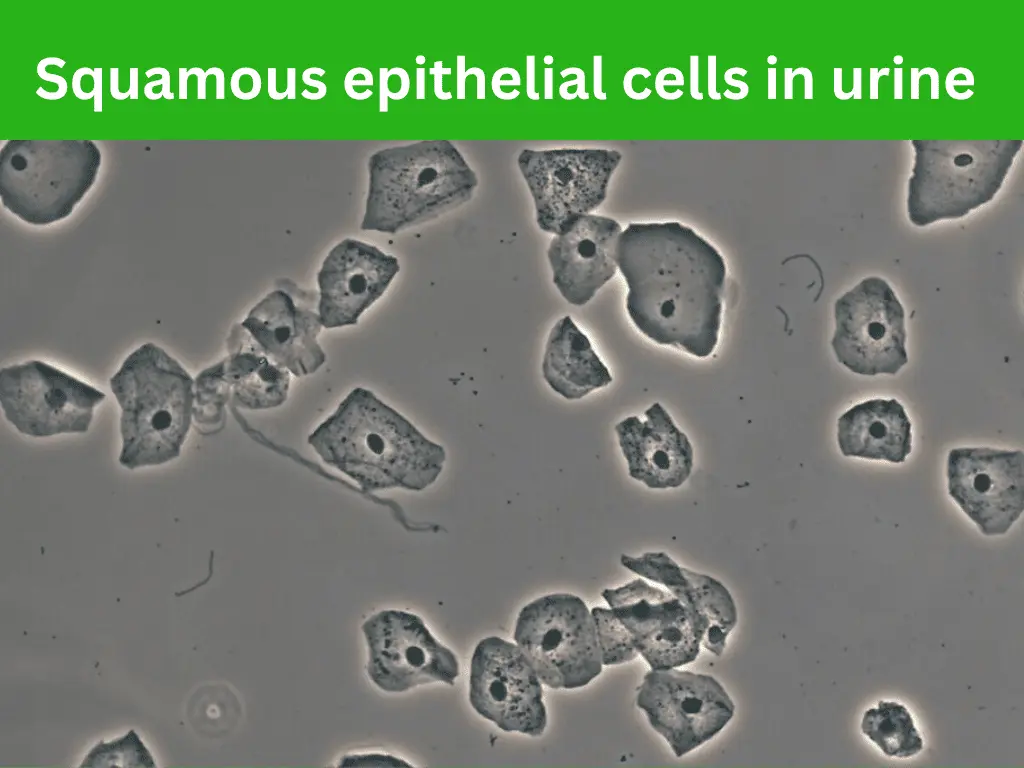
- Squamous epithelial cells: These are the largest type and usually come from the outer urethra or external genital area. Their presence is often due to contamination during urine collection, especially in women.
- Transitional epithelial cells: Also known as urothelial cells, these originate from the lining of the bladder, ureters, or renal pelvis. A moderate number can be normal, but higher levels may suggest inflammation or infection.
- Renal tubular epithelial cells: These cells come from the nephrons in the kidneys. Finding them in urine may indicate kidney damage or renal disease, and usually warrants further medical evaluation.
Not all epithelial cells are equal—some are harmless, while others can signal serious kidney issues.
| Type of Cell | Origin | Appearance | Clinical Significance |
|---|---|---|---|
| Squamous epithelial cells | Urethra / external genital tract | Large, flat, irregular shape | Usually normal (often contamination) |
| Transitional epithelial cells | Bladder, ureters | Round or pear-shaped | May indicate inflammation or infection |
| Renal tubular epithelial cells | Kidney tubules (nephrons) | Small, round, high nucleus-to-cytoplasm ratio | Suggests kidney damage |
The type and quantity of epithelial cells found during urinalysis can provide important clues about urinary tract health.
What Causes Epithelial Cells to Appear in Urine?
Here are the most common causes:
1. Natural Shedding
The urinary tract is lined with epithelial cells that routinely shed and renew. A small number of these cells can enter the urine as part of the body’s normal maintenance process. This is usually not a cause for concern.
2. Contamination During Sample Collection
Improper urine collection techniques, especially in females, can lead to contamination from squamous epithelial cells found in the skin around the urethra or vaginal area. This is the most frequent cause of epithelial cells appearing in urine tests.
3. Urinary Tract Infections (UTIs)
An infection in the bladder, urethra, or kidneys can cause inflammation, leading to an increase in epithelial cell shedding. In these cases, epithelial cells are often accompanied by other abnormal findings, such as white blood cells (revealed by Leukocyte Esterase), bacteria, or nitrites.
4. Kidney Conditions
Renal epithelial cells in the urine may point to kidney damage, glomerulonephritis, or acute tubular necrosis. These findings often require further evaluation by a nephrologist.
5. Bladder Inflammation or Irritation
Conditions such as interstitial cystitis, catheter use, or chemical irritants can lead to the sloughing of transitional epithelial cells from the bladder lining.
5. Bladder cancer or other urinary tract cancers
Abnormal growths can interfere with normal cell renewal, causing more epithelial cells to appear in the urine.
6. Pregnancy
Hormonal changes and increased sensitivity in the urinary tract during pregnancy can lead to slightly elevated epithelial cell counts, especially if hygiene or sample collection isn’t optimal.
7. Dehydration or Poor Hydration
Concentrated urine may irritate the urinary tract lining, leading to increased epithelial cell shedding.
Symptoms Linked to Epithelial Cells in Urine
The presence of epithelial cells in urine does not usually cause symptoms on its own. However, it can be a sign of an underlying condition—and that’s what leads to noticeable symptoms.
Here are the most common symptoms to watch for:
Pain or Burning During Urination
A burning sensation while urinating is often linked to urinary tract infections (UTIs) or irritation in the urinary tract.
Cloudy or Foul-Smelling Urine
Urine that appears cloudy or has a strong, unpleasant odor may indicate a bacterial infection or an increased number of cells and debris.
Blood in Urine (Hematuria)
The presence of blood in urine can be alarming and may be associated with:
- Kidney disease
- Bladder infections
- Urinary tract tumors
Frequent Urination
Needing to urinate more often than usual—especially in small amounts—is a common symptom of UTIs or bladder inflammation.
Lower Abdominal or Back Pain
Pain in the lower abdomen or back may suggest kidney involvement or inflammation in the urinary system.
Fever and Chills
Fever, especially when combined with urinary symptoms, can indicate that an infection has spread to the kidneys and may require prompt medical attention.
Check Your Urine at Home
This post may contain affiliate links. As an Amazon Associate, I earn from qualifying purchases at no extra cost to you.
If you’re experiencing any of the symptoms above, using at-home urinalysis test strips can help you quickly check for abnormalities such as infection markers, protein, or other changes in urine.
These strips are:
- Easy to use
- Fast (results in minutes)
- Useful for early monitoring before consulting a healthcare professional

- Comprehensive 14-in-1 Testing: These urine test strips 14 Parameters measure 14 key health indicators, including pH, nit…
- Quick and Reliable Results: Our urine test strips get accurate results in under 60 seconds. Simply dip the strip, wait a…
- 100 Strips for Extended Use: Includes 100 test strips in a resealable container to ensure freshness, making it perfect f…
Normal Range vs. High Levels of Epithelial Cells
The number of epithelial cells in urine is one of several parameters measured during a routine urinalysis.
Normal Range of Epithelial Cells
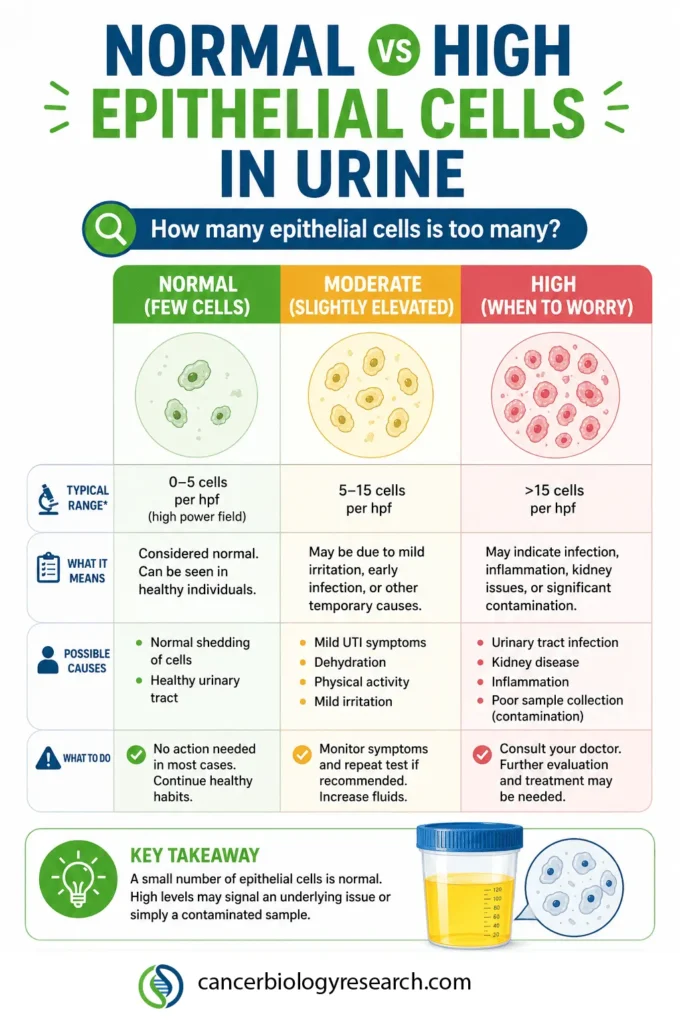
In a clean-catch midstream urine sample, it is considered normal to find 0 to 5 epithelial cells per high-power field (HPF) under a microscope. These cells usually come from the lower urinary tract and are naturally shed.
Moderate to High Levels
When epithelial cells exceed the normal range, the result may be reported as:
- Few
- Moderate
- Many
A moderate or high number of epithelial cells could indicate:
- Urinary tract infection (UTI)
- Kidney disease (especially if renal tubular epithelial cells are present)
- Bladder inflammation
- Contamination from improper sample collection
The type of epithelial cell also plays a crucial role in interpreting the result:
- Squamous cells: Often suggest contamination
- Transitional cells: May reflect bladder shedding or irritation
- Renal cells: Can be a warning sign of kidney damage
When to Be Concerned
If a urine test shows a high number of epithelial cells, especially alongside abnormal levels of white blood cells, protein in urine, bacteria, or casts, further testing is usually recommended. A repeat urinalysis with proper collection or a referral to a nephrologist or urologist may be necessary.
What Do Different Types of Epithelial Cells Indicate?
Not all epithelial cells in urine carry the same diagnostic significance. The type of epithelial cell found can provide valuable clues about where in the urinary tract the shedding occurred—and whether it might be due to a harmless process or a more serious condition.
Here are the three main types of epithelial cells found in urine and what they typically indicate:
1. Squamous Epithelial Cells
- Origin: Lining of the distal urethra and external genitalia
- Appearance: Large, flat, irregular-shaped cells with small, central nuclei
- Clinical Significance:
- Commonly found in contaminated samples, especially in women
- Usually indicate poor collection technique, not a health issue
- Rarely suggest any disease unless found in large quantities alongside abnormal findings
2. Transitional Epithelial Cells (Urothelial Cells)
- Origin: Bladder, ureters, renal pelvis, and proximal urethra
- Appearance: Round or oval cells, sometimes with tails or projections
- Clinical Significance:
- Normal in small amounts
- Elevated levels may indicate bladder irritation, catheter use, or urinary tract infections (UTIs)
- Persistent high levels may warrant further evaluation for bladder inflammation or urothelial carcinoma
3. Renal Tubular Epithelial Cells
- Origin: Lining of the renal tubules in the kidneys
- Appearance: Small, round cells with a large nucleus and minimal cytoplasm
- Clinical Significance:
- Considered the most clinically significant type
- May indicate kidney damage, such as in acute tubular necrosis, glomerulonephritis, or viral infections
- Presence should prompt further kidney function tests and nephrological evaluation
If you’re interested in observing urine sediment more closely, a basic microscope can help you visualize different types of epithelial cells and other components. This is especially useful for students and those learning laboratory techniques.
Treatment Options for Epithelial Cells in Urine
Treatment for epithelial cells in urine focuses on addressing the underlying cause, not the cells themselves. Once the root issue is treated, epithelial cell levels usually return to normal.
Here are the most common treatment approaches:
Antibiotics (For Infections)
If a bacterial infection such as a urinary tract infection (UTI) is the cause, doctors typically prescribe antibiotics to eliminate the infection.
Pain Management
Over-the-counter or prescribed pain relievers may help reduce:
- Burning sensation during urination
- Lower abdominal discomfort
Increased Fluid Intake
Drinking more water helps:
- Flush out bacteria from the urinary tract
- Dilute urine and reduce irritation
- Support overall kidney and bladder health
Surgical Intervention (In Severe Cases)
In some cases, such as:
- Structural abnormalities
- Kidney stones
- Tumors or cancers
Medical procedures or surgery may be required to treat the underlying problem.
Lifestyle Modifications
Simple habits can help prevent recurrence:
- Maintain good personal hygiene
- Avoid irritants (harsh soaps, chemicals)
- Stay well hydrated
- Practice healthy urinary habits
Some supplements, such as cranberry-based products, are commonly used to support urinary tract health. While they are not a treatment for underlying conditions, they may help maintain a healthy urinary environment when combined with proper hydration and medical care.

- AZO CRANBERRY SUPPLEMENT: Taking these cranberry softgels can help maintain a healthy urinary tract. Powerful daily urin…
- NATURALLY SOURCED INGREDIENTS: These cranberry softgels are made with 600mg Pacran, a super-concentrated whole fruit cra…
- SUGAR FREE and GLUTEN FREE: Each serving is equal to the benefits of one glass of cranberry juice.
Important Note
If epithelial cells are linked to kidney disease or more serious conditions, treatment may require specialized care and follow-up with a healthcare professional.
Summary of Treatment Options
| Treatment Option | When It’s Used | What It Does |
|---|---|---|
| Antibiotics | Bacterial infections (e.g., UTIs) | Eliminates infection-causing bacteria |
| Pain relievers | Pain or burning during urination | Reduces discomfort and inflammation |
| Increased fluid intake | Mild infections or general support | Flushes out bacteria and toxins |
| Surgical intervention | Structural issues, stones, tumors | Corrects underlying physical problems |
| Lifestyle changes | Prevention and mild cases | Reduces risk of recurrence |
FAQs
Epithelial cells are cells that line the urinary tract. A small number in urine is normal because these cells naturally shed over time.
Squamous epithelial cells come from the outer part of the urinary tract or skin. They are usually harmless and often mean the urine sample was slightly contaminated.
A normal result is usually reported as “few” cells or up to about 15 cells per high-power field, depending on the laboratory.
The main types are squamous, transitional, and renal tubular epithelial cells, each coming from different parts of the urinary system.
Higher levels can be caused by urinary tract infections, kidney problems, inflammation, or contamination of the urine sample.
References
- Simerville JA, Maxted WC, Pahira JJ. Urinalysis: A Comprehensive Review. American Family Physician. 2005;71(6):1153–1162.
https://www.aafp.org/pubs/afp/issues/2005/0315/p1153.html - National Kidney Foundation. Urinalysis and Kidney Disease.
https://www.kidney.org/atoz/content/what-urinalysis - Mayo Clinic. Urinalysis.
https://www.mayoclinic.org/tests-procedures/urinalysis/about/pac-20384907 - McPherson RA, Pincus MR. Henry’s Clinical Diagnosis and Management by Laboratory Methods. 24th ed. Elsevier; 2021.
- Cleveland Clinic. Urinalysis: What It Is, Purpose, Procedure, Results & Types.
https://my.clevelandclinic.org/health/diagnostics/17893-urinalysis - National Institute of Diabetes and Digestive and Kidney Diseases. Urinary Tract Infections in Adults.
https://www.niddk.nih.gov/health-information/urologic-diseases - Fogazzi GB. Urinalysis and Urinary Sediment: A Textbook for Clinical Practice. 3rd ed. Elsevier; 2010.
Medical Disclaimer: This content is for informational and educational purposes only and does not constitute medical advice. It is not intended to replace professional medical consultation, diagnosis, or treatment. Always seek the advice of a qualified healthcare provider with any questions regarding a medical condition.


