

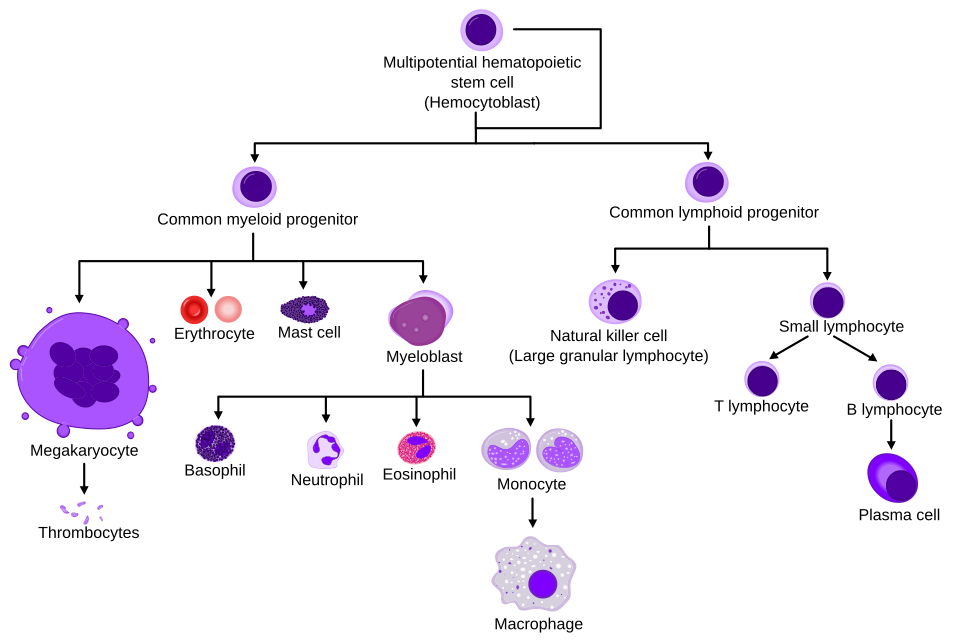
Hematopoiesis is the highly regulated biological process responsible for the continuous production of blood cells throughout life. Originating from multipotent hematopoietic stem cells (HSCs), this process ensures the daily replenishment of billions of red blood cells, white blood cells, and platelets that are essential for oxygen transport, immune defense, and hemostasis.
Beyond its physiological importance, hematopoiesis is central to our understanding of both normal blood development and hematological disorders such as leukemia, aplastic anemia, and bone marrow failure syndromes. Insights into the regulation of hematopoiesis have also transformed clinical medicine through advances in hematopoietic stem cell transplantation and novel therapeutic strategies targeting growth factors and signaling pathways.
In this article, we will explore the fundamental aspects of hematopoiesis, including its developmental origins, cellular lineages, molecular regulators, and clinical implications.
What is Hematopoiesis?
Hematopoiesis is the process by which all mature blood cells are generated from a small pool of multipotent hematopoietic stem cells (HSCs). These stem cells reside primarily in the bone marrow and possess two critical properties:
- Self-renewal – the ability to produce identical daughter stem cells to maintain the stem cell pool.
- Differentiation – the capacity to give rise to increasingly specialized progenitor cells and, ultimately, to mature blood cells.
At the core of hematopoiesis lies the hematopoietic hierarchy, which organizes blood cell production into distinct stages:
- Hematopoietic Stem Cells (HSCs): Rare, long-lived cells with pluripotent potential.
- Multipotent Progenitors (MPPs): Cells with reduced self-renewal but capable of differentiating into multiple lineages.
- Common Myeloid Progenitors (CMPs): Give rise to erythrocytes, platelets, monocytes, and granulocytes.
- Common Lymphoid Progenitors (CLPs): Produce lymphocytes, including B cells, T cells, and natural killer (NK) cells.
- Mature Blood Cells: Fully differentiated, function-specific cells essential for physiological homeostasis.
This hierarchical system ensures a fine balance between stem cell maintenance and cellular output, allowing for lifelong hematopoietic activity. The process is tightly regulated by intrinsic factors (transcription factors, epigenetic modifications) and extrinsic signals from the bone marrow niche.
Sites of Hematopoiesis
The location of hematopoiesis is not constant throughout life but changes according to developmental stage and physiological needs.
Fetal Hematopoiesis
Hematopoiesis begins early in embryonic development and progresses through distinct anatomical sites:
- Yolk Sac (primitive hematopoiesis): The first blood cells appear in the yolk sac around the third week of gestation. These primitive erythrocytes provide early oxygen transport to the developing embryo.
- Fetal Liver (definitive hematopoiesis): By the second trimester, the liver becomes the primary hematopoietic organ. It supports the expansion of hematopoietic stem and progenitor cells and the production of myeloid and lymphoid lineages.
- Spleen: The spleen serves as a secondary site of fetal hematopoiesis, especially for lymphoid cell development.
- Bone Marrow: In late gestation, hematopoietic stem cells migrate to the bone marrow, which becomes the dominant lifelong site of blood formation.
Adult Hematopoiesis
In adults, hematopoiesis occurs almost exclusively in the bone marrow, particularly in the axial skeleton (pelvis, sternum, ribs, vertebrae) and proximal ends of long bones. The bone marrow provides a highly specialized microenvironment (niche) that regulates HSC maintenance, proliferation, and differentiation.
Extramedullary Hematopoiesis
Under pathological conditions, such as bone marrow failure, myelofibrosis, or certain leukemias, hematopoiesis can reactivate in non-marrow sites such as the liver and spleen. This phenomenon, known as extramedullary hematopoiesis, reflects the adaptability of the hematopoietic system but is usually a marker of disease.
The Bone Marrow Niche
The bone marrow niche is the specialized microenvironment where hematopoietic stem cells (HSCs) reside, self-renew, and differentiate. This niche is not merely a physical space but a complex cellular and molecular ecosystem that ensures the balance between quiescence, proliferation, and lineage commitment.
Cellular Components of the Niche
- Mesenchymal stromal cells (MSCs): Provide structural support and secrete growth factors.
- Endothelial cells: Regulate HSC trafficking, homing, and mobilization.
- Osteoblasts and osteoclasts: Influence HSC localization near the endosteal region of bone marrow.
- Adipocytes and fibroblasts: Modulate the metabolic environment and cytokine secretion.
- Immune cells (macrophages, T cells): Contribute to signaling and niche remodeling.
Molecular Regulation
Several signaling pathways and soluble factors coordinate HSC behavior:
- Notch signaling: Maintains stemness and prevents premature differentiation.
- Wnt signaling: Supports self-renewal and expansion of HSCs.
- JAK/STAT pathway: Mediates cytokine responses essential for lineage-specific differentiation.
- CXCL12-CXCR4 axis: Controls HSC retention and mobilization within the marrow.
Dynamic Nature of the Niche
The bone marrow niche is highly dynamic and responsive to physiological conditions. For example, during infection, inflammatory cytokines stimulate increased leukocyte production, while after hemorrhage, erythropoietin (EPO) levels rise to accelerate erythropoiesis. Similarly, in stress or disease states, the niche can be remodeled, sometimes leading to abnormal hematopoiesis or the emergence of malignant clones.
In short, the bone marrow niche is a critical regulator of hematopoiesis, providing both structural support and biochemical signals that guide stem cell fate.
Hematopoietic Lineage Differentiation
From hematopoietic stem cells (HSCs) arises a structured hierarchy of progenitor cells that give rise to all mature blood cells. This process of lineage differentiation involves sequential restriction of developmental potential, guided by transcription factors and cytokines. Broadly, differentiation proceeds through two major progenitor classes: the common myeloid progenitor (CMP) and the common lymphoid progenitor (CLP).
Common Myeloid Progenitors (CMPs)
CMPs generate most of the non-lymphoid blood cells, encompassing four major pathways:
1. Erythropoiesis
- Differentiation of HSCs into red blood cells (erythrocytes).
- Regulated by erythropoietin (EPO) secreted by the kidney in response to hypoxia.
- Key transcription factor: GATA-1.
- Function: Ensures oxygen transport via hemoglobin.
2. Thrombopoiesis
- Production of platelets from large progenitor cells known as megakaryocytes.
- Stimulated by thrombopoietin (TPO) from the liver.
- Essential for blood clotting and wound repair.
3. Granulopoiesis
- Formation of granulocytes:
- Neutrophils (phagocytosis, antibacterial defense),
- Eosinophils (anti-parasitic, allergy response),
- Basophils (inflammatory and allergic reactions).
- Driven by cytokines such as G-CSF and transcription factors like C/EBPα.
4. Monocytopoiesis
- Generation of monocytes, which can differentiate into macrophages and dendritic cells.
- Functions include antigen presentation, phagocytosis, and immune regulation.
- Regulated by factors such as M-CSF and PU.1.
Common Lymphoid Progenitors (CLPs)
CLPs give rise to cells of the adaptive and innate lymphoid lineages:
1. B Lymphopoiesis
- Differentiation into B cells, responsible for antibody production.
- Requires bone marrow maturation followed by activation in peripheral lymphoid organs.
- Key regulator: PAX5 transcription factor.
2. T Lymphopoiesis
- CLPs migrate to the thymus, where they develop into T cells.
- Subtypes include CD4+ helper T cells and CD8+ cytotoxic T cells.
- Notch signaling is crucial for T cell lineage commitment.
3. Natural Killer (NK) Cells
- Part of the innate immune system, NK cells provide rapid cytotoxic responses to infected or malignant cells.
- Development regulated by IL-15.
Through this bifurcated lineage system, hematopoiesis ensures the continuous production of diverse blood cells required for oxygen transport, host defense, and hemostasis.
Molecular Regulation of Hematopoiesis
Hematopoiesis is governed by a sophisticated network of transcription factors, cytokines, and signaling pathways that coordinate stem cell self-renewal, lineage specification, and terminal differentiation. Disruption of these regulatory systems can lead to hematological disorders, including anemia, immunodeficiency, and leukemia.
Key Transcription Factors
- GATA-1: Essential for erythropoiesis and megakaryocyte differentiation; loss of function leads to severe anemia.
- PU.1: Critical for myeloid and lymphoid lineage development; dosage-dependent regulation determines macrophage vs. B cell fate.
- RUNX1 (AML1): Master regulator of early hematopoietic stem cell emergence and differentiation; frequently mutated in acute myeloid leukemia.
- C/EBPα: Promotes granulocyte differentiation; mutations are linked to leukemogenesis.
- PAX5: Required for B cell commitment and maintenance.
Cytokines and Growth Factors
- Erythropoietin (EPO): Produced by the kidney; stimulates red blood cell production.
- Thrombopoietin (TPO): Drives megakaryocyte maturation and platelet formation.
- Granulocyte-Macrophage Colony-Stimulating Factor (GM-CSF): Supports granulocyte and monocyte development.
- Interleukin-3 (IL-3): Broad regulator of multipotent progenitor proliferation.
- Interleukin-7 (IL-7): Vital for lymphoid lineage differentiation, particularly T and B cell development.
Signaling Pathways
- JAK/STAT Pathway: Activated by cytokine receptors; regulates proliferation and survival of hematopoietic progenitors.
- Notch Signaling: Directs lymphoid lineage commitment, especially T cell development in the thymus.
- Wnt Signaling: Maintains stem cell self-renewal and prevents premature differentiation.
- CXCL12–CXCR4 Axis: Ensures hematopoietic stem cell retention in the bone marrow niche.
Epigenetic and Microenvironmental Control
- Epigenetic regulation (DNA methylation, histone modification) fine-tunes gene expression during lineage commitment.
- Bone marrow stromal cells and extracellular matrix components provide essential niche signals.
- Hypoxia-inducible factors (HIFs) adapt hematopoietic stem cell metabolism to the low-oxygen marrow environment.
Together, these molecular regulators create a robust but flexible system that adapts to physiological demands such as infection, blood loss, or stress, while maintaining stem cell pools for lifelong hematopoiesis.
Disorders of Hematopoiesis
Disruptions in the regulation of hematopoiesis can result in a wide spectrum of hematological diseases. These disorders arise from defects in hematopoietic stem cells, progenitor differentiation, or the bone marrow microenvironment, leading to impaired blood cell production or uncontrolled proliferation.
Aplastic Anemia and Bone Marrow Failure Syndromes
- Aplastic anemia is characterized by bone marrow hypoplasia and pancytopenia (deficiency of all blood cell types).
- Causes include autoimmune destruction of hematopoietic stem cells, exposure to toxins or radiation, and inherited syndromes (e.g., Fanconi anemia).
- The result is insufficient blood cell production, leading to anemia, recurrent infections, and bleeding tendencies.
Myelodysplastic Syndromes (MDS)
- A group of clonal stem cell disorders characterized by ineffective hematopoiesis and dysplasia in one or more lineages.
- Patients present with cytopenias and an increased risk of progression to acute myeloid leukemia (AML).
- Pathogenesis involves mutations in genes controlling epigenetic regulation, splicing, and signaling pathways.
Leukemias
- Acute leukemias (AML, ALL): Malignant transformation of progenitor cells leads to uncontrolled proliferation and blocked differentiation.
- Chronic leukemias (CML, CLL): Expansion of more mature cells with variable clinical progression.
- Commonly associated with genetic alterations such as RUNX1 mutations, BCR-ABL fusion (Philadelphia chromosome), or NOTCH1 mutations.
- Leukemias illustrate how disrupted hematopoiesis can shift from failure to malignant clonal expansion.
Other Disorders of Hematopoiesis
- Polycythemia vera: Excessive erythropoiesis due to JAK2 mutations.
- Essential thrombocythemia: Overproduction of platelets linked to JAK/STAT pathway dysregulation.
- Neutropenia: Reduced granulopoiesis, increasing infection risk.
Disorders of hematopoiesis not only compromise blood and immune function but also highlight the importance of tightly regulated stem cell activity. Understanding these pathologies has driven advances in diagnostics, targeted therapies, and stem cell transplantation.
Hematopoietic Stem Cell Transplantation
Hematopoietic stem cell transplantation (HSCT) is a cornerstone therapy for a wide range of hematological disorders, including bone marrow failure syndromes, leukemias, lymphomas, and inherited immunodeficiencies. The principle of HSCT lies in replacing a defective or malignant hematopoietic system with healthy stem cells capable of reconstituting normal blood and immune function.
Principles of HSCT
- Myeloablative conditioning: High-dose chemotherapy or radiation is administered to eliminate diseased or malignant hematopoietic cells and create “space” for donor stem cells.
- Stem cell infusion: Healthy hematopoietic stem cells are introduced intravenously, homing to the bone marrow niche.
- Engraftment: Successful colonization of the marrow by donor cells leads to the gradual recovery of hematopoiesis.
Sources of Hematopoietic Stem Cells
- Bone Marrow: Traditional and reliable source; requires invasive harvesting.
- Peripheral Blood Stem Cells (PBSCs): Mobilized into circulation with granulocyte-colony stimulating factor (G-CSF); now the most common source due to easier collection and faster engraftment.
- Umbilical Cord Blood: Rich in stem cells with high proliferative potential; useful for pediatric patients but limited by cell dose.
Types of Transplantation
- Autologous HSCT: Patient’s own stem cells are collected, stored, and reinfused after myeloablative therapy; avoids immune rejection but risks reintroducing malignant cells.
- Allogeneic HSCT: Stem cells from a matched donor (related or unrelated); offers a graft-versus-leukemia effect but carries risks of graft rejection and graft-versus-host disease (GVHD).
Challenges and Complications
- Graft-versus-host disease (GVHD): Donor immune cells attack host tissues, causing significant morbidity and mortality.
- Infections: Immunosuppression during the engraftment period increases susceptibility.
- Relapse of malignancy: Failure to achieve complete eradication of diseased cells.
- HLA matching and donor availability: Critical for successful outcomes.
HSCT remains both a curative therapy and a field of ongoing innovation, with advances in conditioning regimens, immunomodulation, and alternative stem cell sources expanding its applicability.
Conclusion
Hematopoiesis is a fundamental and highly regulated process that sustains blood and immune system function throughout life. From hematopoietic stem cells in the bone marrow to the diverse mature blood cell lineages, this dynamic system relies on intricate molecular, cellular, and microenvironmental controls. Disruptions in hematopoiesis can lead to a wide spectrum of disorders, ranging from anemia and bone marrow failure to leukemia, highlighting its clinical significance. Advances in stem cell transplantation, molecular therapies, and regenerative medicine continue to expand our understanding and ability to manipulate hematopoiesis, offering new avenues for treatment and research.
References
- Crispino, J. D. (2023). Introduction to a review series on hematopoietic stem cells. Blood, 142(6), 497. https://doi.org/10.1182/blood.2023020909 PubMed
- Weeks, L. D., & Ebert, B. L. (2023). Causes and consequences of clonal hematopoiesis. Blood, 142(26), 2235–2246. https://doi.org/10.1182/blood.2023022222 PubMed
- Tang, X., Wang, Z., Wang, J., Cui, S., Xu, R., & Wang, Y. (2023). Functions and regulatory mechanisms of resting hematopoietic stem cells: A promising targeted therapeutic strategy. Stem Cell Research & Therapy, 14, 73. https://doi.org/10.1186/s13287-023-03316-5 BioMed Central
- Muench, M. O., & Gudmundsson, K. O. (2024). Editorial: Rising stars in hematopoiesis and stem cells 2023. Frontiers in Hematology, 3, 1477997. https://doi.org/10.3389/frhem.2024.1477997 Frontiers
- Parajdi, L. G., Bai, X., Kegyes, D., & Tomuleasa, C. (2024). A mathematical model of clonal hematopoiesis explaining phase transitions in myeloid leukemia. arXiv. https://doi.org/10.48550/arXiv.2401.05316 arXiv


